
Celebrating Trail Milestones: Mark Your Outdoor Achievements
Outdoor pursuits have a strange relationship with achievement. Ask most hikers why they do it and they'll give you answers about the process: the fresh air, the views, the physical work. Ask them what they remember and they'll tell you about specific moments. Their first alpine summit. The trail that pushed them harder than expected. The route they finally finished after three failed attempts.
Milestones matter. Not as the point of hiking, but as anchors in a longer practice. Here's how to track them, celebrate them, and use them to keep moving forward.
Why Milestones Drive Long-Term Motivation
Most people who stick with hiking for years don't just hike for the pure intrinsic joy of it every single time. Motivation is variable. Some weeks the trail feels effortless. Other weeks it's a discipline. Milestones give you something to move toward during the flat stretches, and something to look back on when you're wondering why you bother.
The psychology here is straightforward: goal-setting research consistently shows that concrete, measurable targets improve follow-through compared to open-ended intentions. "Hike more" is an intention. "Complete ten trails in my county this year" is a target. The specificity changes how your brain tracks progress and what counts as a win. A 2021 peer-reviewed study on long-distance hikers published in PMC found that completing a challenging hike measurably boosts self-confidence and self-efficacy, and that hikers are primarily driven by intrinsic motivations: overcoming new challenges, testing physical limits, and belonging to a like-minded community.
There's also a social dimension. Shared milestones, a group completing a trail series together, a hiking club logging their collective summits, create accountability and belonging. These are strong motivators, often stronger than personal goal-setting alone.
Types of Trail Milestones Worth Tracking
Not all milestones are summits. There are several frameworks hikers use to mark progress, and the right one depends on what kind of hiking you do.

Cumulative milestones are the most accessible: total trails completed, total elevation gained, total kilometres walked. Apps like AllTrails and Komoot track these automatically once you log activities. Hitting 1,000km walked or 100 trails completed is genuinely satisfying even if none of those individual days were spectacular.
List completion is a deeper obsession for many hikers. The Wainwrights in England (214 fells). The 282 Scottish Munros. The 48 New Hampshire 4,000-footers. These lists create a structured project with a defined finish that can take years or decades. The same drive applies to long-distance trails: the Appalachian Trail Conservancy reports that only 28 to 31% of thru-hikers who attempt the 2,190-mile AT successfully complete it, and since the trail's first thru-hike in 1948, only around 22,000 people have finished it. The lists have their own communities, traditions, and terminology. Completing one is a different category of achievement from any individual hike.
Personal firsts are often the most meaningful: first solo overnight, first alpine route, first winter summit, first time navigating by map and compass alone. These mark capability transitions, the moments when your hiking expanded into new territory.
Tracking Methods That Actually Work
The tracking method matters because inconsistency kills the milestone habit. If you're logging some hikes and not others, your data is useless and so is your sense of progress. Pick a system and commit to it.
AllTrails Pro is the most complete option for most hikers. With 55 million registered users and over 500,000 trails worldwide, it's the largest trail database available, and it achieved that scale almost entirely through organic growth rather than paid acquisition. Automatic activity tracking, map downloads for offline use, a searchable catalogue of trails with conditions and reviews. Your completed hike log becomes a searchable personal record over time. The milestone notifications (100 trails, 500km) are small but satisfying.
Komoot is better for route planning and has a stronger European trail database. Its Collection feature lets you build lists of planned and completed routes, which is useful for working through regional trail lists.
A physical journal works differently and isn't inferior to apps. A handwritten log captures things GPS tracks don't: weather, who you were with, what you saw, how you felt. These are the details that make a milestone genuinely meaningful when you look back at it years later. Many experienced hikers keep both: app for data, journal for experience.
The First Summit: Making It Count
The first significant summit you complete, genuinely significant, the one that required real effort, early start, weather management, navigation, deserves to be marked properly. This is one of the most common outdoor milestones and one of the most commonly undersold.

Photo by eberhard grossgasteiger via Pexels
A few things make a summit feel more like an achievement and less like just another day out. Write it down the same day, while the details are fresh. Take a photo that actually captures where you are, not just a selfie at the cairn. Tell someone about it who will understand what it means. And wear something that marks the occasion, not because gear is the point, but because physical objects anchor memories.
The Raised on Peaks T-Shirt is the kind of piece people reach for on summit days. Heavyweight garment-dyed cotton that feels earned rather than generic, something you put on because it matches the weight of the day. AukCliff is designed in New Zealand and fulfilled through trusted production partners worldwide, which means the design sensibility comes from people who actually spend time in the mountains.
Wearing What You Earned: Trail Gear as Milestone Markers
Outdoor clothing has always served a dual function: practical protection and personal identity. The badges on a mountaineer's pack, the patches on a worn-out jacket, the specific pieces people wear to specific places, these aren't just aesthetic choices. They're a shorthand for experience.
This is why graphic tees work as milestone gear in a way that blank apparel doesn't. A specific design from a specific collection purchased after a specific achievement becomes part of the memory of that achievement. It's the outdoor equivalent of a race finisher shirt, except the design is something you'd actually want to wear.
The Life on the Edge T-Shirt from the Origin Collection is a good example. The name is specific enough to mean something but not so on-the-nose that it's unwearable. On the premium blank, it's also the kind of tee that gets softer and better with washing rather than degrading. Milestone gear should last.
The Peak Junkie Hoodie occupies a similar space. premium M2580 fleece at 9oz is substantially heavier than most hoodies, the kind of weight that feels appropriate for cold post-summit evenings or early starts before the sun comes up. If you're working through a summit list, it's the kind of piece that earns its place in the rotation.
Building a Collection with Meaning
Some hikers buy trail gear before every major trip as a deliberate ritual. Others buy after, as a reward. Both approaches work. What matters is that the piece is connected to something specific rather than being just another item in a drawer.
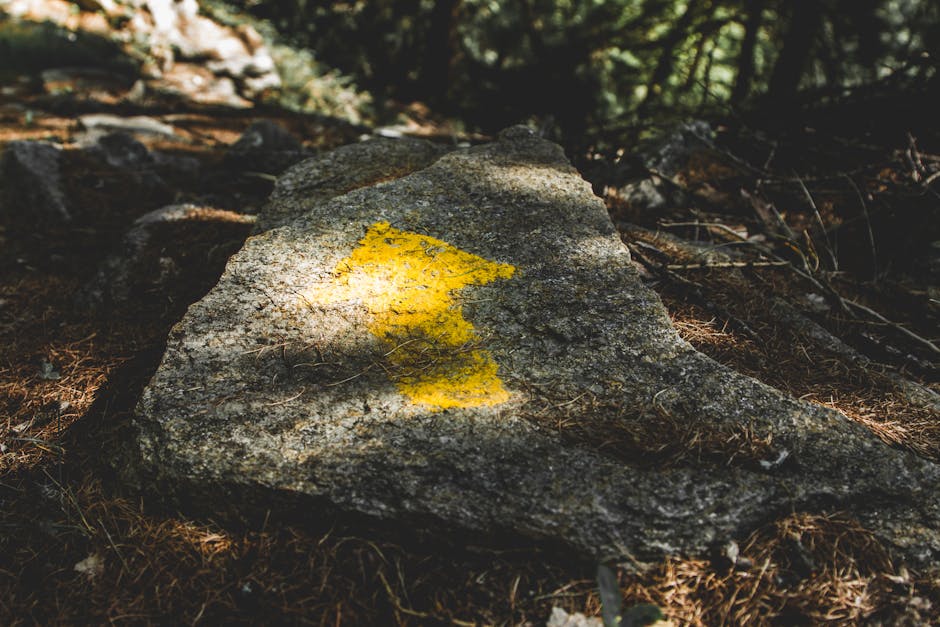
Photo by chepté cormani via Pexels
AukCliff's designs are designed to work as collectible trail pieces. The hand-drawn quality (all Captain Puffin designs are drawn by artist Maria, not generated by AI) gives each piece a distinctiveness that mass-market outdoor apparel doesn't have. When you're building a collection that marks years of hiking, that specificity matters. You want to be able to look at a tee and remember exactly when and why you got it.
The Value Packs are worth considering if you're kitting out a collection rather than buying individual pieces. Multiple pieces at a discount, with the same premium and premium quality throughout.
Celebrating with Others: Group Milestones
Solo milestones are meaningful. Group milestones are different. When a hiking club completes a trail series together, when a group of friends finishes their first overnight route, when a running club logs their collective 10,000km, the social dimension adds something that personal achievement can't replicate.
If you're organising a group milestone, think about how to mark it in a way that's shared. A group dinner where everyone contributes their favourite trail story from the year. A shared journal that circulates between members. Matching pieces from a collection that everyone gets when the group goal is hit. These rituals matter for group cohesion and for keeping people motivated through the harder stretches of a long project.
The outdoor community in most places is better than it's given credit for. Hikers are generally generous with trail knowledge, patient with beginners, and enthusiastic about others' achievements. Tap into that. Share your milestones publicly (apps, social media, group chats) and you'll find people who care about them more than you expected.
FAQ
What's a good first trail milestone to aim for?
For newer hikers, completing 10 different trails in your local area within a year is a solid first target. It's achievable, forces you to explore, and gives you a benchmark. For more experienced hikers, a regional list (your county's highest points, a specific long-distance trail) provides a multi-year project with a defined finish.
What apps are best for tracking trail milestones?
AllTrails is the most user-friendly for general tracking and has the best trail database for most regions. Komoot is better for European routes and detailed route planning. Strava works if you're already using it for other activities. The best app is the one you'll actually use consistently, not the one with the most features.
How do I stay motivated between big milestones?
Set shorter-term process goals alongside the outcome goals. "Complete two hikes per month" runs in parallel with "finish the Wainwrights". The process goal keeps you moving when the outcome goal feels distant. Also: vary your trails. Doing the same routes repeatedly kills motivation faster than anything else.
Should I buy trail gear before or after a milestone?
Either works. Buying before creates anticipation and a ritual around the event. Buying after feels like a genuine reward. Many hikers do both: wear a specific piece on the day, then add another piece to mark the completion. What matters is that the piece is deliberately connected to the achievement rather than just another purchase.
How do I celebrate a milestone that no one else cares about?
Find your tribe. Most major trail lists have active communities (subreddits, Facebook groups, hiking clubs) where people genuinely celebrate each other's completions. A stranger who's also working through the same list will often react more enthusiastically to your completion than a non-hiking friend. Seek out those communities. They're worth it.
Related Reading
Wear it out there

Simple
$75.99
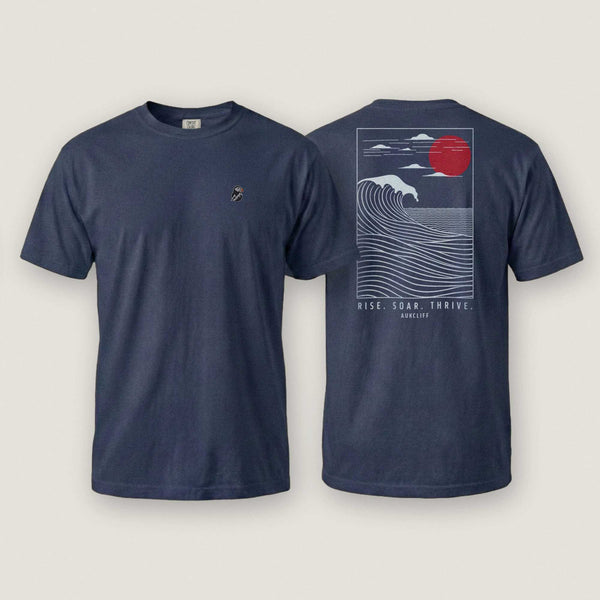
Coastal Waves
$101.99
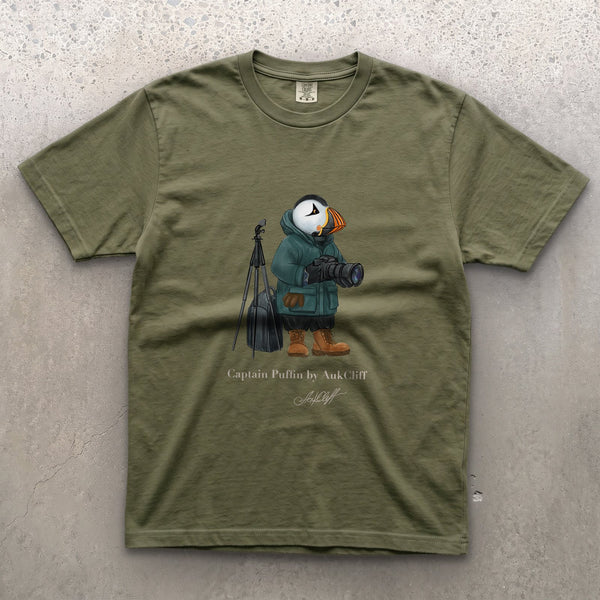
Captain Puffin Wildlife Photographer
$84.99

Captain Puffin Hiker
$84.99
Get the next one
New designs as they land, and the stories behind them. Unsubscribe in one click.