
Outdoor Adventures in France: Alps, Coast, and Countryside
France gets written up as a food and wine destination, which it is, but it's also one of the most varied outdoor countries in Europe. The Alps give you high-altitude terrain that rivals anywhere in the world. Corsica has a trail that serious hikers talk about for years afterward. The Calanques near Marseille combine sea cliffs with Mediterranean swimming. The Pyrenees offer a less crowded alternative to the Alps with routes that cross into Spain. And in between, thousands of kilometres of marked hiking paths connect villages, river valleys, and countryside that most visitors never see. Here's how to approach it.
Chamonix and the Mont Blanc Massif
Chamonix is the obvious starting point for anyone interested in serious Alpine adventure. The town sits at 1,035 metres in a valley dominated by Mont Blanc (4,808m), and the infrastructure around it, lifts, huts, marked trails, has been built over two centuries of mountaineering history. You don't need to be a climber to use it well. The valley welcomes approximately 3 million visitors per year, with around 8 million overnight stays recorded annually, according to the Chamonix Tourist Office, and about 60 percent of those visitors come from outside France. The Tour du Mont Blanc (TMB) circles the entire massif over roughly 170km and 10,000 metres of vertical gain, crossing into Italy and Switzerland along the way. Most people take 10-12 days. Survey data from 2023 shows that 85.5 percent of hikers successfully completed the trail, with August the most popular start month. Huts are bookable in advance and provide dinner and breakfast, so you carry only a day pack.
For shorter trips, the Aiguilles Rouges above Chamonix offer full-day ridge walks with views directly across to Mont Blanc and the Mer de Glace glacier. The Lac Blanc route is the most-walked option and deservedly so: the lake sits at 2,352 metres with the entire Mont Blanc range reflected in it on calm mornings. Allow five hours from the Index lift station.
July and August are peak season with crowded trails and huts that book out months in advance. Late September offers better availability, cooler temperatures, and autumn colour in the valley forests. Snow can arrive in October, so check conditions if you're going late in the season. Pack a Mountain Adventure Hoodie for evenings at altitude, the temperature drops sharply after sunset even in summer, and a 9oz cotton fleece is warm enough for hut evenings without adding bulk.
The GR20 in Corsica
The GR20 is consistently rated among the most demanding long-distance trails in Europe. It runs 180km from Calenzana in the north to Conca in the south, crossing the spine of Corsica at high altitude for almost its entire length. The terrain is granite, often requiring hands on rock rather than a walking pace. Expect 13,000 metres of total ascent. Most hikers take 15 days; experienced hikers can do it in 10. Starting from the north to south is the traditional direction and slightly easier on the first few days. Between 10,000 and 20,000 hikers walk the GR20 each year according to Wikipedia's GR20 article, and at peak season the trail can be a victim of its own success, with the Corsican Natural Park now running a refuge booking regulation system to manage the pressure on low-capacity huts.

What makes it worth doing is the combination of remoteness and variety. You're crossing a mountain range with almost no road crossings, spending nights at refuges run by the Parc Naturel Régional de Corse, and swimming in glacial lakes that sit below 2,000-metre ridges. The southern half is technically easier but scenically spectacular, with maquis (dense aromatic scrub) and views down to the sea from high passes.
June is the best month before the heat builds and crowds peak. By mid-July, the most popular refuges are very full. The GR20 requires genuine mountain fitness and navigation ability. Afternoon thunderstorms are common in summer, starting high above the ridges you may be crossing. An early start each day, typically before 7am, gets you to your next refuge ahead of the weather and the crowds.
The Calanques: Sea Cliffs and Deep Water
The Calanques are a stretch of limestone coastline between Marseille and Cassis, protected as a national park since 2012. The cliffs drop directly into clear Mediterranean water, creating a series of narrow inlets (calanques) accessible by foot, boat, or kayak. The combination of rock climbing, trail hiking, sea swimming, and wild camping in a single area within 20 minutes of a major city is unusual anywhere in the world.
The main calanques, Morgiou, Sormiou, En-Vau, and Port-Pin, each require 1-3 hours of hiking from the trailheads near Marseille or Cassis. En-Vau is the most dramatic, a narrow inlet flanked by white limestone towers with a small beach at the bottom that's only accessible on foot or by boat. The trail in from Cassis takes about 90 minutes each way and involves some scrambling on the descent.
Between July 1 and September 15, fire risk restrictions often close the trails during the hottest part of the day. Check the Prefecture des Bouches-du-Rhone website before going. Starting at 6am gets you in before restrictions kick in and lets you swim before the day heats up. Bring more water than you think you need. The limestone reflects heat aggressively and shade is scarce.
The Pyrenees: Space and Solitude
The Pyrenees run for 430km from the Atlantic to the Mediterranean, forming the border between France and Spain. They're less visited than the Alps, which means more space on trails, smaller queues at refuges, and an atmosphere that feels wilder. The Haute Route Pyréneenne (HRP) is the demanding alternative to the GR10 (French side) and GR11 (Spanish side), following the ridge and crossing between countries frequently. At 800km, it takes most people 45-55 days.

Photo by Francesco Ungaro via Pexels
For shorter trips, the Cirque de Gavarnie is one of the most impressive natural amphitheatres in Europe: a 1,700-metre semicircular cliff wall with the highest waterfall in France dropping 422 metres from the top. The hike from the village takes two hours at an easy pace. Gavarnie itself is a classic Pyrenean mountain village with accommodation, and the valley above it sees far fewer visitors than comparable sites in the Alps.
The Ordesa Canyon in the Spanish Pyrenees is a straightforward day-trip from the French side and worth including. Enter via the Torla-Ordesa village, walk the canyon floor to the Cascada de Cola de Caballo waterfall, and return via the high Soaso cirque. Allow 6-7 hours. The combination of vertical canyon walls, beech forest, and high meadows covers more visual variety in a single day than most longer routes.
Dordogne: Cycling Through River Country
The Dordogne department in southwest France offers a different kind of outdoor experience: gentler terrain, medieval villages on limestone cliffs, and a river valley that lends itself to cycling, kayaking, and multi-day walking. The EuroVelo 3 pilgrimage route passes through this region, and the Dordogne River itself is navigable by kayak for several days between Argentat and Beynac.
The cycling is accessible to riders of most fitness levels. The valley floor routes follow the river closely with minimal climbing. Getting onto the plateau above the valley adds more significant hills but opens up views across a countryside that hasn't changed much in a century. The village of La Roque-Gageac, built directly into a cliff above the river, is a good base for a week of mixed riding and walking.
September is the best month: the summer crowds have thinned, temperatures are moderate (around 20-25°C), the walnuts and chestnuts are ripening, and the light in the afternoons is exceptional. October is also viable for cycling, with the added benefit of near-empty roads through villages that are still open.
Seasonal Planning for France
France's outdoor seasons vary sharply by region. The Alps and Pyrenees are best from late June to early October for hiking; ski season runs December through April. Corsica and the Calanques are accessible year-round but peak from May to June before the heat and crowds. The Dordogne and Loire cycling is best April to June and September to October. France has 11 national parks in total, from Vanoise, established in 1963 as the country's first, through to the Pyrénées and Ecrins. Together they attract more than 10 million visitors each year, according to parcsnationaux.fr.

Photo by Baraa Jalahej via Pexels
Weather in the mountains changes fast. A stable morning can produce afternoon thunderstorms with very little warning, particularly in July and August. Checking the Meteo France mountain forecast (meteo.fr) rather than general weather apps is worth the extra minute. They publish specific forecasts for each massif and altitude band.
For cooler days in the mountains or evening temperatures at high refuges, the Embrace The Mountain Call Hoodie and Peak Junkie Hoodie are both made from 9oz premium fleece, substantial enough for genuine warmth without being too heavy to pack. The full hoodies collection has options across different designs. They're also worth having for the cooler coastal evenings in Corsica and the Calanques, where the temperature difference between midday and sunset can be 15 degrees.
Getting There and Moving Around
Paris is the main international hub, with direct connections to Chamonix via Lyon and the Mont Blanc Express train. For Corsica, fly direct to Ajaccio or Bastia from several European cities, or take the overnight ferry from Nice or Marseille (8-9 hours), which is cheaper and lets you bring more gear. For the Calanques, Marseille has excellent rail connections from Paris (TGV, 3 hours 20 minutes) and is walkable to many trailheads.
Train travel within France is genuinely useful for outdoor trips. The SNCF network reaches many mountain valleys, and the interrail pass is good value for multi-region trips. Renting a car in Corsica is worth considering for access to the GR20 start and end points and for resupply during the trek. Outside Corsica, most major trailheads are reachable by public transport with some planning.
FAQ
- Do I need to speak French for outdoor trips in France?
- For Chamonix and major tourist areas, English is widely spoken. In the Pyrenees, Dordogne, and smaller mountain villages, French is helpful. Basic phrases for hiking (trail directions, weather questions, hut reservations) are worth learning. Trail signs use standard French and GR markings that don't require language knowledge to follow.
- How far in advance do I need to book TMB huts?
- For July and August, book 6-12 months in advance. The most popular huts, particularly Refuge du Col de la Croix du Bonhomme and Refuge des Mottets, fill quickly. For September trips, 3-4 months is usually sufficient. The TMB website has a hut booking portal that covers most refuges across all three countries.
- Is the GR20 suitable for beginners?
- No. The GR20 requires multi-day mountain hiking experience, the ability to navigate with a map and compass, and comfort with exposed rocky terrain. A strong preparation would include completing a 5-day Alpine route before attempting it. The northern section in particular has sections where a fall would be serious.
- What's the best outdoor region in France for a first visit?
- Chamonix for mountain hikers, the Calanques for a coastal experience with less physical commitment. Both offer excellent infrastructure, clear trail marking, and enough variety for a week. The Dordogne is the best choice for mixed-activity trips with varied fitness levels in a group.
- What should I pack for a week in the French Alps?
- Trail shoes, a waterproof jacket, warm mid-layer, sun hat, sunscreen (UV at altitude is strong), 2-litre water capacity, basic first aid, and a headtorch. If staying in huts, a lightweight sleeping liner is required at most refuges. Keep your pack under 12kg for multi-day trips.
Related Reading
Frequently Asked Questions
What is the GR20 trail in Corsica and how difficult is it?
The GR20 is a long-distance hiking trail that crosses Corsica from north to south through rugged mountain terrain. It is widely considered one of the most challenging trails in Europe, with exposed ridges, steep ascents, and sections requiring scrambling.
Are the Pyrenees less crowded than the Alps for hiking?
The Pyrenees offer a quieter alternative to the heavily trafficked Alps, with routes that extend across the border into Spain. The terrain is genuinely alpine but the trails see far fewer visitors, which makes them a good choice for hikers who want solitude alongside serious mountain scenery.
What are the Calanques near Marseille?
The Calanques are a series of narrow inlets carved into dramatic sea cliffs along the Mediterranean coast between Marseille and Cassis. The area is now a national park and combines coastal hiking on limestone ridges with access to clear turquoise swimming coves.
How many kilometres of marked hiking trails does France have?
France has thousands of kilometres of marked hiking paths, including a network of long-distance Grande Randonnee routes and shorter local trails called Petite Randonnee. These connect villages, river valleys, and countryside that the majority of visitors to France never reach.
Is France a good destination for outdoor adventure beyond skiing?
France offers a wide range of outdoor activities across very different landscapes, including high-altitude alpine hiking in the Alps, sea cliff routes on the Mediterranean coast, and countryside walking through villages and river valleys. The variety of terrain makes it one of the most diverse outdoor destinations in Europe.
Explore the Captain Puffin collection
Last updated: April 2026
Wear it out there
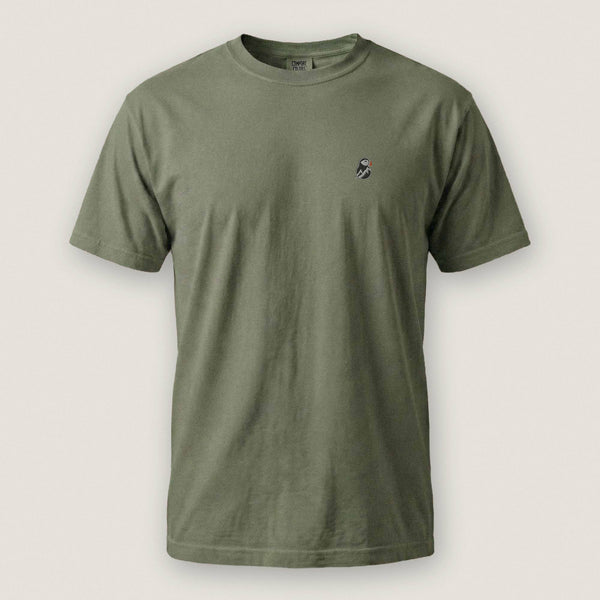
Simple
$75.99
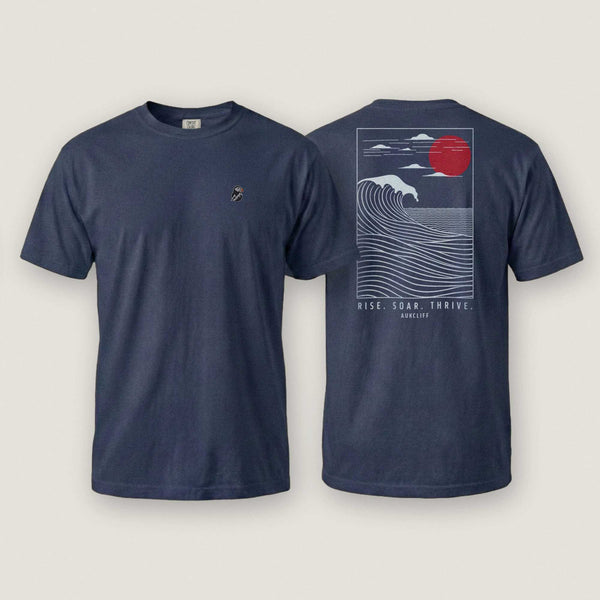
Coastal Waves
$101.99
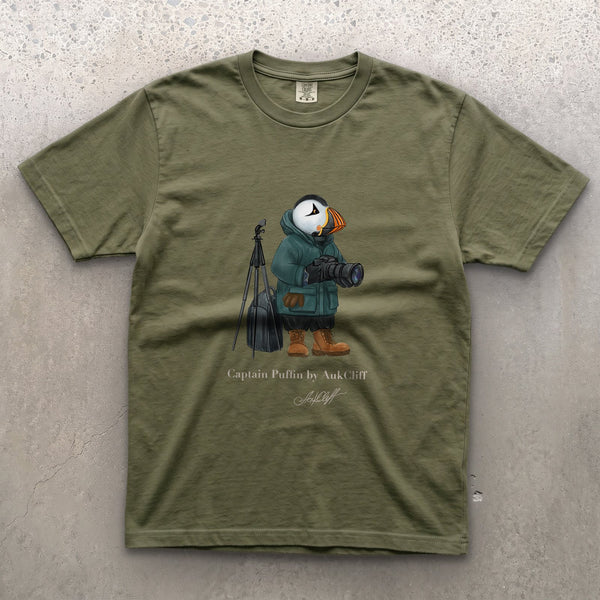
Captain Puffin Wildlife Photographer
$84.99
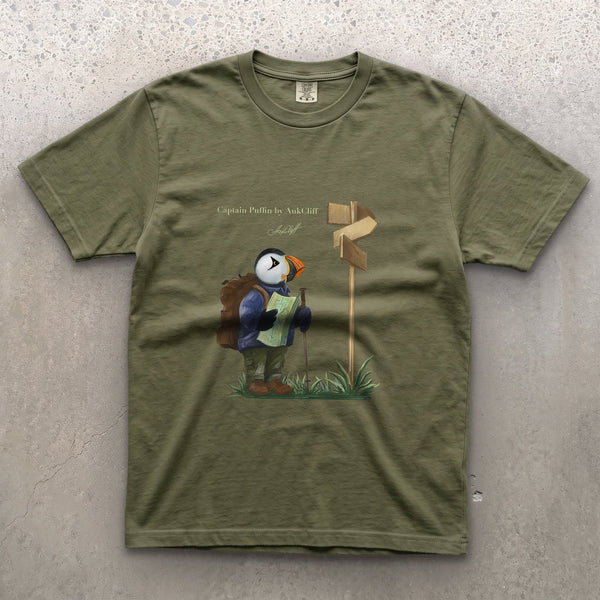
Captain Puffin Hiker
$84.99
Get the next one
New designs as they land, and the stories behind them. Unsubscribe in one click.