
Coastal Mornings: How to Read the Sea and Catch a Sunrise Worth Getting Up For
Some places only show themselves at the edges of the day, and the coast is one of them. A good coastal sunrise takes a little planning: the right light, the right tide, and the patience to be in position before anything happens. This is a practical guide to reading the sea for a sunrise worth getting up for, with tide and safety notes, photography settings, and what to wear, alongside the design that came out of those mornings.
What makes a good coastal sunrise?
The best coastal sunrises share a few conditions. None of them are complicated, but they rarely all land at once, which is part of the appeal:
- A clear-ish horizon for the sun to break over cleanly
- Some cloud, high or scattered, to catch and hold colour
- An east-facing coast so the sun rises over the water
- A workable tide for safe access to the spot you have in mind
How do you read tides and light?
Reading the sea starts the night before. Check the sunrise time and the tide table for your exact spot, and aim to be in place 30 to 40 minutes before sunrise, when the colour usually peaks.
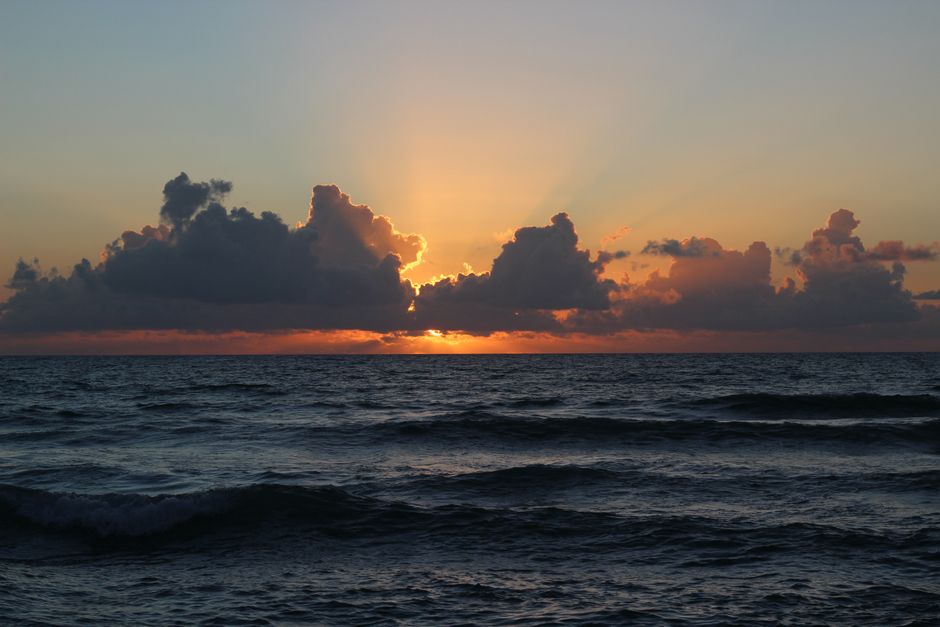
Photo by Zeze via Pexels
Tides follow a roughly twice-daily cycle driven by the moon (NOAA). A few habits make the difference:
- Know the turn: a low tide opens up beaches and rock; a rising tide can cut them off
- Watch the swell: bigger sets reach further up the sand than you expect
- Arrive early: the band of orange before the sun clears the horizon is usually the best of it
A simple way to think about the timing of a dawn session:
| Time before sunrise | What is happening | What to do |
|---|---|---|
| 45 minutes | Blue hour, a faint glow | Arrive, set up, check your footing |
| 30 minutes | Colour builds in the cloud | Often the best colour; shoot wide |
| 10 minutes | The sky brightens | Meter on the sky, watch the tide |
| Sunrise | The sun breaks the horizon | Silhouettes and sun stars, then warm light |
What is the design?
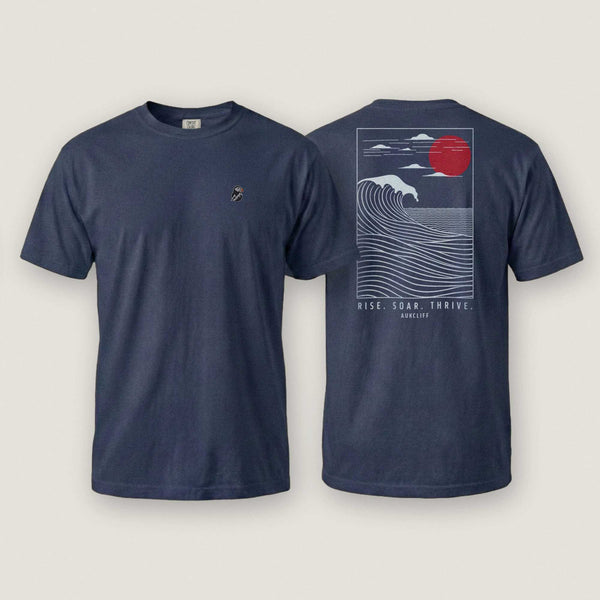
The design on the back of the Ocean Sunset Waves hoodie and tee is a low sun and a set of breaking waves, drawn by hand. It came straight out of these mornings: not a particular beach or famous break, just the shape of that hour, kept simple enough to read across a room.

How do you photograph a sea sunrise?
Coastal light changes fast, so it helps to have a starting point and adjust from there:
- Shutter: start around 1/125s for movement; drop to 1/4s or slower on a tripod to smooth the water
- Aperture: f/8 to f/11 for front-to-back sharpness
- ISO: as low as you can, 100 to 400, to keep the shadows clean
- Metering: spot meter on the brighter sky so the whole frame does not blow out
- Filters: a graduated filter balances the bright sky against the darker sea
How do you stay safe on the coast at dawn?
Most coastal incidents come down to tides and footing, both of which are easy to plan around. The RNLI keeps it simple:
- Check the tide times for your spot and know when it turns
- Avoid cut-off spots like sandbars, causeways and the base of cliffs on a rising tide
- Mind your footing on wet rock and weed in the dark
- Tell someone where you are going and when you will be back
What to wear, and where the design fits
Mornings by the sea are colder and damper than the forecast suggests, so dress for wind and standing still:
- Base layer: merino, to hold warmth even slightly damp
- Mid layer: a warm brushed-cotton or fleece top
- Shell: a windproof layer for the exposed sand
The Ocean Sunset Waves Cotton Heritage hoodie is the layer we reach for on a cold dawn beach and keep on all day; the garment-dyed tee is the soft everyday piece. Both carry the sunrise and the waves across the back.
If your edges run higher than the sea, we draw mountains too. Read about Everest and the Matterhorn.
See the full design and both pieces in the AukCliff collection.
Frequently Asked Questions
What makes a good coastal sunrise?
A clear-ish horizon for the sun to break over, some high or scattered cloud to catch colour, and safe access at the tide you are walking. An east-facing coast gives you the sunrise over the water itself.
How do I know when sunrise is and what the tide is doing?
Check a sunrise time for your location and a tide table for the same day before you go. Aim to be in position 30 to 40 minutes before sunrise, when the best colour usually happens, and never walk out onto a falling tide without knowing when it turns.
Is it safe to be on the coast at dawn?
It can be, with planning. The RNLI advises checking tide times, telling someone where you are going, and keeping clear of cut-off spots and unstable cliff edges. Rising tides and slippery rocks cause most incidents.
What camera settings work for a sea sunrise?
Start around 1/125s, f/8 and a low ISO, then adjust. A tripod and a low ISO let you slow the shutter to smooth the water, and spot metering on the brighter sky stops the whole frame blowing out.
What should I wear for a cold coastal morning?
Layers that handle wind and damp: a merino base, a warm brushed-cotton or fleece mid layer, and a windproof shell. Mornings by the sea are colder and damper than the forecast suggests.
Last updated: June 2026
Written by Stephen Milner, founder of AukCliff
Wear it out there

Simple
$75.99
Coastal Waves
$101.99

Captain Puffin Wildlife Photographer
$84.99

Captain Puffin Hiker
$84.99
Get the next one
New designs as they land, and the stories behind them. Unsubscribe in one click.