
Hiking with Babies: When to Start and How to Prepare
One of the first questions outdoor parents ask after having a baby is when they can get back on the trail with their child. The short answer is: sooner than most people think. Babies can go hiking from a few weeks old if you're using a suitable carrier, the trail conditions are appropriate, and you're managing their comfort and safety properly. The longer answer involves understanding developmental stages, carrier types, trail selection, and what the day actually looks like with a small person in tow.
This guide covers the practical side: when to start, what equipment you need at each stage, how to choose trails for family hiking, and what parents should wear and carry. The goal is to get outdoor families back on the trail with confidence, not to create barriers.
From Birth: Carrier Hiking in the Early Months
Newborns can go outdoors with a suitable soft structured carrier or wrap from a few weeks old. The key requirements are head and neck support, a frog-leg seated position rather than legs dangling, and regular visibility checks. The M-position, knees higher than the bum with weight distributed along the thigh rather than concentrated at the crotch, is the correct ergonomic position for infant carrying and matters for hip development.
For very young babies, forward-facing carries are not appropriate. The infant should face the caregiver until they have sufficient neck and core strength to safely face outward, typically around four to six months. Inward-facing carries support the spine naturally and allow the baby to sleep in a physiologically sound position. A good soft structured carrier or woven wrap, fitted correctly, is safe for extended outdoor use from early weeks. The American Academy of Pediatrics recommends that children under one year sit in carriers with legs in the M-position, knees slightly higher than hip level, to help prevent hip dysplasia. They advise parents to take a photo of their carry position and show it to their paediatrician at the next visit to confirm the infant is positioned correctly.
Trail selection in this phase needs to match your own fitness and recovery level rather than the baby's. Keep it manageable, flat or gently graded, good underfoot, not too long. You're carrying extra weight in an unusual position and your body needs to adapt. Start with shorter distances and build up. Most carriers add 7 to 10 kg to your load once you factor in the carrier weight and the baby, more as they grow.
Three to Six Months: Building Trail Routines
Between three and six months, babies develop predictable sleep patterns and begin engaging more with their environment. This is often when hiking becomes more enjoyable for both parent and child. The baby is awake for longer stretches, looking around, responsive to sound and movement. Being carried through a forest or along a ridge is genuinely stimulating for an infant at this stage.

The main change in this period is sun and weather protection. A newborn is largely protected by the carrier and whatever you're wearing. A three to six month old with better head control is more exposed. Sun protection at this age means physical barriers, a hat that shades the face and neck, a lightweight sun cover on the carrier, and staying out of direct sun during peak hours. Sunscreen is generally not recommended for skin under six months; shade and physical coverage are the tools.
Hydration management becomes more important as trips get longer. A breastfed baby regulates fluid intake naturally. A formula-fed baby needs feeding supplies that work on the trail, which means a carrier that allows you to sit comfortably on a log or rock and feed without completely dismounting everything you're carrying.
Six Months to Walking Age: Frame Carriers
Once a baby has sufficient core and neck strength to sit supported, typically from around six months, a framed backpack carrier becomes a practical option. REI's expert guidance on child carriers notes that kids who are at least 16 lbs with full head and neck control are good candidates for structured carriers, and most experts recommend waiting until at least 6 months before using a hiking backpack-style carrier regardless of weight. These carriers position the child higher on the parent's back with a rigid frame that distributes weight more efficiently than a soft carrier for longer distances. Most frame carriers have a sun hood, storage compartments, and a kickstand for setting down safely.
Frame carrier hiking opens up longer and more varied terrain. With a child on your back rather than your front, you have better balance, better visibility of the trail, and more efficient weight distribution for sustained climbing. Parents who found soft-carrier hiking tiring or uncomfortable often find the transition to a frame carrier makes trail days significantly more enjoyable.
The trade-off is pack weight. A framed child carrier with a toddler in it, plus snacks, nappies, water, and a rain layer, can easily reach 15 to 20 kg. Core strength and good walking technique matter more here than on a lighter day hike. Trekking poles help significantly with stability and reducing impact on descents.
Toddler Walking Age: Their First Steps on Trail
Most children begin walking at 12 to 15 months. Trail walking for toddlers starts much later. A one-year-old who can walk confidently on flat ground is still years away from useful trail hiking under their own steam. Realistically, most children can manage 1 to 2 km on a simple, well-surfaced trail from around age three. By age four or five, confident hikers manage 4 to 6 km on easier terrain. A widely-cited rule of thumb from Backpacker Magazine and family hiking guides is that children can hike approximately 0.5 miles per year of age on a suitable trail from around age four, so a 4-year-old might cover 2 miles, and a 6-year-old around 3. Worth keeping in mind: research cited by Mom Goes Camping found that a 5-year-old expends roughly 40% more energy per kilometre than an adult covering the same ground. They are working harder than they look, even on easy trails.
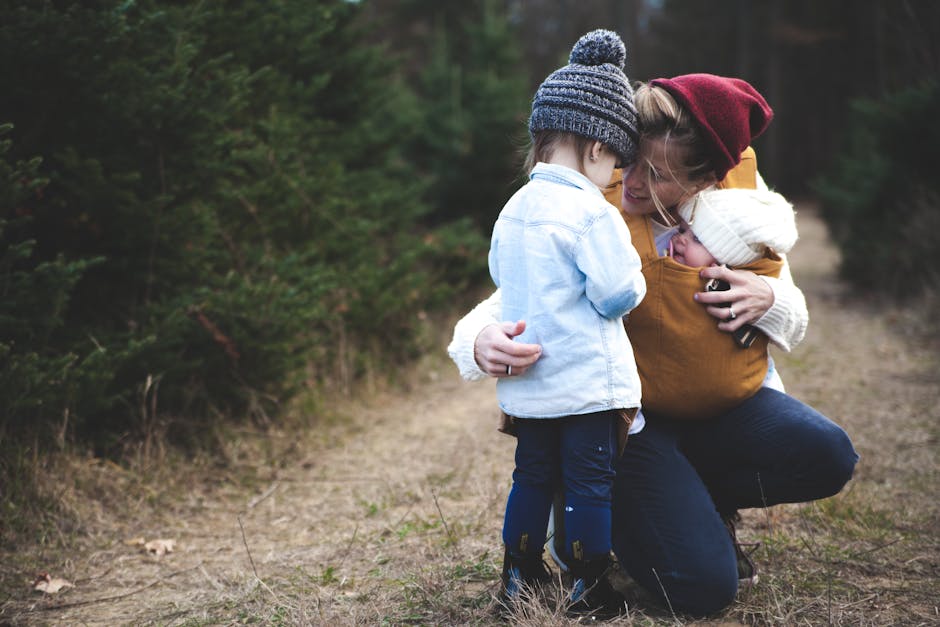
Photo by Josh Willink via Pexels
The toddler hiking stage requires patience with pace. Toddlers stop for everything: interesting rocks, puddles, insects, sticks. This is not a problem to manage, it's the experience. Trying to maintain an adult hiking pace with a two-year-old produces frustration on both sides. Budget triple the time you'd normally allow and treat it as an explore rather than a hike to a destination.
Trail surface matters more for toddlers than for any other hiking group. Loose rock, exposed roots, and steep camber are all significantly more hazardous for a small person with developing balance and short legs. Start on maintained paths with compacted surfaces and no significant exposure. Forest trails with good drainage and minimal technical difficulty are ideal for the early walking years.
What Parents Should Wear
Parents carrying children on the trail need clothing that works across a full day of physical activity, handles variable weather, and is comfortable enough to wear for six or more hours without becoming irritating. The carry position puts specific pressure on certain areas depending on the carrier type, and rough fabric at the collar or shoulders becomes genuinely unpleasant over time.
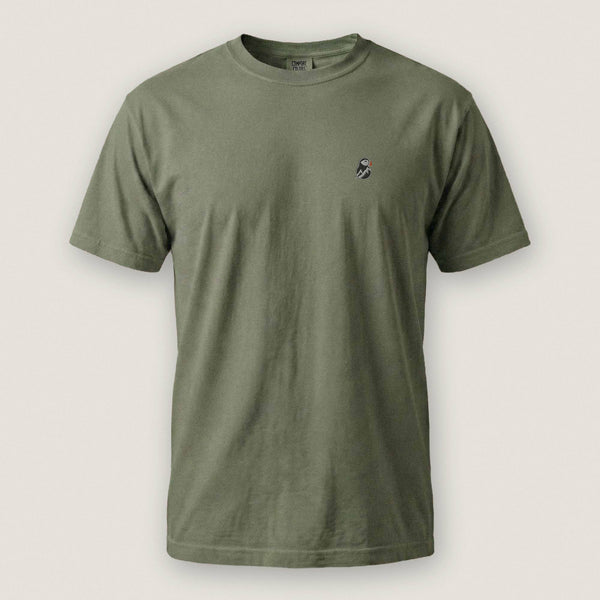
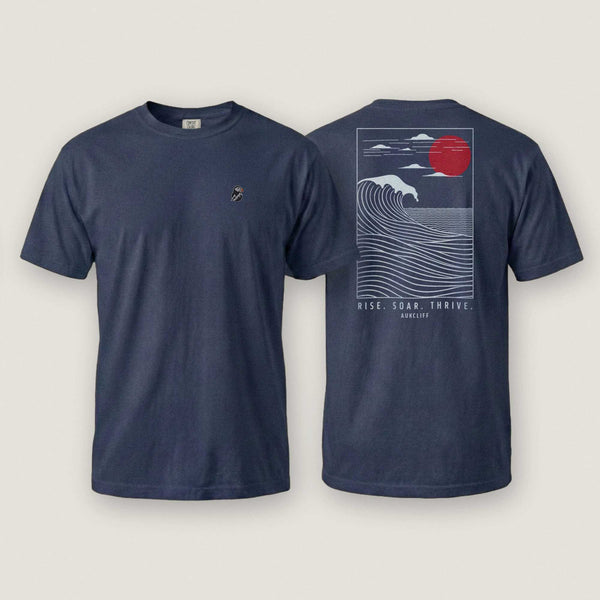
A quality heavyweight cotton tee as a base layer is a reliable starting point for mild to warm conditions. The Simple T-shirt on the premium blank is 6.1 oz garment-dyed cotton, soft and structured. It holds its shape over a long active day and stays comfortable against the skin even when you're working hard. The Coastal Waves T-shirt is the same construction with a coastal design, part of the broader outdoor t-shirt range.
For headwear, the Organic Trailblazer Dad Hat is worth considering. Sun protection for parents often gets neglected when you're focused on managing the baby's sun exposure. A hat that covers the face and back of the neck handles a significant portion of your UV load without requiring sunscreen reapplication through the day.
What to Carry for Baby on the Trail
The kit list for hiking with a baby is longer than hiking solo but can be kept manageable with a bit of organisation. The essentials are:

Photo by Tatiana Syrikova via Pexels
Water for yourself and any older children, formula or pumped milk if relevant, at least two nappy changes, a lightweight change mat, wet wipes, a sun hat and sun protection for the baby, a warm layer for the baby for when you stop moving and they cool down, emergency snacks if they're eating solids, and your standard adult kit: first aid, rain layer, navigation. A nappy bag that fits inside or attaches to a frame carrier keeps everything consolidated and reduces the number of bags you're managing.
For the parent's own clothing and kit, the AukCliff Essentials collection covers the core apparel pieces. The consistent sizing across the range, XS to 3XL unisex on all tees, means you can order for yourself and know the fit will be predictable based on previous experience with the brand.
Trail Selection for Families with Young Children
The best family hiking trails share a few characteristics: clear, maintained path with minimal exposure to drops or technical sections; a defined destination rather than a vague loop; accessible start point with parking and ideally toilet facilities; and terrain that matches the youngest and least experienced member of the group.
For carrier hiking with infants, trail quality matters primarily for the parent's footing. You're carrying extra weight and your centre of gravity is shifted. Uneven, muddy, or loose terrain is significantly more tiring and slightly more hazardous than it would be unloaded. Paved or hard-packed tracks, gentle woodland paths, and wide forestry tracks are all good starting points.
For toddler hiking, short loops with something interesting at the end, a stream, a viewpoint, a particular rock formation, give the child a goal to aim for and a reason to keep moving. The journey matters too, but having a landmark destination makes the inevitable "are we there yet" question answerable in concrete terms rather than vague encouragement.
FAQ
How old does a baby need to be to go hiking in a carrier?
There is no minimum age restriction on outdoor hiking with a newborn in a suitable carrier, provided the baby has adequate head and neck support, is in an ergonomic M-position, and you are checking on them regularly. Most parents start with short, mild outings from four to six weeks once their own recovery allows it.
What carrier type is best for hiking with a baby?
A soft structured carrier or woven wrap works best for young babies who need close support and the inward-facing position. For babies six months and up with good core strength, a framed backpack carrier distributes weight more efficiently for longer distances. Many families use both: soft carrier for early months, frame carrier from sitting age onwards.
What age can children walk a full trail themselves?
This varies significantly by child, but a realistic starting point for genuine unaided trail walking is around three to four years old for short, easy trails of 1 to 3 km. By age five or six, confident children can manage 5 to 8 km on moderate terrain. Don't rush the transition. Carrying them when they're tired or the terrain is difficult is always an option.
What should I bring for sun protection when hiking with a baby?
For babies under six months, use physical barriers: a hat with a brim, a carrier sun cover, and shade where available. Avoid direct sun during peak hours. For babies over six months, SPF 30 or higher baby sunscreen on exposed skin, plus a hat, plus shade breaks. For parents, a hat is the most practical ongoing sun protection for a long active day outdoors.
Is it safe to hike in cold weather with a baby?
Yes, with appropriate layering. A baby in a carrier draws warmth from your body but still needs their own insulation. Dress them one layer warmer than you would dress yourself at that temperature. Check their extremities, hands, feet, and ears, regularly. A wind-resistant carrier cover helps significantly in cold or windy conditions. The primary risk is cooling when you stop moving, so have a warm layer accessible without having to fully unpack.
Related Reading
Wear it out there
Simple
$75.99
Coastal Waves
$101.99
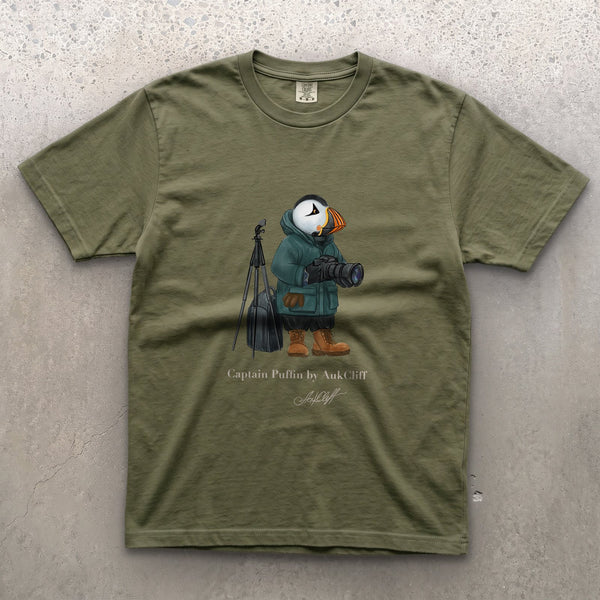
Captain Puffin Wildlife Photographer
$84.99
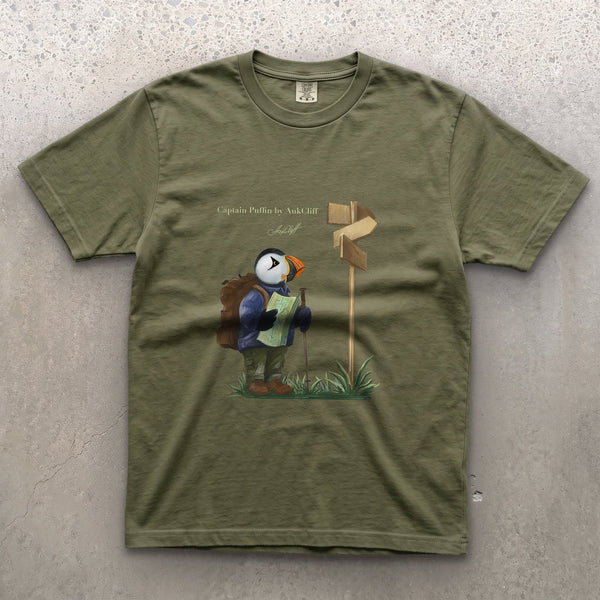
Captain Puffin Hiker
$84.99
Get the next one
New designs as they land, and the stories behind them. Unsubscribe in one click.