

Most first dates follow a predictable script. Sit across from each other at a restaurant or bar. Stare at menus. Ask the same questions. Wonder if the other person is actually like this in real life. It is not a great format for getting to know someone, and most people know it.
Hiking solves most of these problems without you having to think too hard about it. You are side by side instead of face to face. You have a shared goal and something to look at and talk about. The physical setting does a lot of the conversational heavy lifting. And according to Tinder's 2024 survey data, 39% of singles already plan outdoor activities for first dates, so the idea is not unconventional anymore. It is becoming the default for a reason.
This guide covers why hiking works as a first date, how to plan it well, what to wear, what to bring, and what to do if things go sideways.
The Psychology Behind Why Hiking Works
There is solid research behind the intuition that shared physical activity builds connection. A study by Arthur Aron and colleagues published in the Journal of Personality and Social Psychology found that couples who participated in exciting physical challenges reported significantly higher relationship satisfaction than those in routine activities. The physiological arousal from moderate exercise, the mild challenge, the shared experience of completing something together, all of this transfers positively into how people feel about each other.
Side-by-side conversation is also fundamentally different from face-to-face. When you are walking, there is no pressure to maintain constant eye contact. Silences feel comfortable because you are both looking ahead at the trail, not at each other. This removes one of the most anxiety-inducing parts of a first date: the performance of sustained eye contact and continuous talking.
You also learn real things about a person on a trail. How they handle a steeper section. Whether they move fast or prefer to look around. Whether they are considerate of other hikers. What they notice. These are not things you learn in a restaurant.
Choosing the Right Trail
Trail selection is where most hiking first dates fail before they start. The goal is to choose a trail that creates a good experience for both people, not to impress your date with how fit you are.

Distance and difficulty: Unless you already know your date is an experienced hiker, aim for something in the 5 to 10 km range with modest elevation gain. You want enough walking that conversation flows naturally and you feel like you have done something, but not so much that either person ends up exhausted or out of their depth. A trail that is too easy can feel underwhelming. A trail that is too hard creates stress and discomfort, neither of which helps.
Destination or feature: Trails with a clear destination, a viewpoint, a waterfall, a summit, or a lake, give the date a natural structure. You walk out, you arrive somewhere worth arriving, you take a moment, then you walk back. This prevents the awkward question of when to turn around.
Accessibility: Consider how you are both getting there. Trailheads in locations that require driving together for 45 minutes create an early commitment that may not suit everyone. Accessible trailheads close to public transport or that can be reached with a reasonable drive are better for a first outing.
Cell coverage: Check in advance. It is worth knowing whether you are heading somewhere remote. If your date is not an experienced outdoors person, knowing there is limited cell coverage might affect their comfort level. Mention it beforehand rather than letting them find out on the trail.
What to Wear on a Hiking Date
The usual hiking advice applies: dress in layers, wear broken-in footwear, check the forecast. But there is a social dimension to what you wear on a first date that does not exist on a solo hike.
Avoid looking like you are either going into the Himalayas or going to the shops. Excessive technical gear for a moderate trail can read as try-hard. Casual cotton that will soak through with sweat and weigh you down after ten minutes is the other extreme. The middle ground is comfortable, considered, and practical.
A quality heavyweight tee is the right base layer for most conditions. The Embrace the Mountain Call Tee is a 6.1oz garment-dyed premium tees that breathes, holds its shape all day, and does not look like sportswear. For trails where you want something with a bit more personality, the Captain Puffin Wildlife Photographer T-Shirt features hand-drawn art by New Zealand artist Maria and tends to be a conversation starter in its own right. The Coastal Waves T-Shirt works well for coastal trails and beach walks. Browse the full outdoor T-shirt collection for options across all fits and prints.
Footwear: trail runners or low hiking boots are ideal. Avoid brand-new boots you have not walked in before. Any trail with decent surface and no significant scrambling can be done comfortably in a good trail runner.
What to Bring
You do not need to carry a full expedition pack. You do need to be prepared enough that neither person ends up uncomfortable.
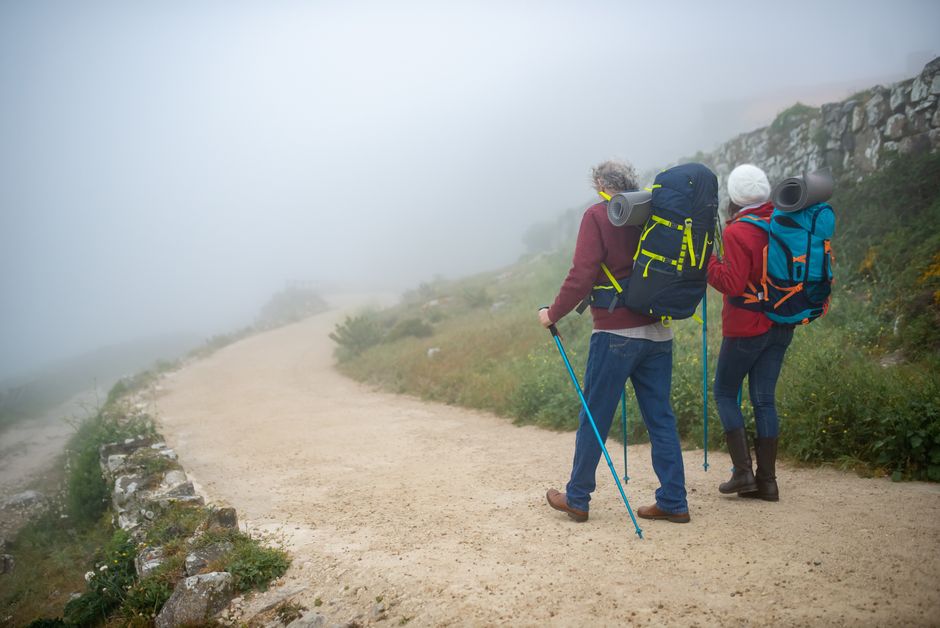
Photo by Kampus Production via Pexels
Water: Bring more than you think you need. 1.5 to 2 litres each for a half-day hike in mild conditions. Dehydration makes people quieter and more irritable, neither of which helps a first impression.
Snacks: Food is a reliable mood leveller. Trail mix, fruit, a good sandwich at the viewpoint. Sharing food is inherently social. Bringing something decent shows you thought about it.
Sun protection: Hat, sunscreen, sunglasses. Sunburn on a first date is a memorable experience for the wrong reasons.
Light layer: Temperature at elevation or in exposed areas changes faster than in town. A packable layer that fits in the bottom of a daypack is easy insurance.
Basic first aid: A small kit with plasters and antiseptic wipes. More relevant if you are heading somewhere remote than a busy local trail, but worth having.
Research from Strava found that athletes who exercise in pairs go longer in both time and distance than solo athletes. The implication for a first date is interesting: you may well end up spending more time than planned on the trail because the activity itself encourages it. Factor that into your logistics.
Etiquette on the Trail
Trail etiquette matters both for the experience and for what it signals to your date. A few basics:
Yield to uphill hikers: If you are descending, let uphill hikers pass. It is standard and courteous.
Pass on the left, announce yourself: When overtaking slower walkers or runners coming from behind, a quick "passing on your left" is normal and appreciated.
Pack out what you bring in: Leave no trace is not optional. How someone treats the environment they are in tells you something about them. If your date litters, that is data.
Keep noise reasonable: Other trail users are there to enjoy the outdoors too. Loud music from a portable speaker is generally not welcome on a busy trail.
Dog etiquette: If you are bringing a dog, or your date is, confirm this in advance. Not everyone is comfortable around dogs, and some trails have restrictions.
Handling the Conversation
One of the reasons hiking works is that you do not need to fill every silence. The trail does some of the work for you. But a few conversation principles help.

Photo by PNW Production via Pexels
Ask questions that get beyond the standard script. "What was the last thing you did that surprised you" tends to go somewhere more interesting than "where did you grow up." Noticing things on the trail gives you natural material: wildlife, a good view, an interesting tree. It is not forced conversation, it is just paying attention to where you are.
Pew Research data shows that 30% of US adults have used dating apps, meaning many first dates now start with people who have exchanged messages but never met. Hiking gives both people something to do with the slight initial awkwardness of meeting in person for the first time. The task of walking together helps the transition from digital to real.
Backup Plans
Have a weather contingency. Check the forecast the morning of and the night before. If there is a genuine chance of heavy rain, decide in advance whether you are happy to hike in it or would prefer to reschedule. Rain hiking can be great but it needs to be a mutual call, not a surprise.
Have a plan for afterwards. A trail that ends near a good coffee place or a spot for lunch gives the date a natural extension if it is going well. You do not need to commit to it in advance, but knowing it is there as an option gives you flexibility.
The Captain Puffin Hiker T-Shirt features hand-drawn artwork designed in New Zealand and is the kind of shirt that tends to generate its own small conversations on the trail. Sometimes that is the easiest icebreaker of all.
Frequently Asked Questions About Hiking as a First Date
What if my date is not a confident hiker?
Choose a well-maintained, clearly marked trail with minimal technical sections. Mention the distance and approximate time in advance so they can prepare. Bring extra water and snacks so they do not need to worry about it. The goal is for both people to finish the trail feeling good, not to put in a performance. An easier trail done comfortably is better than a harder trail done miserably.
Is hiking a safe first date option?
Most local and well-trafficked trails are perfectly safe. For a genuine first meeting with someone you do not know well, choose a busy trail rather than something very remote. Tell someone where you are going and when you expect to be back. This is basic outdoor sense, not paranoia, and applies regardless of the date context.
How long should a hiking first date be?
Two to three hours of hiking is a good target. Long enough to have real conversations and feel like you have done something together. Short enough that if it is not going well, there is a natural endpoint in sight. A 7 to 8 km trail with a destination typically hits this window comfortably.
What if the conversation runs dry?
This is much less likely on a trail than at a table because you always have the environment to work with. Point out something you notice. Ask what they think about what you are looking at. If a silence falls, walking fills it without it feeling awkward. That said, a few prepared questions in mind never hurts. Think of things you are genuinely curious about rather than standard interview questions.
Should I split costs on a hiking first date?
Most hiking is free or low cost, which removes a lot of the awkwardness around who pays. If there is a parking fee or a hut cost, splitting it is natural and easy. If you extend the date to coffee or lunch afterwards, the usual social conventions around who pays apply. The low inherent cost of a hiking date is part of what makes it a good format for a first meeting.


