

New Hiking Gear 2026: What to Add to Your Kit
Hiking gear marketing tends to oversell novelty. Every season there are "revolutionary" new products that turn out to be incremental improvements on things that already worked fine. The global hiking gear market was valued at USD 8.43 billion in 2025 and is forecast to reach USD 11.45 billion by 2030, according to Mordor Intelligence, driven largely by record outdoor participation and ongoing material improvements. Some genuine developments do come through, but sorting them from the noise requires knowing what problems you actually have on the trail rather than what marketing copy tells you that you have.
This is a practical guide to what's worth adding to your kit in 2026, what categories have seen real development, and what remains unchanged because nothing needed changing.
What's Actually Changed in Hiking Gear This Year
The most meaningful developments in recent years have been in lightweight insulation, trail footwear, and navigation tools rather than core clothing. Synthetic insulation fills have gotten lighter and more packable without sacrificing meaningful warmth. Several boot manufacturers have refined their midsole compounds to improve trail feel without sacrificing durability. GPS devices have gotten better satellite acquisition and longer battery life as standard.
In clothing, the changes are quieter. Technical fabrics continue to improve in specific performance metrics (moisture transfer rates, stretch recovery, face abrasion resistance) but the gains are incremental. The honest assessment for most day hikers: your kit from three years ago is probably still performing well, and the reason to upgrade is wear and tear, not because something genuinely better has arrived.
Where gear selection genuinely matters is at the edges of your comfort zone: the routes where conditions can shift rapidly, overnight trips where weight and packability matter, or specific technical terrain that rewards specialist equipment. For general trail hiking in reasonable conditions, most competent gear from reputable brands performs adequately.
Base Layers: The Case for Heavyweight Cotton
This will surprise some people used to the standard advice that cotton kills. The "cotton kills" rule applies specifically to cold, wet conditions where cotton's lack of insulation when wet can lead to hypothermia. In those conditions, the advice is correct. But it covers a lot of ground that doesn't apply to most hiking most of the time.

For lower-intensity hiking in moderate conditions, for summer trails, for warm-weather backpacking, heavyweight garment-dyed cotton is genuinely good trail wear. The advantages are real: it's comfortable against the skin in a way most synthetics aren't, it regulates temperature reasonably well in non-extreme conditions, it handles sun exposure better than thin synthetics (less UV-accelerated degradation, better UPF performance at heavier weights), and it's durable over years of washing without the pilling and delamination problems that affect many performance fabrics. Consumer demand for versatile clothing that transitions from trail to everyday use is among the fastest-growing segments in the outdoor apparel market, which Fortune Business Insights valued at approximately USD 18.44 billion globally in 2025.
The Simple T-shirt on the premium blank is 6.1oz heavyweight garment-dyed cotton, XS-3XL unisex. It's the kind of piece that works as a trail base layer on day hikes, as a camp shirt on backpacking trips, and as everyday wear. Nothing technical about it, but that's the point. For trails where you don't need technical performance, a shirt that feels good and lasts is a better choice than a thin synthetic that feels like wearing a plastic bag.
The Embrace the Mountain Call Tee works similarly. The graphic adds something, it's the kind of design that communicates hiking identity without being a corporate logo or a generic mountain silhouette. On a trail or in a hut, wearing something with character is different from wearing something that looks like standard-issue outdoor gear.
Mid Layers: What to Look For
The mid layer is where most people underinvest. The thinking tends to go: base layer to manage sweat, shell to manage weather, mid layer is whatever's in between. But the mid layer is often what you're wearing most of the time on the trail, when you're not sweating hard enough to need just a base layer and not getting rained on hard enough to need a shell.
For most three-season hiking, a mid layer needs to do three things well: pack small when not needed, add meaningful warmth when worn, and work under a shell without creating friction or restricting movement. Fleece is the most proven material for this. Down fills more of a niche for static situations and cold conditions rather than active hiking.
The Peak Junkie Hoodie (premium M2580, 9oz premium fleece) is heavier than most mid layers and isn't trying to be a compressible packable layer. It's a substantial hoodie, the kind you wear at camp, on slower trail days, or at the trailhead before you start moving. The weight means it earns its place as a camp layer rather than a hiking layer, but it earns that place genuinely. There are nights in the mountains when a heavy fleece hoodie is exactly what you want.
Navigation: Still the Most Important Skill
Every year the navigation tool options improve and every year the number of people who get lost in places with good trail infrastructure stays steady. The tools aren't the problem. Skill is the problem, specifically the gap between digital navigation confidence (knowing how to use AllTrails) and actual navigation ability (knowing how to read terrain and find your way when the app fails). Context here: in 2024, approximately 63 million Americans went hiking, the most popular outdoor activity tracked by the Outdoor Industry Association, and overall outdoor participation hit a record 181.1 million Americans, the ninth consecutive record year. More hikers on the trails means more people relying on apps in terrain they don't fully know.
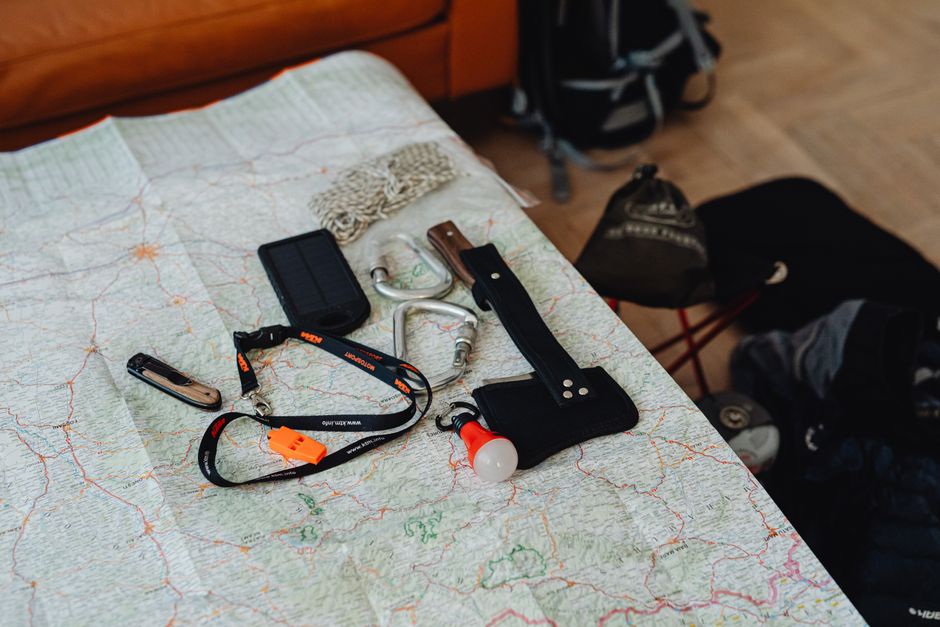
Photo by www.kaboompics.com via Pexels
The most useful addition to your kit in 2026 is not a new GPS device; it's a map and compass course and the habit of using them. The Garmin inReach and SPOT satellite communicators remain the gold standard for emergency communication in areas without cell coverage. If you hike in genuinely remote terrain, one of these is worth the cost. For most trails, your phone with AllTrails downloaded offline is adequate.
What's improving is offline map quality. Both AllTrails and Komoot have improved their offline map resolution and their contour rendering, which makes terrain interpretation more accurate. If you're using these apps offline (which you should be, cell coverage on trails is never guaranteed), download your maps before you leave rather than relying on cached partial data.
Accessories: Patches, Stickers, and Trail Culture
Patch and sticker culture in the hiking and outdoor community is a real thing and has been for decades. National Park passport stamps, state highpoint stickers, trail-specific patches on packs and hats, these are small physical markers that tell a story about where you've been. They're also just genuinely enjoyable to collect.
The Trailblazer Patch from AukCliff fits this category. An embroidered patch you can add to a pack, jacket, or hat. The Captain Puffin character (all designs hand-drawn by artist Maria) is distinctive enough that people ask about it, which leads to actual conversations on the trail about the places and ideas behind the design. AukCliff is designed in New Zealand and fulfilled through trusted production partners worldwide.
Pack patches are practical too: they cover wear holes and marks on older packs, personalise gear that otherwise looks identical to half the people on the trail, and survive conditions that stickers don't. A well-placed embroidered patch on a pack can outlast the pack itself.
Footwear and Socks: Where to Spend Your Money
The single biggest gear impact on trail comfort is footwear. This hasn't changed. Trail runners have largely displaced traditional hiking boots for most day hiking applications, offering better ground feel, lighter weight, and faster drying at the cost of ankle support and longevity. Whether to use trail runners or boots depends on terrain type and personal preference, not on any objective superiority of one over the other.
Photo by www.kaboompics.com via Pexels
Socks are worth spending real money on. Merino wool socks from Darn Tough (Vermont, lifetime guarantee), Smartwool, or equivalent remain the best option for most hikers. They regulate temperature, resist odour, and are durable enough to actually use the lifetime warranties some brands offer. A year of trail use will tell you whether a synthetic or merino sock works better for your foot chemistry and sweating patterns. Some people run hot and prefer synthetic; most find merino more comfortable over longer efforts.
Insoles are underrated. Most stock footbed insoles in hiking shoes provide inadequate arch support for people who pronate or have high arches. After-market insoles (Superfeet Green, Sole, Currex) can transform a shoe that causes foot fatigue into one that doesn't. Worth trying before deciding a perfectly good pair of shoes don't fit.
The Gear That Doesn't Change
Some gear categories are stable because they already work well. A well-made trekking pole design from a decade ago is still a good trekking pole. A quality headlamp works the same way it always has, with battery life and lumen output improvements that are genuinely useful rather than marketing-driven. A good pack fits well because of fit systems and fabric quality, neither of which has fundamentally changed.
The best approach to gear buying is a simple one: buy quality within budget, use it until it fails, then replace it with the best current option at that time. Buying ahead of need on the assumption that next year's version will be better is usually wrong. The gear you have and know well is more valuable than the gear you just bought and haven't used yet.
Browse the AukCliff T-shirts collection and the Accessories collection for trail wear and patches built for people who actually use them.
FAQ
Is cotton safe to wear hiking?
Cotton is appropriate for lower-intensity hiking in warm to moderate conditions where getting wet and cold is not a significant risk. In cold, wet conditions where hypothermia is possible, synthetic or wool base layers are safer choices because they retain more insulation value when wet. Know your conditions and choose accordingly rather than following blanket rules either way.
What's the most important piece of hiking gear to upgrade?
Footwear, if it's causing pain or blisters. Navigation, if you're relying entirely on phone signal. Pack fit, if you're getting shoulder or hip pain on longer days. Beyond these three, most upgrades are incremental improvements on kit that already works. Start with the bottleneck in your system rather than buying broadly.
How long should hiking boots last?
Quality hiking boots last between 800 and 1,600km of use depending on terrain type, care, and construction. Trail runners typically last 500-800km before the midsole compresses and loses cushioning. Track your mileage if you want an objective measure, or look for signs: midsole compression visible when looking at the boot from behind, outsole lugs worn below 3mm depth, upper delamination, or structural collapse in the heel counter.
Are embroidered patches durable on a hiking pack?
Embroidered patches sewn onto pack fabric are very durable, surviving conditions that would destroy stickers. Iron-on patches are less reliable on synthetic fabrics; sewing is always more secure. The thread quality determines lifespan; quality embroidery on a stable backing can outlast the pack it's attached to.
What hiking apps work without cell service?
AllTrails Pro and Komoot both support offline map downloads. Gaia GPS has particularly strong offline capability and is popular with backcountry users who need detailed topo maps. Download your maps before you leave; don't rely on cached data from previous visits as it may be incomplete. Having a backup paper map for technical or remote terrain remains good practice regardless of what your phone can do.


