
Atlantic Puffin Conservation and Clothing: Why These Birds Matter
Are Atlantic Puffins Endangered?
The Atlantic puffin is listed as Vulnerable on the IUCN Red List, one step below Endangered. The global population sits between 12 and 14 million mature individuals according to BirdLife International, but the trend is downward in most key regions. Iceland's puffin population has declined by approximately 70% since 1975 (UNRIC). The Farne Islands off the Northumberland coast recorded a 23% drop in breeding pairs in a single recent year. These are not slow declines, they are sharp enough to register within a generation.
The main pressures are food-related. Sandeels are the primary diet of puffins during breeding season, and overfishing of sandeels in the North Sea reduced food availability at a critical time. The UK banned industrial sandeel fishing in 2024, a meaningful policy shift that the RSPB and seabird researchers had pushed for across several years. The UK holds around 9% of Europe's breeding puffins, so this ban has real population-level consequences. Climate change is adding additional pressure by shifting ocean temperatures and altering where prey fish concentrate, which forces parent birds to fly farther and return to the nest less reliably.
Despite those pressures, puffins remain one of the most resilient and watched seabirds in the Northern Hemisphere. Their population is not in freefall, but the direction is wrong, and the organisations working to reverse it need public awareness as much as they need funding.
Where Can You See Puffins?
Atlantic puffins breed on cliff edges and in burrows on islands and headlands across the North Atlantic. Iceland is the single most important country for puffins in the world, hosting around 2 million breeding pairs each summer, roughly 40% of the global population. The Westman Islands off Iceland's south coast hold around 1.1 million of those birds at peak season.

In the UK, the Farne Islands in Northumberland, Skomer Island in Wales, and Handa Island in Scotland are the most accessible colonies. The Farne Islands in particular have been monitored closely since the 1970s, which is why the decline data is so precise. Norway's Runde Island and the coast of Iceland are the most visited puffin destinations in Europe for wildlife tourists. Our guide to the best places to see puffins in 2026 covers each location in practical detail. In the western Atlantic, Newfoundland holds major colonies, and Project Puffin in Maine has restored breeding populations to islands where puffins had been absent for over a century.
Most people who have seen puffins in the wild remember exactly where it was. The experience tends to stay with you. The birds stand on cliff edges with an air of serious purpose, flap with a wing speed that seems physically impossible for their size, and carry sandeels back to the burrow in quantities that look impractical. They are monogamous and return to the same mate and the same burrow year after year, which contributes to the sense that puffins are committed to things in a way most birds are not.
How to Support Puffin Conservation
The organisations doing the most direct puffin conservation work are Project Puffin (run by Audubon Society in Maine), the RSPB in the UK, and the Puffin Trust in Iceland. Project Puffin has restored breeding colonies to islands in the Gulf of Maine that had been puffin-free for over 100 years, using decoys and recorded calls to attract pioneering birds. That is the kind of active, multi-decade field work that actually moves numbers.
Supporting these organisations through donations, citizen science reporting, or visiting their reserves and paying entry fees all contribute directly to field programmes. Beyond direct support, reducing your ecological footprint in the areas these birds depend on, being mindful of boat traffic near colonies, not disturbing nesting birds on cliff paths, has a practical effect at the local level.
Clothing that carries puffin imagery does something different. It creates ongoing conversations. Over 20% of AukCliff customers collect three or more pieces from the Captain Puffin range, that level of commitment reflects a genuine connection, and the conversations those pieces start are a consistent entry point into puffin conservation for people who would not otherwise read a BirdLife report.
Captain Puffin: Hand-Drawn Art for Outdoor People
AukCliff's Captain Puffin character was hand-drawn by artist Maria. Each version places the puffin in an outdoor role: wildlife photographer, hiker, van life adventurer, bush pilot. The artwork is not AI-generated and not stock art. Maria's line work has a quality that reads immediately: slightly loose, expressive, and genuinely funny without trying too hard.
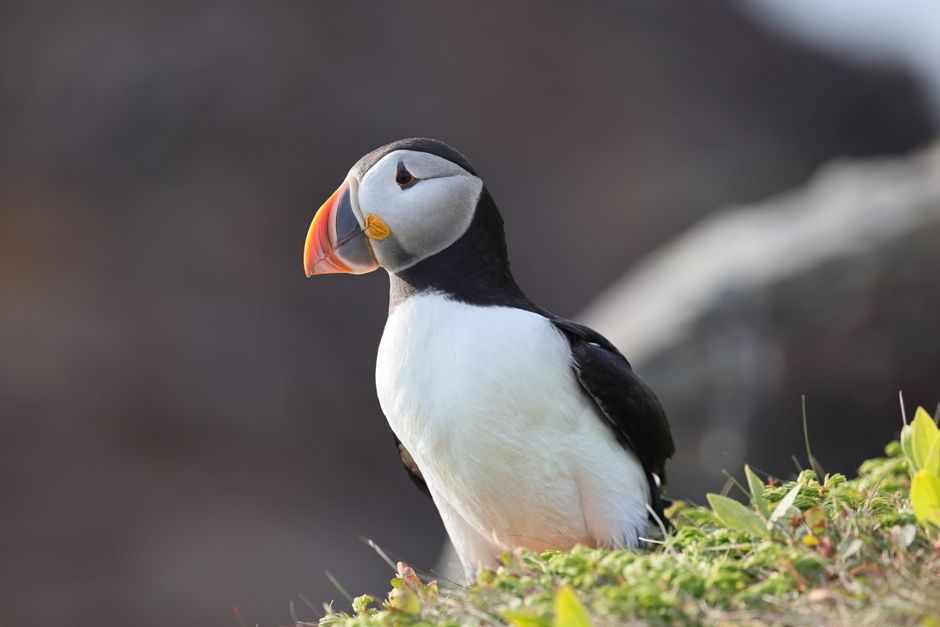
Photo by teyi 徐 via Pexels
The four personas speak to different outdoor communities. The wildlife photographer persona resonates with birders and nature photographers who spend time in the field with long lenses. The hiker speaks to people who approach wild places on foot. Each version is the same puffin doing the thing the wearer does, which is why collectors often describe finding versions of themselves in the different characters.
The Captain Puffin Clothing Range
The range covers two main garment types: T-shirts on premium blanks (6.1oz garment-dyed heavyweight cotton) and sweatshirts on premium M2580 fleece (9oz premium fleece). Both are substantial garments that will last years.
The Captain Puffin Wildlife Photographer T-Shirt is one of the most popular pieces in the range. Garment dyeing gives it a faded, vintage feel that pairs naturally with outdoor aesthetics and improves with every wash.
The Captain Puffin Hiker T-Shirt uses the same blank with the hiker character. Wearing it on an actual trail tends to prompt conversations with other hikers who notice the detail in the art.
In sweatshirts, the Captain Puffin Wildlife Photographer Sweatshirt and the Captain Puffin Hiker Sweatshirt are built for genuine cold-weather use. At 9oz, they sit between a mid-layer fleece and a casual jacket in warmth. The weight means they hold their shape over years of wear.
The Geometric Puffin Trekker T-shirt takes a different approach with a graphic, geometric treatment of the puffin form. A good option for collectors who want variety in art style, or for people who prefer a more abstract approach to wildlife imagery on clothing.
The full Captain Puffin collection is the best place to see current pieces and what is available across both garment types.
Collector Pricing and Shipping
AukCliff offers free shipping on orders of three or more items. If you are planning to collect multiple pieces, combining them into a single order eliminates shipping costs across the range. Orders of four or more pieces attract collector pricing, reducing the per-item cost further.
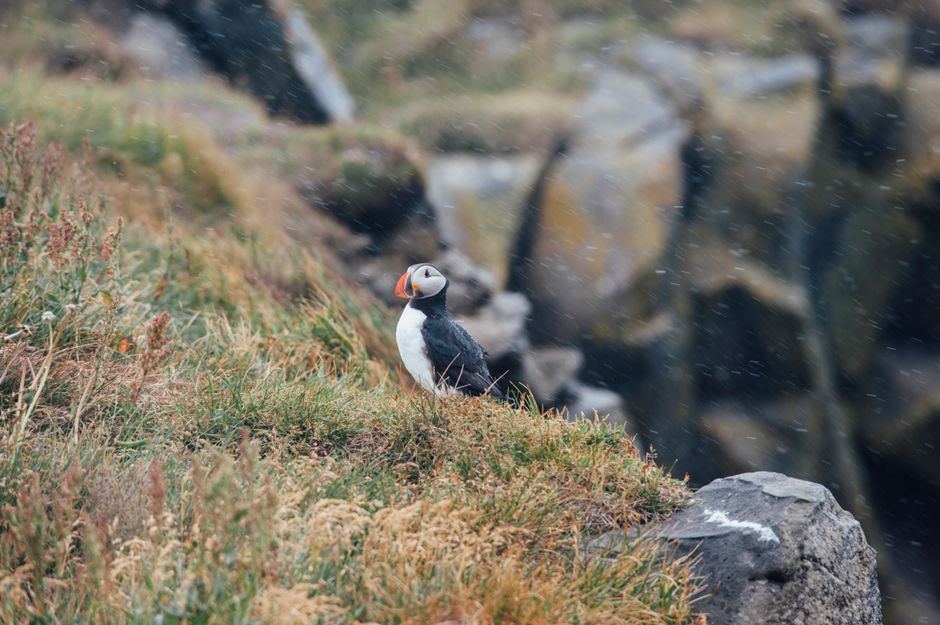
Photo by Benedetta Taddei via Pexels
FAQ
Is the Captain Puffin artwork AI-generated?
No. Every Captain Puffin design is hand-drawn by artist Maria. The line work is original and each persona is designed from scratch. This is part of why the character has a consistent personality across pieces: there is one artist's sensibility running through all of them.
What fabric are the Captain Puffin T-shirts made from?
All Captain Puffin T-shirts are printed on premium blanks: 6.1oz, 100% ring-spun cotton, garment-dyed. Softer than a standard pre-dyed blank from the first wear, and it improves with washing. The 6.1oz weight is substantially heavier than most fast-fashion T-shirts, which run at 4.5-5oz.
How many pieces are in the Captain Puffin collection?
The core range covers four outdoor personas across T-shirts and sweatshirts, with additional pieces in different art styles. The full current range is visible in the Captain Puffin collection, and our Captain Puffin collection guide explains the story behind each character. New pieces are added periodically.
Is it better to order multiple Captain Puffin pieces at once?
Yes. Free shipping applies to orders of three or more items, and collector pricing applies from four items. If you already know you want multiple pieces, combining them in a single order is the most economical approach.
Wear it out there
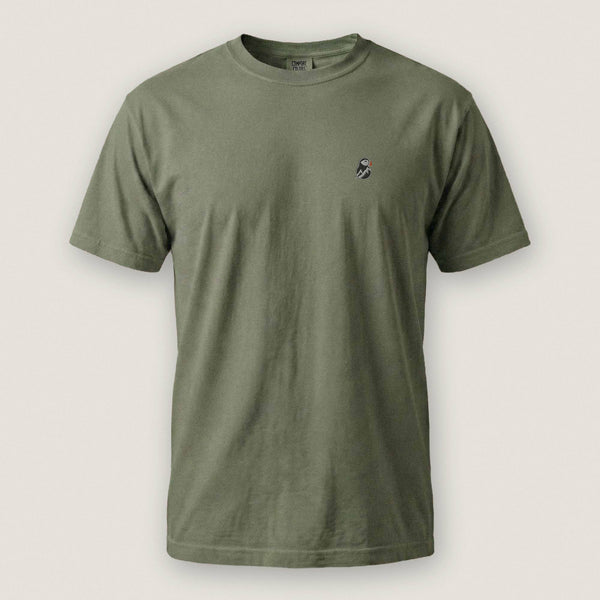
Simple
$75.99
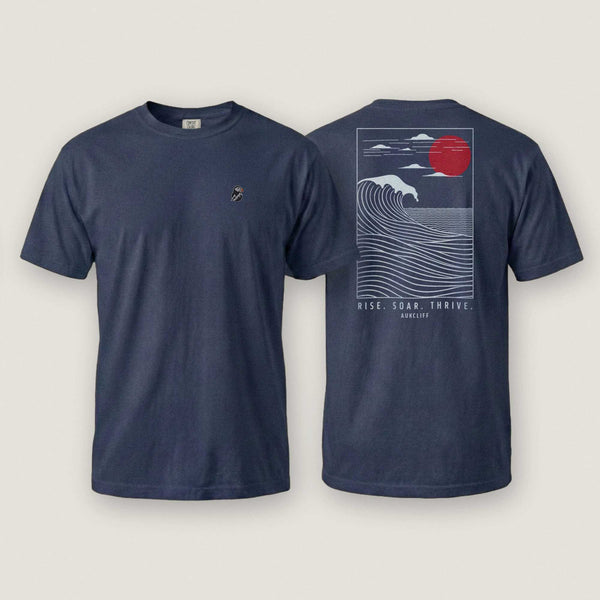
Coastal Waves
$101.99
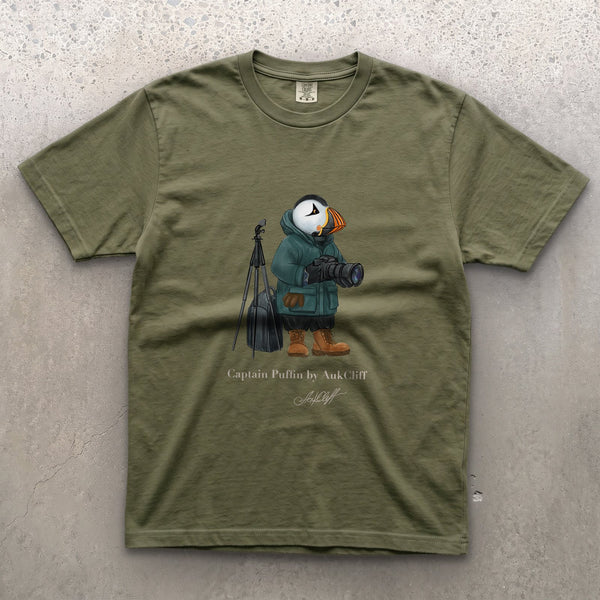
Captain Puffin Wildlife Photographer
$84.99
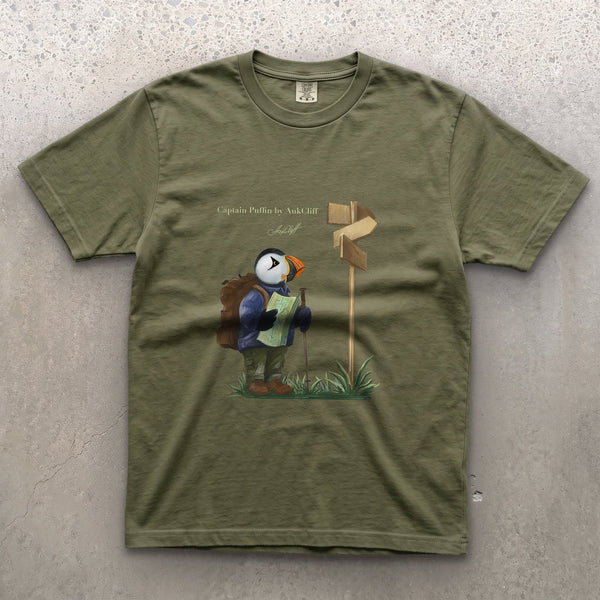
Captain Puffin Hiker
$84.99
Get the next one
New designs as they land, and the stories behind them. Unsubscribe in one click.