
Puffin Season 2026: Where to See Them This Year
If you want to know where to see puffins in 2026, the window is narrow and the locations are specific. Atlantic puffins spend most of their lives far out at sea, invisible to the rest of us. But from late April through early August, they come ashore to breed, returning to the same clifftop colonies they've used for decades. Get the timing right, get to the right place, and you'll be standing within metres of one of the most visually striking birds on the planet.
This guide covers the best puffin-watching locations across the North Atlantic, what to expect when you arrive, and how to make the most of the season.
When Puffin Season Starts (and Ends)

Photo by Kevin Morgans
Puffins begin arriving at their breeding colonies from late April. Numbers build through May. Peak activity, the best time to visit, runs from late May through July. By mid-August, most birds have left the cliffs. Chicks (pufflings) fledge at night, making their way to the sea without any help from the adults. The colony empties quickly after that.
If you're planning a trip specifically around puffins, target June and early July. Birds are present in large numbers, daylight hours are long in northern latitudes, and the adults are making constant fish runs to feed their chicks, which means activity all day.
The Best Places to See Puffins in 2026
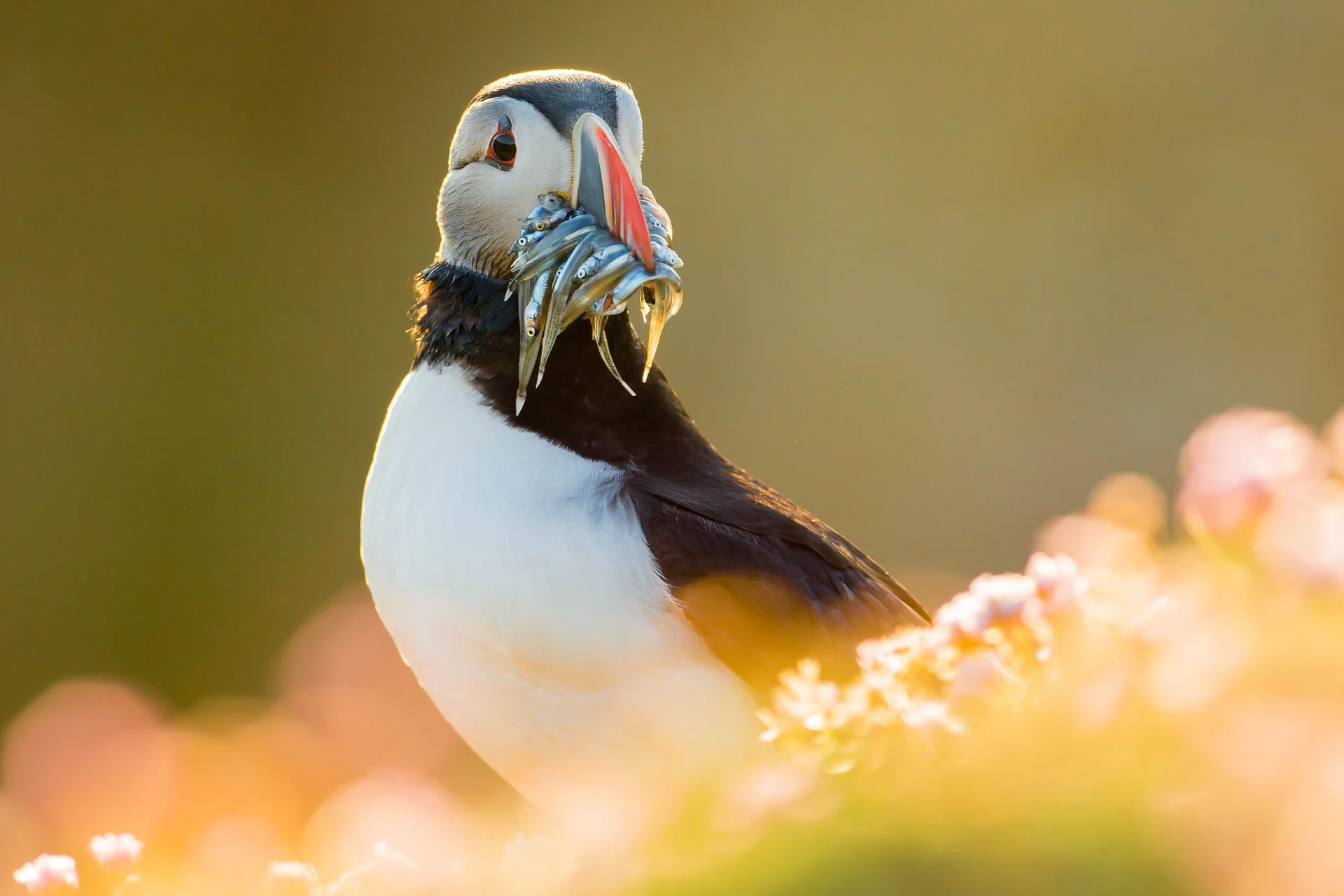
Photo by Kevin Morgans
Skomer Island, Wales
Skomer holds one of the largest puffin colonies in southern Britain, around 6,000 breeding pairs. It's a 15-minute boat crossing from Martin's Haven in Pembrokeshire. Day visitors land in the morning and must leave by late afternoon, which keeps foot traffic manageable. You do not need a telephoto lens here. Puffins stand on the clifftop paths within arm's reach, largely unbothered by people. It's one of the most accessible puffin experiences in the world.
Booking is essential. Day trip permits sell out weeks in advance. The Pembrokeshire Marine Special Area of Conservation manages access, book directly through the Wildlife Trust of South and West Wales. Season runs approximately April to late July.
Látrabjarg, Iceland
The westernmost point of Iceland and Europe. Látrabjarg is a 14-kilometre sea cliff that hosts millions of seabirds, including the largest puffin colony in the world. The scale is difficult to describe until you're standing there. Puffins nest in burrows along the clifftop, you can watch them launch off the edge into strong Atlantic headwinds at close range.
Getting there requires commitment. It's a long drive from Reykjavík, around 5 to 6 hours, partly on gravel roads, or you fly to Ísafjörður and drive from there. No entrance fees, no booking system. The remoteness is part of the experience. Best months: June and July.
Runde, Norway
A small island off the northwest coast of Norway, accessible by bridge from the mainland. Runde hosts around 100,000 puffin pairs alongside gannets, razorbills, and guillemots. The colony is concentrated on the western sea cliffs. A marked walking trail leads from the village to the clifftop viewpoints, about a 45-minute walk each way on well-maintained paths.
Norway offers something the UK and Iceland don't always deliver: clear skies. The combination of dramatic fjord landscape and high puffin density makes Runde one of the best photographic locations in Europe. Season: late April through July.
Farne Islands, Northumberland, England
The Farne Islands sit a few miles off the Northumberland coast near Seahouses. National Trust-managed and accessible by boat, they hold around 20,000 breeding puffin pairs during the season. Inner Farne and Staple Island are the main landing sites. Like Skomer, the birds are remarkably close, nesting in clifftop burrows directly alongside the visitor paths.
Book boat trips early. The islands are hugely popular and capacity is limited to protect the seabird colonies. Season: mid-April to late July. The terns that breed here are aggressive during nesting season, bring a hat.
Machias Seal Island, Maine / New Brunswick
The only significant puffin-watching location in the continental United States and the most regulated. Machias Seal Island sits in disputed waters between Maine and New Brunswick. Access is by boat from either Cutler, Maine or Grand Manan, New Brunswick. A strict daily visitor cap, around 15 people per boat, two boats per day, is enforced by the Canadian Wildlife Service. Visitors are placed in wooden blinds on the island and the puffins walk directly in front of you.
It is among the most intimate wildlife experiences in North America. The waiting list for permits is long. Book months in advance. Season: late May through late July.
Sumburgh Head, Shetland
Shetland sits at 60 degrees north, closer to Bergen than to London. Sumburgh Head is the southernmost tip of Mainland Shetland and one of the most accessible puffin sites in Scotland. The RSPB reserve here has a clifftop path where puffins nest in burrows at eye level. You can also watch from the old lighthouse compound. No boat required. The island has regular flights from Edinburgh and Aberdeen. Season: May through July.
How to Watch Puffins Without Disturbing Them
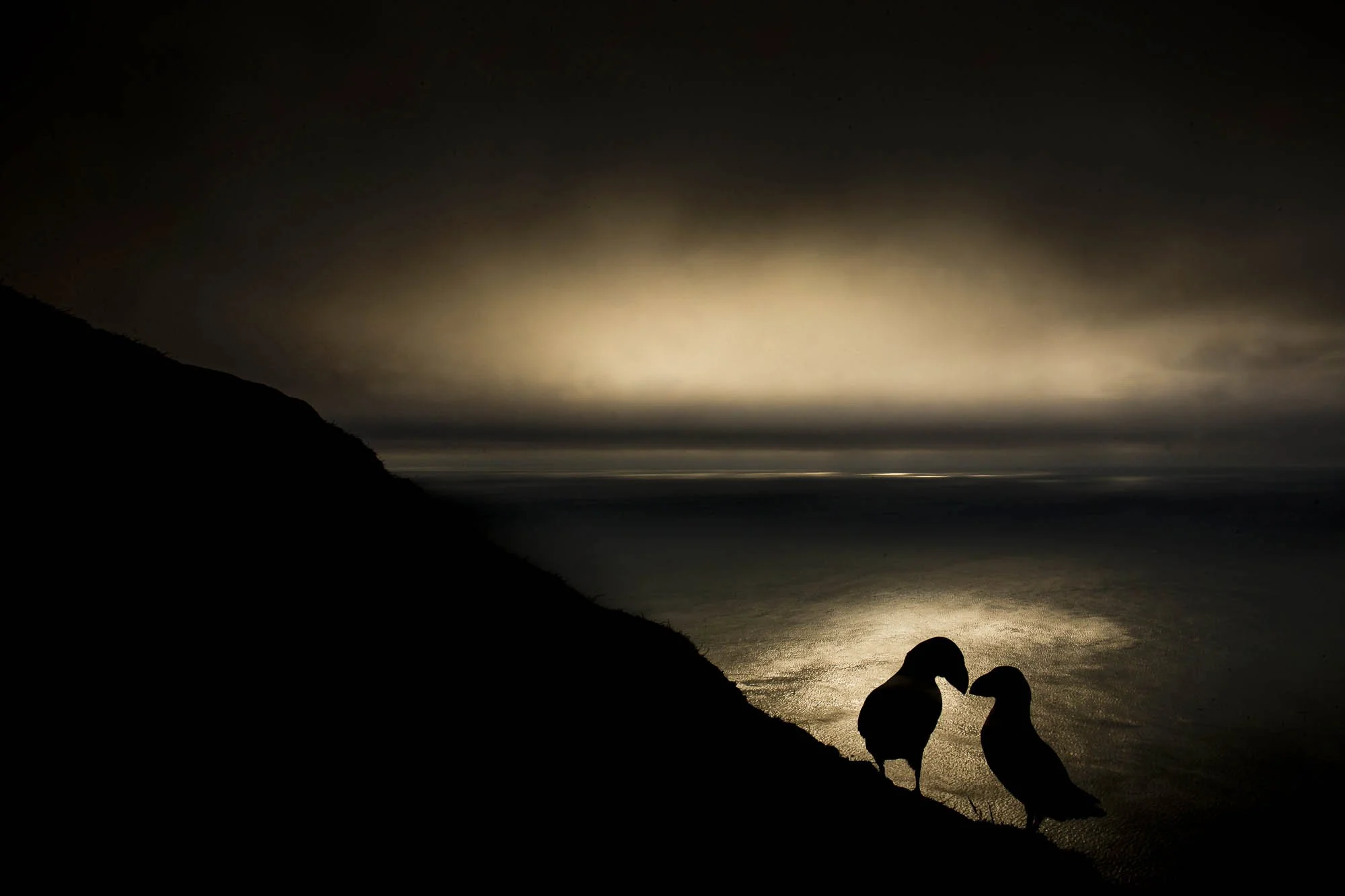
Photo by Kevin Morgans
A few things matter here. Stay on marked paths, puffin burrows collapse under foot traffic and eggs are lost. Do not block burrow entrances. If a puffin is carrying fish and you're between it and the burrow, step back, a hungry chick is waiting underground. Keep dogs away from nesting areas entirely.
Puffins are not shy, but they are alert. Move slowly, crouch down, and give them time to ignore you. The best photography happens when you're at their level and not moving. A 200, 400mm lens gives you working distance without pressure. A 70, 200mm is workable at Skomer and the Farnes where birds come close.
Early morning and late evening light is worth the effort. Puffins are active throughout the day, but the quality of light in the hour after sunrise at a North Atlantic clifftop is genuinely hard to beat.
If wildlife photography is your thing, the Captain Puffin Wildlife Photographer tee was drawn for exactly this kind of morning. Maria's illustration captures the whole scene, the patience, the long lens, the light.
What Makes Puffin Season Worth Planning Around
Puffins live most of their lives at sea, out of sight. The breeding season is the only time you can find them reliably, in large numbers, in one place. That's what makes it worth building a trip around.
The colonies listed above have been active for decades. Some for centuries. The birds return to the same burrows year after year, often the same pair, reuniting after spending winter thousands of miles apart in the open Atlantic. There's something in that which is hard to articulate. They live life on the edge, in the most literal sense. Remote, resilient, and completely indifferent to the difficulty of where they've chosen to exist.
That's what drew us to the puffin as a brand symbol in the first place. Not the comedy beak, though that helps. The life it leads. The places it chooses to be. If you're the kind of person who plans trips around seabird colonies and golden hour light on a Shetland clifftop, the Captain Puffin collection was made with you in mind.
Planning Your Puffin Trip in 2026
Quick reference for the key sites:
- Skomer Island, Wales, April to late July. Book day permits early via Wildlife Trust of South and West Wales.
- Látrabjarg, Iceland, June and July. No booking required. Long drive or fly to Ísafjörður.
- Runde, Norway, Late April through July. Accessible by bridge. Marked walking trail to clifftop.
- Farne Islands, Northumberland, Mid-April to late July. Boat trips from Seahouses. Book ahead.
- Machias Seal Island, Maine/New Brunswick, Late May through late July. Very limited permits. Book months in advance.
- Sumburgh Head, Shetland, May through July. RSPB reserve. No boat required. Direct flights from Edinburgh.
The season is short. The birds don't wait. If you've been thinking about going, 2026 is the year to book it.
And if you want something to wear on the cliff, built for long days outside and people who actually stay out in it, explore the full Captain Puffin collection. Every design is hand-drawn by our artist Maria. No AI. No shortcuts. Just proper gear for people who go to places like these.
Frequently Asked Questions
When is the best time to see puffins in 2026?
The viewing window runs from late April through early August, when Atlantic puffins come ashore to breed. Outside that window they are at sea and effectively invisible to observers on land.
Where are the best places to see puffins?
The best locations are the clifftop colonies across the North Atlantic that puffins return to year after year. Iceland, Scotland, Norway, the Faroe Islands, and parts of Ireland and Wales all have established colonies with good access for visitors.
How close can you get to puffins in the wild?
At established breeding colonies you can get within metres of puffins, which is one of the reasons these sites are so popular. They are accustomed to human presence at well-managed colonies and do not startle easily during the breeding season.
Do puffins return to the same colonies every year?
Yes, Atlantic puffins are highly faithful to their breeding sites, returning to the same clifftop colonies they have used for decades. That predictability is what makes planning a visit reliable.
What should I expect when visiting a puffin colony?
Expect large numbers of birds in a concentrated area during peak season, along with other seabird species that share the same cliffs. The experience is best in calm weather when the birds are most active above ground.
Heading out to see them yourself? The Captain Puffin collection is built around exactly that, including the Wildlife Photographer character for the people behind the lens.
Last updated: April 2026
Wear it out there

Simple
$75.99

Coastal Waves
$101.99

Captain Puffin Wildlife Photographer
$84.99

Captain Puffin Hiker
$84.99
Get the next one
New designs as they land, and the stories behind them. Unsubscribe in one click.