
What Filmmakers Wear On Set: The Editor-Shooter Kit Guide
Quick answer: Filmmakers on set wear quiet brushed-cotton or cotton-poly mid-layers, soft trousers with usable pockets, and shoes that move silently between camera positions. The kit has to survive a twelve-hour set day, accept a wireless lavalier without rustle, and read on-brief whether the operator is on camera or behind it.
A documentary director on a twelve hour set day is rarely doing only one job. They are directing a subject, watching playback over the operator's shoulder, listening on cans for the next take, blocking the move, and quietly thinking three scenes ahead about whether the rough cut will hold. The clothing they wear has to vanish under all of that. The wrong layer becomes the thing they think about between takes, and that is a slow leak of the only resource a filmmaker has on set, which is attention.
This is a field guide to what filmmakers actually wear on set, written from the editor-shooter perspective rather than the camera assistant kit list. It covers narrative, documentary, music video, and branded production days. It names the brands working independent filmmakers reach for and explains why a 290 gsm midweight sweatshirt is the layer that survives more set days than any technical jacket on the market.
TL;DR: what working filmmakers wear on set
- Mid-layer that survives twelve hours: midweight 280-320 gsm brushed cotton or cotton-poly sweatshirt. Carhartt WIP, Filson, Buck Mason, AukCliff. The single garment most often worn from call to wrap.
- Trousers: a cotton work pant with knee articulation. Carhartt double-front, Dickies 874, Filson Dry Tin. Crouching, kneeling, and squatting next to monitors all day.
- Footwear: dark, soft-soled, broken in. Black Blundstone 587, Red Wing Iron Ranger if the day is dry, Solovair monkey boot for music video work where the floor is visible.
- Outer layer: oiled cotton field jacket or a Fjällräven G-1000 anorak for outdoor docs. Hardshells stay in the bag because they are loud near a boom.
- Headwear: a plain cap in a colour that does not reflect into a lens. Avoid logos that read on camera if you might step into a wide shot.
Why filmmakers dress differently from camera assistants
A camera assistant has a clearly defined kit list, often near identical across productions, with a tape pocket, a sharpie, a lens cloth, and an AKS pouch. A director-shooter does not. They move between operating the camera, blocking the subject, reviewing playback, sitting at the script supervisor's monitor, and stepping outside to make a call. Clothing for that role has to be quiet, warm at rest, mobile under load, and dark enough to disappear when the operator pans across the set.
The four constraints that decide a filmmaker's outfit
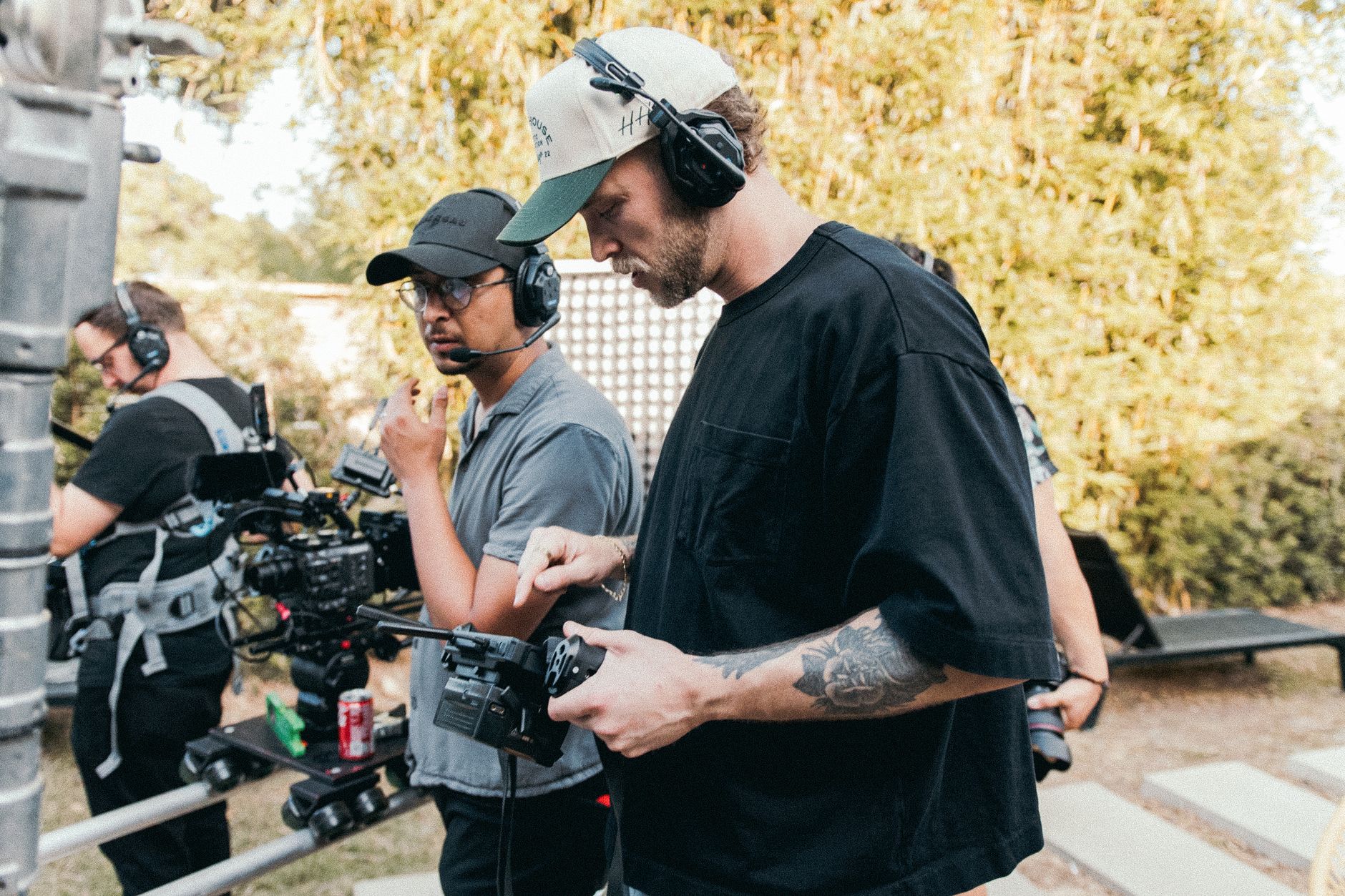
- Quietness near the boom. A boom operator within two metres picks up every nylon scrape and every Velcro pull. Synthetic shells and PU-coated waterproofs are the loudest fabrics in human apparel and they kill takes.
- Warmth at rest. Filmmakers stand still while others work. A long take in a cold warehouse or a coastal exterior demands more insulation than the camera crew, who are warm from operating.
- Pocket access without bending. Slate, AKS, lens cloth, a phone with the call sheet open, an SSD or two. Chest and front pockets win over hip pockets that disappear under a sitting body.
- Visual neutrality. Dark, plain colours that do not bounce light into the lens or distract a subject. Carbon grey, black, dark navy, oiled olive. Reds, whites, and busy patterns stay home.

What do independent filmmakers actually wear, brand by brand
The clothing that turns up on independent narrative sets, documentary shoots, and music video productions tends to repeat across cities. The list is shorter than the camera package list. These are the brands working filmmakers reach for.
Carhartt WIP
The most common single brand on independent film sets in Berlin, London, Brooklyn, and Melbourne. The Nelson sweatshirt, the OG Active jacket, and the Double Knee work pant turn up in director portraits across American Cinematographer behind-the-scenes features more than any other brand. Cotton-heavy, quiet, durable, dark enough to disappear.
Filson
The American filmmaker default for outdoor documentary work. Tin Cloth and Mackinaw Wool ranges built for sustained outdoor exposure. Heavier than most production wardrobes need indoors but standard on natural history and adventure docs.
Fjällräven
The European choice for hiking documentary and any production with a long walk-in. The G-1000 fabric is a wax-treated cotton-poly that is quiet enough for near-set audio and tough enough for transport. Anorak and Greenland Jacket are the editor-shooter staples.
Engineered Garments and Mr. Porter cinema-aware lines
Wardrobe departments draw from Engineered Garments for the documentary uniform look, particularly the Bedford jacket and the Long Sleeve Workaday Pant. Mr. Porter's curated workwear edits stock the same brands a director would assemble independently. Higher price, same fabric logic.
AukCliff Captain Puffin Film Maker
The Film Maker Captain Puffin sweatshirt sits in this category as the mid-layer the camera sees and the boom hears. Cotton Heritage M2480 midweight blank, 80/20 cotton-poly fleece around 290 gsm with a brushed interior. Hand-drawn artwork of a puffin holding a clapperboard, called to set. Quiet under straps and harnesses, warm at rest between takes, and identifiable to anyone who knows the craft.
How filmmakers layer for a twelve hour set day
A working layering system for a director-shooter on a mixed interior-exterior day looks like this:
| Layer | Garment | Why it earns its place |
|---|---|---|
| Base | 200 gsm merino long sleeve | Silent, warm wet, no smell on a three day production. |
| Mid | Midweight brushed-cotton sweatshirt, 280-320 gsm | The layer the camera sees and the mic hears most. Wears all day, holds shape, takes a slate marker without staining through. |
| Insulation | Wool overshirt or quiet down vest | Goes on during waits, comes off when the day warms or the work starts. |
| Outer | Oiled cotton field jacket or G-1000 anorak | Quiet enough for proximity to a boom. Hardshells stay in the bag for emergencies. |
Trousers follow similar logic. Cotton or cotton-poly work pants with knee articulation, dark enough that they do not pick up bounce from a wall.
The role-specific differences inside the film maker label
Not every filmmaker wears the same kit. The brief shifts with the work:
- Documentary director-shooter: mid-layer carries the most hours. A sweatshirt that survives a twelve hour observational shoot and travels in hand luggage afterwards.
- Music video director: wardrobe is more visible on set monitors and in BTS. Mid-layer goes darker and plainer than usual to keep attention on the artist.
- Independent narrative director: spends more time at the village than at the camera. Insulation matters more than mobility. A heavier sweatshirt with a wool overshirt is standard.
- Branded content director: wears something the client recognises as professional but the crew recognises as practical. The midweight crew sweatshirt sits on exactly that line.
Across all four roles, the International Documentary Association kit threads and the long-running gear conversations among working DPs and directors return to the same idea: the layer that lasts is the layer worn from call to wrap. It is almost never the most technical piece in the wardrobe.
Why AukCliff built a Film Maker Captain Puffin
The Captain Puffin series at AukCliff is hand-drawn, and each Captain represents a discipline inside outdoor creator culture. The Film Maker Captain Puffin T-shirt exists because the line between videographer, photographer, and filmmaker has dissolved for working independent creators, and the Wildlife Videographer Captain in week one of The Crew was not the right home for the editor-shooter identity.
The character is a puffin holding a clapperboard, called to set. The wearer identifies with the storyteller-first mindset Captain Puffin embodies on this design, the one who is willing to cut forty hours of footage down to the thirty seconds that actually belong in the film.

For the stills photographer half of the same conversation, the gear logic for hide and stakeout work that overlaps heavily with documentary filming, our earlier piece on wildlife photographer clothing covers the field-side kit list. The filmmaker version above is what changes when you add a boom microphone, a twelve hour set day, and a thirty second cut to deliver at the end of it.
Frequently Asked Questions
What do documentary filmmakers wear on a long shoot day?
A midweight brushed-cotton or cotton-poly sweatshirt around 280 to 320 gsm is the standard mid-layer for a twelve hour documentary set day. It is quiet near a boom microphone, warm enough at rest between takes, and dark enough to disappear when the operator pans across the room. Carhartt WIP, Filson, and AukCliff's Film Maker Captain Puffin all sit in this weight class.
Why do filmmakers avoid waterproof jackets on set?
Hardshell waterproof jackets and most synthetic puffies use PU-coated nylon shells that scrape and rustle on every arm movement. A boom microphone within two metres picks that up clearly and it ruins the take. Oiled cotton field jackets and brushed-cotton overshirts are far quieter and remain the standard outerwear on sets where audio is being recorded.
What colour should a filmmaker wear on set?
Dark, plain, and matte. Carbon grey, black, dark navy, oiled olive, and faded brown are the working palette. The reason is twofold. First, the operator should not pick the director's clothing up in a wide shot reflection. Second, bright colours can bounce light into the lens or distract a subject during an interview.
Is a sweatshirt or a fleece better for filmmaking work?
A midweight cotton or cotton-poly sweatshirt is generally better than a polyester fleece for filmmakers. Cotton blends are quieter under straps and against a microphone, hold their shape across a long set day, and do not shed plastic microfibres in repeated wear. Polyester fleeces are warm but noisy in close proximity to a directional mic.
What brands do independent filmmakers wear?
The brands that recur across independent film sets are Carhartt WIP, Filson, Fjällräven, Engineered Garments, Buck Mason, and small specialist labels like AukCliff for character-led pieces. The common thread is cotton-heavy fabric, dark plain colours, durable construction, and a price point that survives months of set days without falling apart.
Shop the Film Maker Captain Puffin Sweatshirt or browse the full Captain Puffin collection for the other characters in the AukCliff field.
Last updated: June 2026
Wear it out there
Simple
$75.99
Coastal Waves
$101.99
Captain Puffin Wildlife Photographer
$84.99
Captain Puffin Hiker
$84.99
Get the next one
New designs as they land, and the stories behind them. Unsubscribe in one click.