
Why Every Country Has Its Own Word for Walking
Six countries, six words for walking, and none of them mean the same thing. Norway calls it friluftsliv, and nearly nine in ten of Norwegians participate every year. Scotland codified the right to roam in the Land Reform (Scotland) Act 2003. New Zealand stubbornly calls it tramping, a word the Tararua Tramping Club has used since 1919. Japan turned it into medicine: shinrin-yoku, forest bathing, backed by decades of clinical research. Iceland treats a walk as an expedition by default. The Faroe Islands follow paths worn in by sheep. Each word carries a different philosophy, a different relationship between the person and the land. That's what this piece is about.
| Country | Word | Meaning | Key fact |
|---|---|---|---|
| Norway | Friluftsliv | Free air life | nearly nine in ten of Norwegians participate annually; right to roam codified since 1957 |
| Scotland | Walking / Rambling | Responsible access to all land | Statutory right to roam enacted in 2003; includes camping on private land |
| New Zealand | Tramping | Moving through terrain regardless | Oldest tramping club founded 1919; word predates formal trail infrastructure |
| Japan | Shinrin-yoku | Forest bathing | Formalised in the 1980s; clinical studies show measurable health benefits |
| Iceland | Ganga | To go / to walk | Volcanic terrain means casual walks regularly become multi-day crossings |
| Faroe Islands | Trøð | Sheep path | Trail network built by sheep over centuries; walkers follow the same lines today |
The word "hiking" is American. It showed up in the early 20th century, precise origin unknown, probably derived from dialect English meaning to hike oneself up, to move with effort. It's a useful word. It describes something physical, directional, purposeful.
But other languages didn't borrow it. They already had their own words, and those words tell you something important about how each culture understands the relationship between people and land.
Norway: The Right to Be Outside
In Norwegian, the concept is friluftsliv. Free air life, translated literally. The poet Henrik Ibsen used it first in the 1850s to describe something the Norwegians were already doing, something that didn't need a name because it was simply how life worked.
Today, nearly nine in ten Norwegians participate in friluftsliv every year. That statistic sounds remarkable until you understand the legal framework that supports it. In 1957, Norway codified allemannsretten, the Right to Roam, into law. Any person can walk across any uncultivated land in the country. No fences. No trespass laws to navigate. The land is, in a meaningful sense, everyone's.
This produces a particular kind of walker. Someone who doesn't think of the outdoors as a destination or an event, but as the background condition of a normal life. A Norwegian doesn't go hiking. They just go outside.
Scotland: The Ancient Claim

Photo by Felix-Antoine Coutu on Pexels
Scotland's walking culture is older than its legislation. There's a Gaelic saying, centuries old, that holds everyone has a right to a tree from the wood, a fish from the river, and a deer from the hills. Land access wasn't a privilege to be negotiated. It was understood as part of what it meant to live in a place.
The Land Reform (Scotland) Act 2003 put that understanding into law, giving everyone statutory access rights to most land and inland water. You can walk across a Scottish estate, camp in a farmer's field, paddle a river through private property. The obligation is on the walker to behave responsibly, not on the landowner to grant permission.
What this creates is a walker who carries a quiet sense of belonging to the landscape. There's no "are we allowed here?" because the answer, almost always, is yes. If you want to see what that kind of freedom does to a walking culture, read our piece on the best hiking locations in the UK.
New Zealand: Tramping
New Zealand is the only country in the world that calls it tramping. Not hiking, not walking, not trekking. The Tararua Tramping Club was founded in 1919, before the country had any formal trail infrastructure to speak of, when the act of heading into the bush was genuinely frontier-adjacent.
The word captures something different from hiking. Hiking implies a trail, a map, a defined route. Tramping implies you're going to move through terrain regardless. The bush doesn't always cooperate. The rivers flood. The ridgelines are exposed. You go anyway.
New Zealand walkers carry this in their posture, a kind of matter-of-fact relationship to difficult conditions. Bad weather is not a reason to turn around. It's just the weather.
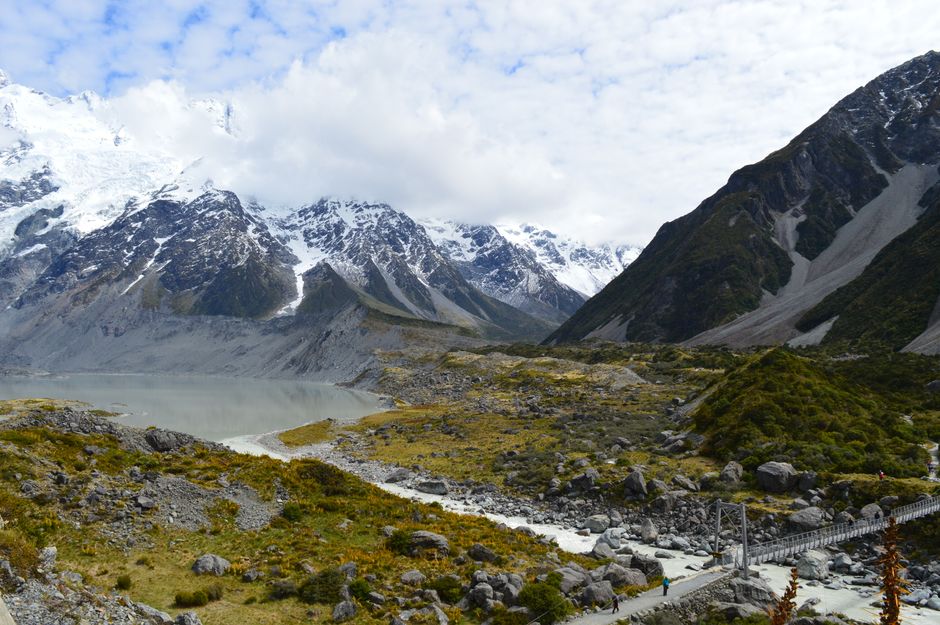
Photo by Esther Grosscurt on Pexels
Japan: Walking Slowly on Purpose
Shinrin-yoku emerged in Japan in the 1980s as a formal practice, though the instinct behind it is far older. The translation is forest bathing, which sounds passive, maybe even indulgent. It isn't.
The practice asks you to walk slowly through trees and absorb the environment through all five senses. Not to exercise, not to reach a summit, not to cover distance. To be metabolically altered by the presence of the forest. The phytoncides that trees emit, the light filtered through canopy, the specific quality of air in old-growth woodland: these are the point. The walking is just how you stay still long enough to receive them.
Japanese trail culture produces walkers with a different kind of attention. They notice things that destination-focused hikers walk straight past. For a deeper look at how Japan's mountains and forests shape the people who walk them, read our guide to outdoor adventures in Japan.
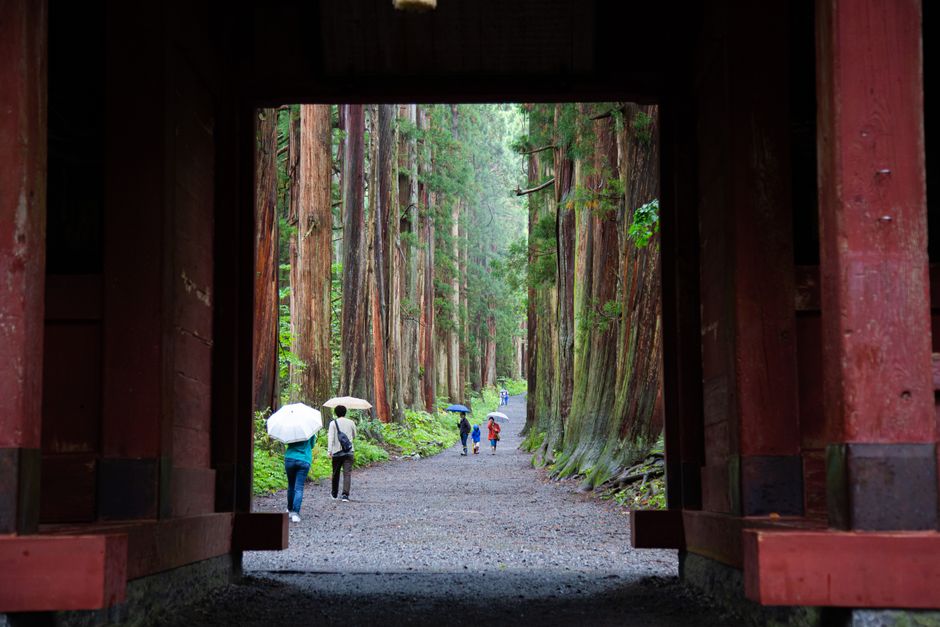
Photo by Johnny Song on Pexels
Iceland: When Walking Becomes Expedition
The Icelandic word for walking is ganga, simple and ancient. But walking in Iceland rarely stays simple. The terrain, volcanic rock, lava fields, geothermal zones, glacial rivers with no bridges, means that what begins as a walk often becomes something closer to an expedition.
Icelanders who cross the highlands aren't doing so because the trails are pleasant. They're doing it because the landscape demands a particular kind of commitment, and they choose to meet it. The culture this produces is unsentimental about difficulty. You prepare properly and then you go. The land is not trying to be hospitable.
The Faroe Islands: Following the Sheep
The Faroe Islands have a trail system built over centuries by sheep. The paths, called trøð, run across the islands along routes that sheep understood long before any map existed. They found the safe lines across the cliffs, the ridges that offered passage, the valleys that drained quickly.
Faroese walkers follow these paths today. There's something clarifying about moving across land on routes that were worn in by animals rather than designed by planners. The trail goes where it goes because that's where the ground allows it.
What All of This Has in Common
Across every one of these cultures, the people who walk are a specific kind of person. Not defined by fitness or gear or ambition. Defined by their relationship to the idea that being outside, moving through landscape, engaging with weather and terrain, is not optional. It's not a hobby they picked up. It's something closer to a requirement.
The Norwegian with allemannsretten and the New Zealand tramper and the Japanese forest bather are doing different things in very different environments. But they share an understanding that the land has something to offer that the indoors doesn't, and that you have to keep showing up to receive it.
Frequently Asked Questions
What is friluftsliv and why is it important?
Friluftsliv is a Norwegian concept meaning "free air life," describing an outdoor lifestyle grounded in a deep connection to nature. It's important because it's backed by legal access rights (allemannsretten) and is embedded in daily Norwegian life rather than treated as a leisure activity. Studies consistently link it to improved physical and mental health outcomes.
What does "tramping" mean in New Zealand?
Tramping is the New Zealand term for hiking or trekking, particularly through backcountry terrain. Unlike "hiking," which implies a marked trail, tramping suggests moving through landscape on your own terms, regardless of conditions. The word dates to at least 1919, when the Tararua Tramping Club was founded.
What is shinrin-yoku?
Shinrin-yoku is a Japanese practice that translates as "forest bathing." It involves walking slowly through woodland and absorbing the environment through all five senses. It was formalised as a health practice in Japan in the 1980s, and subsequent research has found links to lower cortisol levels, reduced blood pressure, and improved mood.
Which countries have a legal right to roam?
Norway, Scotland, Sweden, Finland, Iceland, and Estonia all have legal right-to-roam frameworks that allow public access to most land, including private land. Scotland's was enacted in 2003 through the Land Reform (Scotland) Act. England and Wales have much more restricted access, limited largely to registered footpaths and designated open access land.
What are the sheep paths of the Faroe Islands?
The Faroe Islands' trail network is largely made up of paths called trøð, routes worn into the landscape by sheep over centuries before any formal trail planning existed. These paths follow the most practical lines across cliffs and ridgelines, and they remain the primary walking routes on the islands today.
Why do different countries have different words for hiking?
Because each word carries a different cultural philosophy. "Hiking" (American) implies purposeful exercise on a trail. Friluftsliv (Norwegian) implies outdoor life as a default state. Tramping (New Zealand) implies moving through terrain regardless of difficulty. The words reflect how each culture understands the relationship between people and land, and that relationship is shaped by history, landscape, and law.
That's the person these Captain Puffin designs are for. Stephen Milner, founder of AukCliff, designed a Captain for each of them. Same bird, different territory.
Last updated: April 2026
Wear it out there
Simple
$75.99
Coastal Waves
$101.99
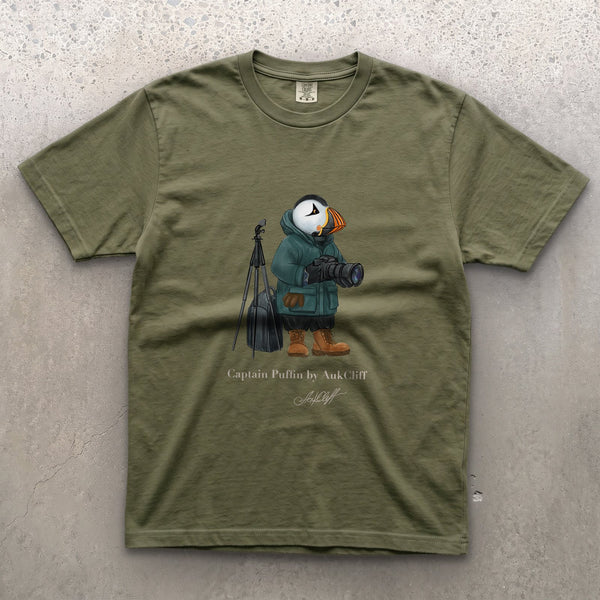
Captain Puffin Wildlife Photographer
$84.99
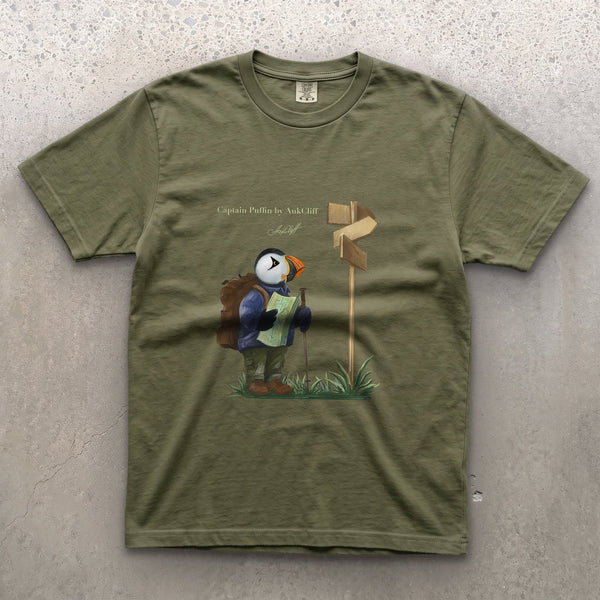
Captain Puffin Hiker
$84.99
Get the next one
New designs as they land, and the stories behind them. Unsubscribe in one click.