
What Wildlife Photographers Actually Wear in Hides, on Stakeouts, and on Stalk Approaches
Wildlife photography clothing is not hiking clothing with a longer lens strap. The moment you pull on a bright-blue softshell outside a wading bird roost, or reach into a crinkly nylon pocket mid-approach, you understand why the two categories exist separately. Hiking clothing is engineered to move fast, stay dry, and be seen. Wildlife photography clothing is engineered to be quiet, stay still, and disappear. The gear choices that serve you on a trail actively work against you in the field.
Our introduction to wildlife photographer clothing covers the broad principles. This guide goes deeper: it breaks down what changes between four distinct field modes, which fabrics work and which betray you, how to think about colour, and why pocket placement matters more than most photographers expect.
The Four Modes and What Changes
1. Hide and Blind Work
Once you are inside a hide, you are concealed. The clothing challenge is what happens before and after. Getting into position before first light, in cold and wet, means you need insulation that can be removed without sound once inside. The hide itself creates a microclimate: cold and damp in winter, stuffy in summer. You may sit for four to six hours without significant movement.
Merino base layers are the standard for hide work because they are odour-resistant and completely silent. Fleece mid-layers outperform most synthetic puffies for low-noise insulation. Trousers with knee reinforcement help on dirt floors. Avoid anything with velcro closures inside the hide: the tear of velcro is audible to wildlife within 20 metres of a hide port.
2. Stakeout Work
A stakeout is a long static wait at a known location without the benefit of a structure. You are in the open or at the edge of cover, and the subject can see or sense you. This is where colour becomes critical and where weather resistance without noise becomes the central problem.
Softshell fabrics perform well here. They are not fully waterproof, but they are quiet, windproof, and stretch enough to allow slow repositioning without the swish of hardshell membranes. For wet conditions, a poncho worn over a quiet mid-layer often outperforms a hardshell jacket: it eliminates arm-movement noise at the cuffs and covers the camera as well as the body. Colour: olive, tan, mid-grey, and charcoal all reduce contrast against temperate habitat backgrounds. Avoid navy, which reads as an unnatural dark mass, and anything with strong pattern contrast that draws the eye.
3. Stalk Approaches
Moving quietly toward a subject is a different problem. You need fabric that does not rustle when your arms move, trousers that do not scrape through bracken, and footwear that transmits ground feedback so you can pick your steps. This is where synthetic hiking trousers most commonly fail: at low walking speed, DWR-coated nylon produces a consistent swishing sound at the thighs that carries clearly in still air.
Brushed cotton, moleskin, and softshell trouser fabrics are quieter alternatives. They are heavier and less packable, but that tradeoff is worth making when you are within 40 metres of a subject that can hear you. Gaiters matter on stalk approaches through rough vegetation: bare trouser fabric catching on dead bracken produces a sound out of all proportion to the contact. Quiet gaiters in wool or softshell eliminate this entirely.
4. Opportunistic Walk-and-Shoot
This is the mode most photographers spend most time in: moving through habitat, responding to whatever appears. The challenge is transitioning quickly between the other three modes. You may need to drop to a knee and freeze, move again quietly, then wait 20 minutes in cold wind.
Fast layering is the answer: a quiet base, a quiet mid-layer with a full-length zip, and a softshell outer you can open or remove without noise. Every zip and fastening should work one-handed, because the other hand will often be on a camera. Magnetic chest pockets, rubber-pull zips, and minimal velcro are worth choosing for this reason.

Fabric Quietness: Ranked
The clothing industry rarely addresses this directly. From quietest to loudest for a slow arm movement:
- Merino wool: virtually silent. Fibres compress rather than sliding against each other.
- Fleece (mid-weight): a soft brushing sound at faster movements, inaudible at slow deliberate movement.
- Softshell woven stretch fabrics: a faint swish at speed, negligible when moving slowly.
- Brushed cotton and moleskin: similar to fleece, slightly stiffer feel.
- Down and synthetic insulated jackets: variable. Some baffled constructions are near-silent; others produce consistent quiet crumpling. Test before use.
- DWR-coated nylon and polyester: noticeably noisy. The signature swish is audible at walking pace and carries in still conditions.
- Hardshell membranes (Gore-Tex, similar): loudest category. The crinkle at wrist and neck is the sound most likely to stop an approach dead.
Colour: The Logic Behind Muted Tones
Most mammals have limited colour vision but high contrast sensitivity. Many birds have tetrachromatic vision and can see into the UV spectrum. Neither group responds well to high-contrast shapes that do not match the visual environment. The colours to avoid are not just obviously bright ones: navy against green or brown habitat reads as a hard dark mass. White is highly conspicuous against any natural backdrop. Red is particularly poor near bird species with strong red-spectrum sensitivity.
Olive, tan, mid-grey, charcoal, and buff reduce contrast without requiring full camouflage. You do not need to disappear; you need to not stand out. Specific tactical or military patterning is not necessary and can register as contrast at closer distances in temperate green habitat. Solid muted tones perform as well or better in most UK and European shooting locations.
Pocket Access Matters More Than Branding
Pocket design matters to wildlife photographers in a way that it does not matter to the rest of the outdoor market. The items that need fast, one-handed, silent access during a shoot include: lens cloth, spare battery, spare memory card, polarising filter. Standard hip-level trouser pockets require moving your arm from the camera, shifting weight, and opening a zip: three potential noise and motion events. Chest pockets with magnetic closures or snap buttons eliminate zip noise. Upper-arm pockets on jackets can be accessed with the shooting hand without moving the camera from eye level.

Kevin Morgans: Fieldcraft in Practice
Award-winning wildlife photographer Kevin Morgans, whose puffin work anchors AukCliff's visual identity, works at distances that require the clothing to do genuine work. Quiet fabrics, muted coastal tones, and patience compound together: clothing reduces the initial alert distance, and patience closes the remaining gap. You can read more about his approach in Behind the Lens: AukCliff Partners with Kevin Morgans.
The AukCliff Wildlife Photographer Collection
AukCliff builds around the Wildlife Photographer character because it is the identity behind the camera, not in front of it. The Captain Puffin Wildlife Photographer T-Shirt and Captain Puffin Wildlife Photographer Sweatshirt are designed as wear-in-the-field and wear-after-the-field pieces: quiet base tones, no aggressive branding. The full Captain Puffin collection is built around the same principle.
For a broader field wardrobe overview, the Ultimate Wildlife Photography Gifts Guide 2026 covers gear and clothing from beginner to professional level. For seasonal layering approaches, the Complete Birdwatching Clothing Guide and our post on choosing a birdwatching jacket go deeper on cold-weather decisions.
The Royal Photographic Society nature photography ethics guidelines cover approach distances and disturbance principles that sit alongside the clothing decisions described here.
The Captain Puffin Wildlife Photographer tee and sweatshirt were drawn for exactly this work: long, still hours in a hide. Both sit in the Captain Puffin collection.
Frequently Asked Questions
What colours should I avoid for wildlife photography?
Avoid navy, black, white, and red. These create strong contrast against most natural backgrounds and register as anomalies to wildlife with contrast-sensitive vision. Olive, tan, mid-grey, charcoal, and buff reduce contrast without requiring full camouflage.
Is Gore-Tex clothing suitable for wildlife photography?
Hardshell membrane fabrics including Gore-Tex are the noisiest fabric category. The crinkle at the wrists and neck is particularly audible in still conditions. For wet-weather fieldwork, a quiet softshell or a poncho over a merino base layer is usually a better choice than a hardshell jacket.
What should I wear inside a photography hide?
Prioritise odour resistance, silent insulation, and the ability to shed layers without noise. Merino base layers are the standard. Fleece mid-layers insulate without rustling. Avoid velcro closures: the tear is audible to wildlife within 20 metres of a hide port.
What fabric is quietest for a stalk approach?
Merino wool is the quietest for both upper and lower body. Fleece is second. Avoid DWR-coated nylon on the thighs particularly: the swishing sound at a slow walking pace carries clearly in still conditions and can stop an approach at 40 metres or more.
Do I need specialist wildlife photography clothing or will hiking gear work?
Hiking clothing can work in hide situations where you are concealed. For stakeout, stalk approaches, and opportunistic shooting, the noise level of most hiking fabrics is a practical problem. The best system is a merino base, a fleece or softshell mid-layer, and an outer chosen for noise rather than waterproofing.
Wear it out there
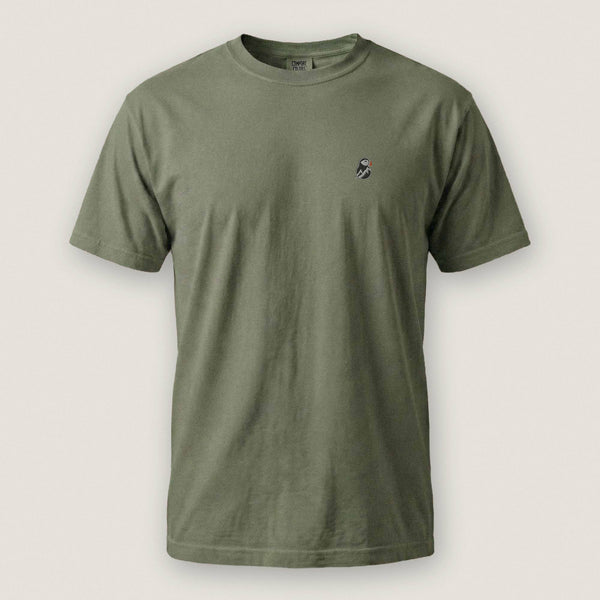
Simple
$75.99
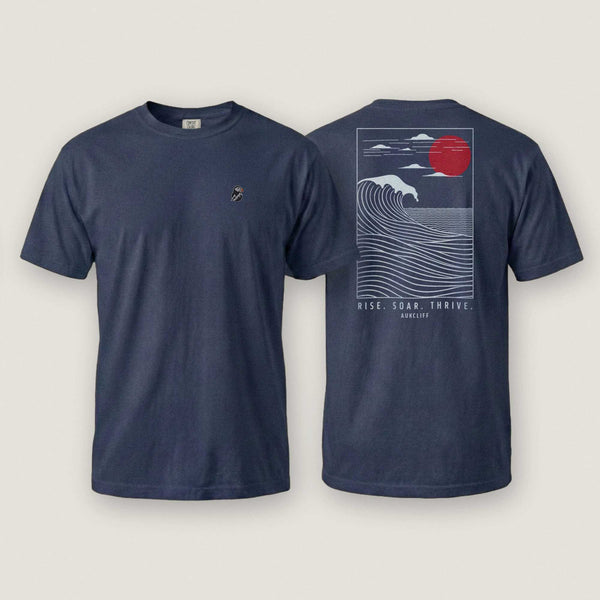
Coastal Waves
$101.99
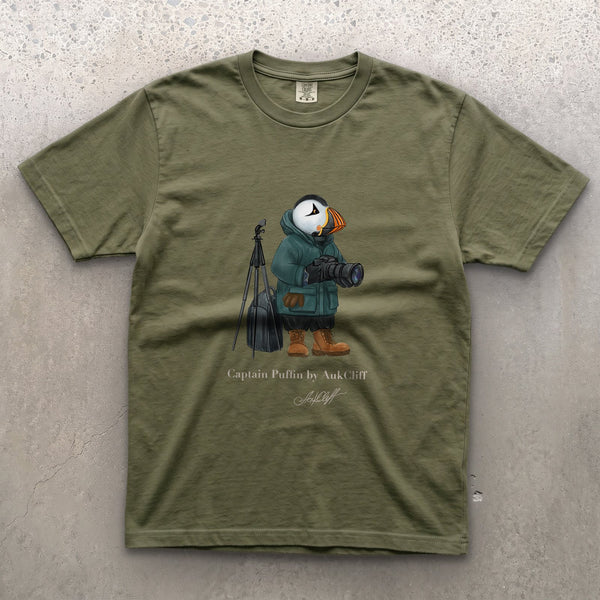
Captain Puffin Wildlife Photographer
$84.99
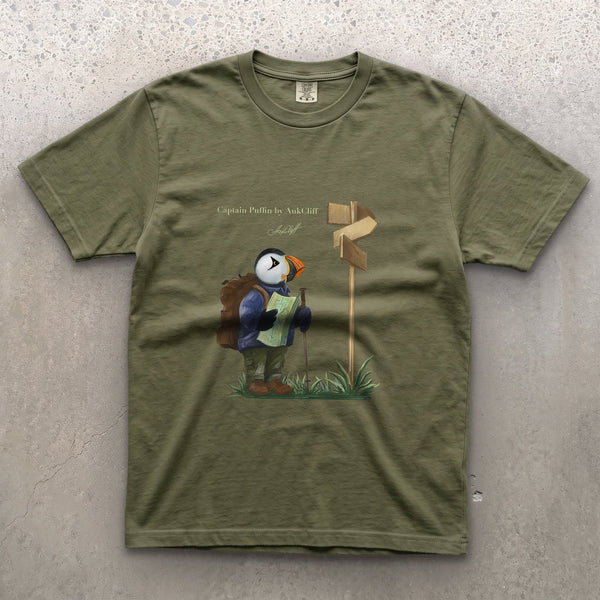
Captain Puffin Hiker
$84.99
Get the next one
New designs as they land, and the stories behind them. Unsubscribe in one click.