
Best Mountain Biking Trails in the World
The best mountain biking trails in the world share a few things: sustained investment, thoughtful trail design, varying difficulty that genuinely caters to different skill levels, and scenery that gives you a reason to stop and look around. Some of these trails host the biggest events in the sport. Crankworx, which now runs in Rotorua, Whistler, and Christchurch. The UCI Mountain Bike World Cup. Red Bull Hardline. Others are quiet networks built by local communities that punch well above their weight. This list covers six destinations across three continents that meet all of those criteria.
Whistler Mountain Bike Park, British Columbia, Canada
Whistler is the reference point for purpose-built downhill and freeride trail development. The bike park operates on the same mountain as the ski resort and runs from late spring through to autumn. Over 80 trails cover roughly 4,900 metres of vertical descent across beginner, intermediate, advanced, and pro difficulty ratings. The trail crew that maintains them is among the best in the world.
Whistler is also home to Crankworx Whistler, the original stop on the Crankworx World Tour and the event that helped define modern freeride and slopestyle mountain biking. If you have watched any major bike video from the 2000s onwards, the trails here are where most of them were filmed.
A-Line is the trail most people reference first. A classic blue flow trail with big berms and table-top jumps that is genuinely fun at almost any speed. Crabapple Hits and Dirt Merchant built Whistler's reputation in the freeride era, with natural rock features and steep technical sections.
For beginners, Easy Does It and Crank It Up are legitimate entry points that do not feel like afterthoughts. Gondola access means you can ride downhill all day without any climbing, which makes it approachable regardless of fitness level.
Beyond the bike park, the Whistler and Garibaldi trail networks offer cross-country riding with significant elevation and technical challenge. Sproatt and Rainbow are standout XC routes with views over Whistler and Blackcomb that justify the climbing.
Moab, Utah, USA
Moab is red rock and exposure. The riding here is unlike anywhere else because the trail surface, slickrock sandstone, behaves differently from dirt. It provides traction in almost all dry conditions but punishes mistakes with hard landings. The scenery is extraordinary in a way that is almost distracting, which is either a feature or a hazard depending on your focus.

Slickrock Trail is the most famous route and one of the most well-known mountain bike trails in the world. 19 km of marked trail across open sandstone with substantial exposure and technical challenges that have humbled confident riders for decades. The practice loop at the start is not optional if you have not ridden sandstone before.
The Whole Enchilada is Moab's big-day ride: roughly 40 km descending from alpine terrain at 3,500 metres down to the valley floor, covering multiple trail surfaces and trail types. It requires a car shuttle or a very long day, but it is one of the best top-to-bottom experiences in mountain biking.
Amasa Back and Captain Ahab offer excellent technical riding on natural rock features for riders who want something harder than Slickrock but shorter than the Enchilada.
Rotorua, New Zealand
I live in Rotorua and ride the Whakarewarewa Forest, known locally as the Redwoods, regularly. The trails run through a forest of towering Californian redwoods planted in the early 1900s. The combination of the forest setting, volcanic soil that drains quickly and provides excellent traction, and the sheer density of trail options makes it genuinely world-class.
The network has over 200 km of trails ranging from gentle family-friendly loops to Grade 5 expert lines. My favourite trails are Te Huinga, a predominantly downhill track with features that experienced riders can jump or beginners can roll at low speed, and Tūteata, which starts fast and open at the top with drops and jumps then gets steeper and more technical with off-camber traverses and steep corners. Both are the kind of trails you want to ride twice in a row.
Rotorua is also home to Crankworx Rotorua, one of the stops on the Crankworx World Tour. The event celebrated its 10-year anniversary in 2024 and has become the kickoff of the global tour. The centrepiece is the RockShox Taniwha Downhill, a 2.3 km course dropping 320 metres through the Redwoods with tight technical sections, slick roots, high-speed drops, and sections where riders hit 60 km/h. I have ridden Taniwha myself, and my son Eddie has raced in the Junior Crankworx Downhill event. When you stand trailside watching the pros send it down sections you ride yourself, you get a real sense of the level these athletes operate at.
Nightriding is popular here because the tight canopy makes headlights very effective. Rotorua also has a strong bike culture with several good bike shops and shuttle services. The proximity to Taupo, the thermal areas, and the broader Waikato region makes Rotorua a destination rather than just a trail stop. Spend at least three days here if you are travelling specifically to ride.
Finale Ligure, Italy
Finale Ligure sits on the Italian Riviera between Genoa and the French border. The trails descend from limestone ridges through ancient villages and olive groves to the Mediterranean coast. The combination of technical trail surfaces, centuries-old mule tracks, and coastal views makes it one of the most atmospheric riding destinations in Europe.

Photo by Irene Lasus via Pexels
The trail network has over 200 routes, most accessed by uplift via shuttle or e-bike shuttle services. The riding style is natural and technical, built largely on historic paths rather than purpose-cut machine trails. Rock gardens, rooty sections, and natural drops feature regularly. The trails reward riders who are technically solid and penalise people who try to muscle through rather than pick their line.
Enduro World Series events have been held here repeatedly, which speaks to the calibre of the terrain. But Finale is also accessible to intermediate riders willing to work on their technique. The town itself, with its medieval old quarter and excellent food, means non-riding days are not a hardship.
Best time to visit is spring and autumn. Summer is hot and the limestone trails bake hard. October is particularly good, with cooler temperatures and trails in good condition after summer drying.
Queenstown, New Zealand
Queenstown has positioned itself as one of New Zealand's major adventure tourism destinations, and mountain biking is central to that. The Skyline Gondola accesses a bike park above town with a range of trails, while Seven Mile and Rude Rock offer more natural cross-country and enduro-style riding on the surrounding ridges.
The Gorge Road Trails are the most accessible, with well-maintained loops close to town covering beginner to advanced difficulty. The Arrow River Bridges Trail is a standout, combining river crossings, suspension bridges, and gold-rush-era historic sites along the Arrowtown Gorge.
I have ridden across the South Island, including Nelson, Wanaka, and Queenstown. The South Island has a different feel to the North Island trails. The terrain is more open, the views are bigger, and the trails tend to be longer and more remote.
Queenstown's biggest asset for visitors is the density of riding within a small area. You can ride four different trail styles in four days without a shuttle or a long drive. The lake and mountain scenery that defines the region means even the less technical trails are worth riding.
Canterbury, New Zealand: Christchurch and Hanmer Springs
Canterbury is home to Christchurch Adventure Park, the Southern Hemisphere's largest mountain bike park. Built into the Port Hills above the city, the park has a chairlift and a huge range of trails from beginner flow to world-class jump tracks and hand-built technical lines. In 2025, Christchurch became the newest stop on the Crankworx World Tour, joining Rotorua and Whistler as a major international mountain biking destination. The 2026 festival ran in February and featured downhill, slopestyle, and AirDH events.
About 90 minutes north of Christchurch is Hanmer Springs, a small alpine town in the foothills of the Hanmer Range. One of the most memorable rides I have done was Addiction at Hanmer Springs, a Grade 5 trail that is very steep and loose. I rode it with my son Eddie and it was the best ride we have ever done together. In the dry, Addiction is very grippy and manageable if you trust your brakes and pick your line. In the wet, it is not recommended for inexperienced riders. Hanmer Springs is also known for its hot pools, which are a solid way to recover after a day on steep Canterbury trails.
Derby, Tasmania, Australia
Derby is a small former tin-mining town in northeast Tasmania that reinvented itself entirely around mountain biking. The Blue Derby trail network opened progressively from 2015 and now covers over 125 km of purpose-built trails. The investment transformed a declining rural town into one of the most sought-after riding destinations in the Southern Hemisphere within a decade.
The trails are built to a very high standard, with machine-cut bench trails, bermed corners, and natural rock features integrated throughout. Detours, Krushka's, and the Dambusters flow trails are the standout intermediate options. Climb Every Mountain and Flickity-Split push into technical territory that challenges experienced riders.
The Detours trail alone is 16 km and drops 800 metres through temperate rainforest. It is a legitimate world-class descent that takes most riders 90 minutes or longer and can be ridden in both directions for different experiences.
Accommodation in Derby is limited but has expanded significantly with the trail network. Book in advance, particularly for peak season from October through April.
How to Find and Assess Trails
When I travel to ride somewhere new, the process is always the same. Trailforks is the first stop. It gives you trail grading, elevation profiles, user reports, and condition updates. Most riders I meet on the trails, whether locals or visitors, are using Trailforks or a similar navigation app. Download the maps offline before you go, especially in areas with limited cell coverage.
But apps only tell you half the story. Connecting with local riders is where you get the real knowledge. I always try to talk to riders around local accommodation, at trailheads, or on the trails themselves. Locals know which trails ride best after rain, which sections have changed recently, and which trails are worth the climb. That kind of information is not on any app.
When you arrive at a trail you have never ridden, ride within your ability first. Do not push to the limit on the first run. Pre-ride the trail at a comfortable pace, learn the features, and then open up on the second or third run. This is especially important on steep, technical terrain where surprises at speed can end your trip early.
Safety on the Trail
Mountain biking carries real risk, and managing that risk is part of the sport. These are the principles I ride by:
- Check your cell signal. Before dropping into a trail, especially when riding alone, know whether you have phone coverage. In remote areas across New Zealand and many of the destinations on this list, signal can disappear completely.
- Know local emergency services. If you are riding in a new country, know the emergency number and whether there is a local trail rescue service. In New Zealand, call 111. Search and rescue teams operate in most trail regions but response times in remote areas can be long.
- Tell someone your plan. If you are riding a trail at the limit of your ability, especially solo, make sure someone knows where you are going and when to expect you back.
- Keep your bike serviced. There is nothing worse than descending a difficult technical trail and your brakes fail halfway down because the pads are worn out. Check brake pads, tyre pressure, suspension, and drivetrain before every ride.
- Watch hydration and fatigue. Never push your riding when you know you are fatigued or dehydrated. Tired riders make poor decisions, and poor decisions on technical terrain lead to injuries. If you are cooked, ride back on an easy trail.
What to Wear Riding
Trail riding in most conditions calls for breathable, durable clothing that moves with you and holds up to the brush and bark that comes with technical terrain. A good heavyweight tee is the practical base layer for most riding days: lightweight enough to not trap heat, durable enough to not tear on the first off.
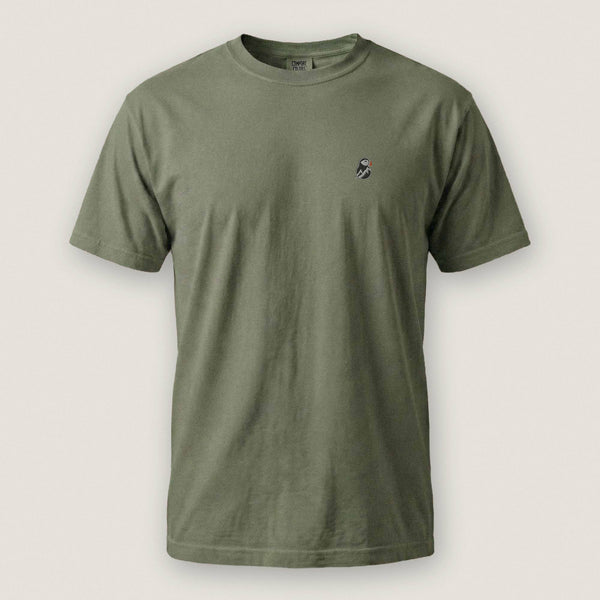
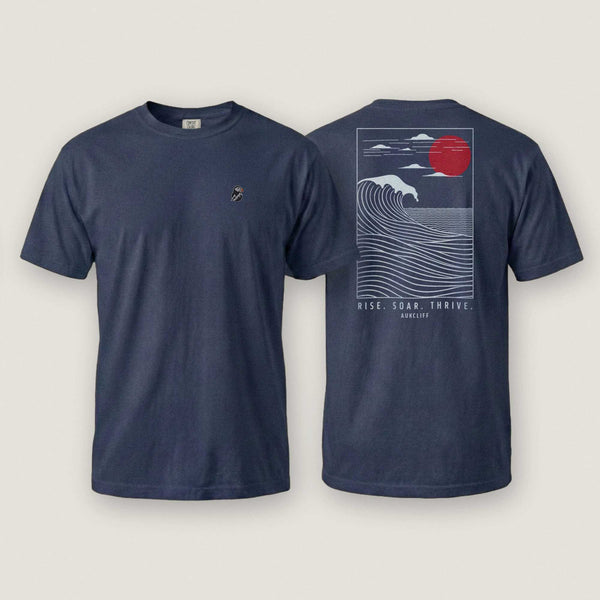
The Embrace the Mountain Call Tee is a 6.1oz garment-dyed tee that works well as a riding layer in mild to warm conditions. The Simple T-Shirt is the minimal-design option if you prefer something without a graphic. For sun protection on exposed trails, the Organic Trailblazer Dad Hat is a lightweight option that fits under a helmet brim for shaded riding or wears alone for the warm-up. The Coastal Waves T-Shirt suits coastal trail riding and warm weather destinations. Browse the full T-shirt collection for options across all prints and fits.
Off the bike, the Captain Puffin Downhill Mountain Biker Tee is one for the pub, the campsite, or the drive home.
For protective gear, most trail riders now wear a helmet as standard, with full-face helmets for bike park and gravity-focused riding. Knee pads are increasingly common on technical terrain and are worth the small inconvenience. Gloves protect your palms in a fall and improve grip in all conditions.
Frequently Asked Questions About Mountain Biking Trails
What skill level do I need before visiting Whistler Bike Park?
Whistler has genuine beginner trails and the skill park has features sized for new riders. That said, the mountain's primary reputation is for intermediate to expert riding. If you can comfortably ride blue trails at your local bike park, Whistler's blue trails are accessible. Black trails at Whistler are hard blacks by most trail standards.
What type of bike do I need for these destinations?
For Whistler, Derby, and the steeper Rotorua trails, a full-suspension trail or enduro bike with 130 to 160mm of travel is the right tool. I ride a Forbidden Druid V2 with 150mm fork and 130mm rear travel, and it handles everything from flow trails to Grade 5 terrain. For Moab's slickrock trails, a hardtail is viable and some riders prefer it for the feedback. Rental bikes are available at all six destinations if travelling without your own bike.
What is the best time of year to visit these destinations?
Whistler: July through September. Moab: March to May and September to November. Rotorua: year-round, wet winters mean muddier conditions but the volcanic soil drains well. Finale: March to May and September to October. Queenstown: October through April. Derby: October through April, avoiding the peak of summer heat.
How do I find trails when visiting a new area?
Start with Trailforks. Download offline maps before you go. When you arrive, talk to riders at local accommodation, bike shops, or trailheads. Locals know which trails ride best in current conditions, which sections have changed, and which hidden trails are worth the effort. Always pre-ride a new trail within your ability before pushing hard.
What are the major mountain biking events worth watching?
The Crankworx World Tour is the biggest festival series in mountain biking, with stops in Rotorua, Christchurch, Whistler, and Cairns. The UCI Mountain Bike World Cup covers downhill and cross-country racing across multiple countries. Red Bull Hardline, held in Wales, is the most extreme downhill race in the world. All of these events are free to watch online and are worth following to see what the sport's best riders can do on trails you might one day ride yourself.
Is it safe to ride mountain bike trails alone?
All six destinations on this list are popular enough that you will encounter other riders on the trail. That said, riding solo on unfamiliar technical trails carries more risk. Check cell coverage before you drop in, let someone know your route, and ride within your ability. Joining a guided shuttle group is a good way to meet local riders and get trail knowledge on your first day at any destination.
You Might Also Like
Wear it out there
Simple
$75.99
Coastal Waves
$101.99

Captain Puffin Wildlife Photographer
$84.99

Captain Puffin Hiker
$84.99
Get the next one
New designs as they land, and the stories behind them. Unsubscribe in one click.