
How to Bike to Work Without Getting Sweaty
Cycling to work is one of the most effective things you can do for your health. A landmark study by the University of Glasgow published in the BMJ found that people who cycled to work had a 41% lower overall mortality rate and a 52% lower risk of dying from heart disease compared to non-active commuters. The British Safety Council found that bike commuters are 20% less likely to need mental health prescriptions. These are not marginal benefits.
And yet the most common reason people give for not cycling to work has nothing to do with safety or distance. It is sweat. Arriving at a meeting drenched, without a shower available, is a social problem that practical people want a practical solution to. The good news is that arriving reasonably dry after a commute is achievable for most people with a combination of pacing, route choice, timing, and clothing. This guide covers all of it.
Why You Sweat and What You Can Control
Sweating during exercise is a heat management mechanism. The harder you work, the more heat your body generates, and the more it needs to cool down. The key insight is that the intensity of your effort is the main variable you control. Most people who arrive at work sweaty are riding too hard, not too far.
A realistic commuting pace for arriving dry is roughly 15 to 18 km/h on flat terrain, slower on anything with significant climbing. This is a pace where you can hold a comfortable conversation and your breathing is noticeably elevated but not laboured. It feels slow if you are used to riding at effort, but it is the pace that keeps sweat within a manageable range.
The other variable is clothing. What you wear determines how much heat is trapped against your body and how efficiently moisture can escape. Wearing a non-breathable synthetic layer while riding, or worse, a suit jacket, is a recipe for arriving wet regardless of how slowly you ride.
Pace Strategy: Ride Like You Are Not in a Hurry
The single most effective change most commuters can make is slowing down. Not marginally, but deliberately. If your usual ride pace leaves you breathless at the top of a hill, halve the effort on that hill. Stand and pedal slowly rather than grinding a hard gear. Let people pass you. The goal is not fitness, it is transport.

Use low gears and high cadence on any climbs. Spinning a light gear at 70 to 90 rpm on a hill generates significantly less core temperature than mashing a heavy gear at 50 rpm, even if the speed is similar. It takes practice if you are not used to it, but it is the technique that experienced commuters use to arrive without needing to change clothes.
Stop at red lights. It sounds obvious, but some riders treat commuting as a time trial and sprint between every traffic light. Each sprint generates a heat spike that takes several minutes to dissipate. Riding smoothly at a consistent effort is always cooler than intervals, even if the average pace is the same.
Route Choice Makes a Bigger Difference Than You Think
Not all routes between A and B are equal for commuting comfort. A route that adds 15% to your distance but eliminates two significant climbs might result in arriving significantly drier. If you have not already, plot an alternative route that prioritises flat ground over direct distance.
Shade matters in summer. A route through tree cover or north-facing streets keeps you cooler than an exposed route in direct sun. If you have the option, choose the shadier road in warm months, particularly for the later stretches of the ride when your body temperature has been rising for a while.
Wind direction is worth checking. A headwind on a warm day cools you down. A tailwind means you are moving at the same speed as the air around you, reducing the evaporative cooling that makes cycling tolerable in heat. On days with a strong tailwind, reduce your pace further to compensate.
Peak US bike commuting was above 900,000 people in 2014 according to the League of American Bicyclists, with 731,272 Americans using bicycles for commuting as of the 2022 US Census (0.54% of all commuters). The infrastructure in most cities has improved over that period, meaning there are often protected lanes and quieter routes available now that did not exist a decade ago. Check your city's cycling map and look for recently added infrastructure.
Timing: Use the Cool Parts of the Day
Temperature is the environmental variable with the biggest impact on sweat rate. A 7am commute in summer is fundamentally different from a 9am commute in the same conditions. If you have any flexibility over your start time, earlier is cooler in summer and late spring.
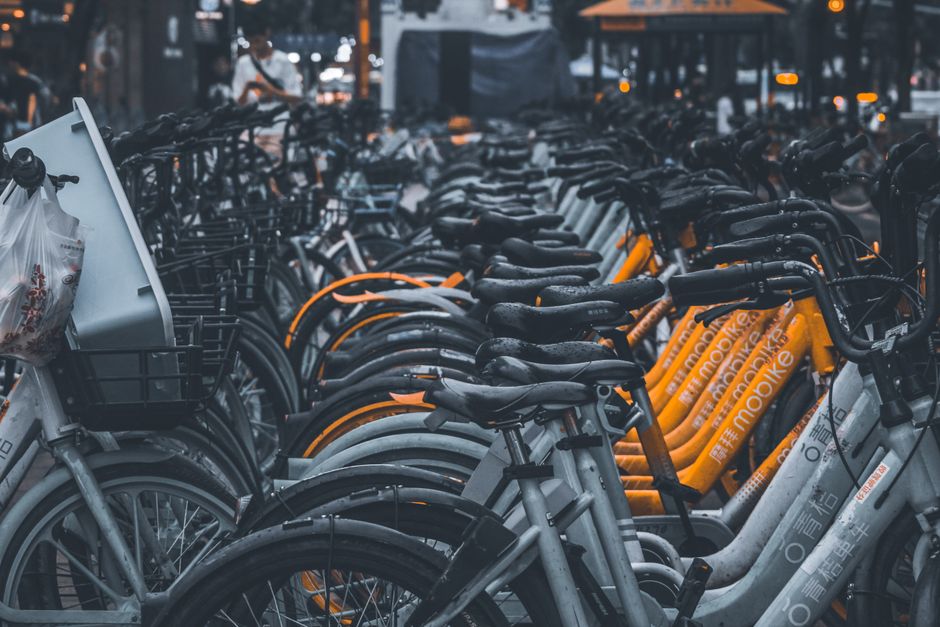
Photo by Zarif Afraim via Pexels
In winter and autumn, timing matters less for temperature and more for daylight and road conditions. Wet roads increase your chances of road spray, which is a different kind of arriving-at-work-wet problem. Mudguards solve this but require fitting them to your bike in advance.
If your workplace is flexible about hours, consider whether you can shift your start and end times by thirty minutes in summer months specifically. The temperature difference between 7:30am and 8:00am on a warm day can be significant enough to change your arrival state.
Clothing: What to Wear for a Dry Commute
The right riding clothing for commuting is breathable, moisture-wicking, and loose enough to allow air movement around your body. The worst option is tight synthetic sportswear that traps heat, closely followed by formal work clothes that you will be wearing all day and cannot wet out.
A quality heavyweight cotton tee is a better riding layer than it sounds. At 6.1oz, a garment-dyed cotton tee like the Simple premium tees breathes well, does not cling when damp, and looks presentable enough that you can go straight into a low-key work environment without changing the top half. The Coastal Waves T-Shirt is the same construction and works well in warmer weather. The Captain Puffin Wildlife Photographer T-Shirt, with hand-drawn artwork by New Zealand artist Maria, is the version for people who want something with a bit more character on the commute and at the coffee stop. Browse the full T-shirt collection for options across designs and fits.
For head coverage in sun, the Organic Trailblazer Dad Hat sits comfortably under a helmet or wears alone for rides where a helmet is not required.
The broader principle: ride in what you are comfortable being seen in, not in performance cycling kit that requires a complete change. If you ride in kit, budget the time for changing and factor in somewhere to store wet clothes.
The Changing Strategy
If your workplace has a shower, use it. This is the most reliable solution and removes most of the anxiety about arriving sweaty. Many workplaces that do not have a dedicated changing room have a toilet cubicle that can serve the same purpose for a quick change of shirt.

Photo by Ryan Lansdown via Pexels
Pack light. A clean shirt, deodorant, and a small towel or pack of face wipes can fit into a compact backpack or pannier. Some commuters use a dry bag inside their pack specifically for the clean clothes to keep them separate from any damp gear.
Cool-down before entering. If you ride hard despite best intentions and arrive warmer than ideal, a five-minute walk from where you lock your bike to the building entrance gives your core temperature time to drop. Arriving at a cool office also helps; stepping out of the heat into air conditioning and standing quietly for a few minutes does a lot.
A change of shirt mid-week is normal. Even with good technique and pacing, summer commuting in warmer climates means you will arrive damp sometimes. Having a spare shirt at your desk or in a locker normalises this as a non-issue rather than a crisis.
E-Bikes: The Honest Answer
If arriving dry is a hard requirement and your commute involves significant climbing or distance above 15 km, an e-bike is the most reliable solution. The pedal-assist does not eliminate the effort, but it caps the intensity at whatever level you choose. With pedal-assist on a climb, you can maintain your effort below the threshold where significant sweating begins, regardless of the gradient.
E-bikes have grown substantially in both availability and quality over the past five years. The cost is still higher than a conventional bike, but for a daily commuter, the calculation includes fuel savings, parking costs, and transport costs that make the comparison more favourable than it appears at first. Many cities now have e-bike share programmes that let you try commuting by e-bike before committing to a purchase.
The weight of an e-bike is a consideration for routes that require carrying the bike up stairs or through a building. Cargo bikes with e-assist are a separate category for riders who need to carry children or significant loads.
Frequently Asked Questions About Cycling to Work Without Sweating
How far can I realistically commute by bike without arriving sweaty?
For most people at a casual pace, 5 to 10 km in mild conditions is achievable without needing to change. Above 10 km or in warm weather, some level of freshening up is usually necessary regardless of pacing strategy. The distance threshold drops with temperature, elevation gain, and sun exposure. If your commute is genuinely 15 km or more with hills, planning to change a shirt at work is the more realistic approach than hoping to arrive completely fresh.
Does the type of bike affect how much I sweat?
Riding position affects your effort level, which affects sweat rate. An upright commuter bike positions you less aerodynamically than a road bike, but it distributes weight more comfortably and typically results in a more relaxed cadence for most riders. A well-fitted bike reduces the effort required at any given speed. Tyre pressure matters too: underinflated tyres increase rolling resistance and make you work harder on the same route.
What should I do if there is no changing facility at work?
A toilet cubicle is sufficient for a shirt change and a wipe-down. A small towel, deodorant, and a fresh shirt can fit in a slim pack and take under five minutes to use. Baby wipes or cooling face wipes work well for a quick freshen-up. Some commuters keep a permanent kit of these items at their desk rather than carrying them daily.
Are there specific fabrics I should avoid when cycling to work?
Avoid non-breathable synthetic fabrics that trap heat and form odour quickly when damp. Tight-fitting compression fabrics are designed for sport performance, not commuting comfort. Heavy denim is the worst option: it absorbs moisture, dries slowly, and is uncomfortable when damp. A loose, breathable natural fibre tee or a moisture-wicking casual shirt is the right call for most commutes.
Is it worth getting panniers instead of a backpack for commuting?
Yes, for commutes longer than a few kilometres. A backpack creates a warm zone on your back that significantly increases sweating in that area, particularly in warm weather. Panniers move the load to the bike and allow air to circulate freely around your back. The downside is the need for a rack and the slight inconvenience of loading and unloading compared to a backpack. For summer commuting specifically, the difference in back sweat is large enough that panniers are worth the setup cost.
You Might Also Like
Wear it out there
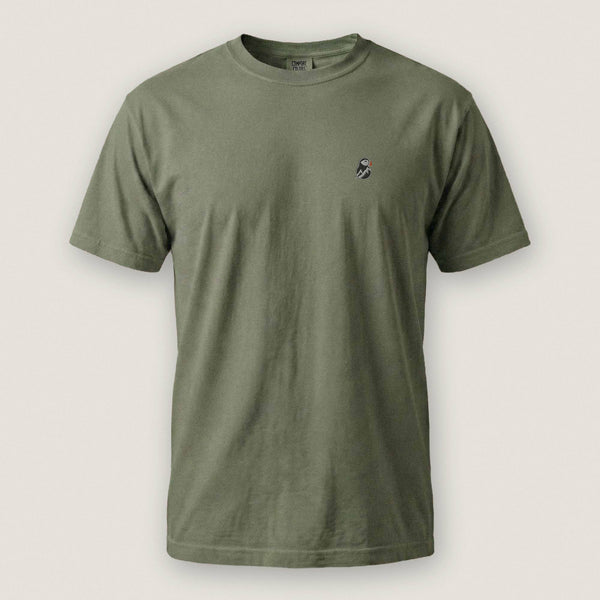
Simple
$75.99
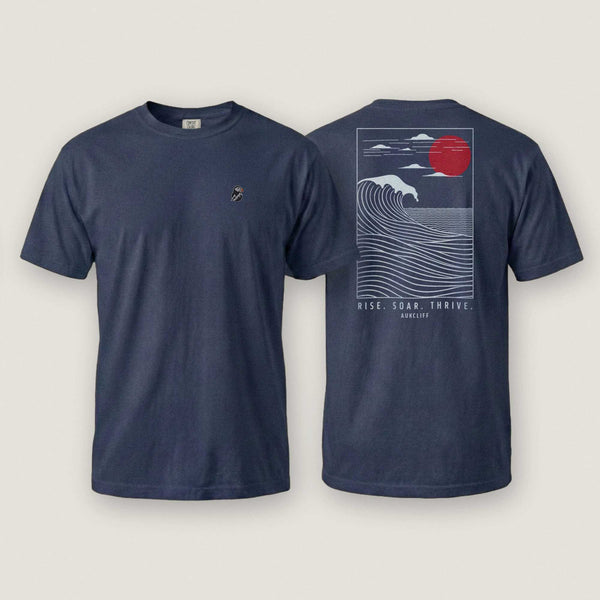
Coastal Waves
$101.99

Captain Puffin Wildlife Photographer
$84.99

Captain Puffin Hiker
$84.99
Get the next one
New designs as they land, and the stories behind them. Unsubscribe in one click.