

Birdwatching has become one of the most widely practised outdoor activities in the world. The US Fish and Wildlife Service counts 96 million Americans who engage in birding, representing 37% of the population. Cornell Lab of Ornithology reports that 1 in 3 US adults now identifies as a birdwatcher. In the UK, the RSPB Big Garden Birdwatch 2025 attracted over 590,000 participants who collectively counted 9.1 million birds in a single weekend. And the economics are significant: Grand View Research valued the global birdwatching tourism market at $67.4 billion in 2024, with projections reaching $96.15 billion by 2030.
Most of those people own binoculars and a field guide. Far fewer have thought carefully about what they're wearing, which matters more than most beginners realise.
Why Clothing Matters for Birdwatching
Birds respond to visual and auditory cues. They detect movement first, then colour contrast against their environment, then sound. If you're wearing a bright white or red jacket, moving quickly, and making noise as your nylon shell rustles, you are telling every bird in range that something unusual is happening. The birds that matter most, the shy species in reeds, the ground-nesting birds on moorland, the raptors hunting open ground, are the most sensitive to exactly these signals.
Getting closer to birds requires managing all three: minimise movement, reduce contrast with your surroundings, and eliminate noise. Your clothing handles the second and third of those.
Colour: What Actually Works
The standard advice is to wear earth tones: browns, greens, olive, khaki, dark grey. This is correct for most environments but the specific shade matters less than people think. What you want to avoid is high contrast against the background. A dark navy jacket stands out in the same way a bright red one does when you're standing against a pale winter sky or golden reed bed.

Avoid white, bright blue, yellow, and orange for any serious birdwatching. Most birds see colour similarly to humans, and some species are more sensitive to UV than we are. Stick to muted, mid-toned naturals and you'll cover most situations.
Camouflage patterns are optional. They help in open habitats where there's no cover, but in woodland, a plain olive or brown is as effective. The bigger issue is usually movement rather than pattern. A perfectly camouflaged person who waves their arms will flush birds faster than someone in a plain grey hoodie who moves slowly and deliberately.
Fabric: Quiet is More Important Than Technical
Noise is the overlooked variable in birdwatching clothing. Modern performance outerwear is often made from nylon or polyester with a DWR coating, and when you move, these fabrics create a swishing, rustling noise that carries surprisingly well in still woodland or open marsh. Birds that haven't seen you will hear you coming.
Soft-shell fabrics and fleece are quieter. Woven cotton is quieter still. A heavyweight cotton garment brushing against a hide edge or a reed stem makes almost no noise. This is one of several reasons cotton base layers have a genuine advantage in birdwatching that gets overlooked in the broader outdoor clothing conversation, where synthetic and merino dominate.
The Captain Puffin Wildlife Photographer T-Shirt is built from 6.1oz premium garment-dyed cotton in muted, fade-resistant tones. It moves quietly, sits close to the body without bulk, and works as either a standalone piece on warmer days or a base layer under a fleece or shell. The Captain Puffin artwork is hand-drawn by artist Maria, which gives it a personality suited to someone who spends real time outdoors watching wildlife rather than just talking about it.
For cooler conditions, the Captain Puffin Wildlife Photographer Sweatshirt in 9oz premium fleece adds warmth without adding noise. It's thick enough to cut wind on exposed headlands and coastal marshes, and the cotton face fabric is substantially quieter than any synthetic fleece equivalent.
Layering for a Full Day's Birdwatching
Serious birdwatching involves a lot of standing and waiting, punctuated by slow movement. This creates a specific thermal management problem: you cool down fast when stationary and warm up fast when walking to a new spot. The standard three-layer approach applies but with extra attention to weight and packability, since you're often carrying optics, field guides, and camera gear already.
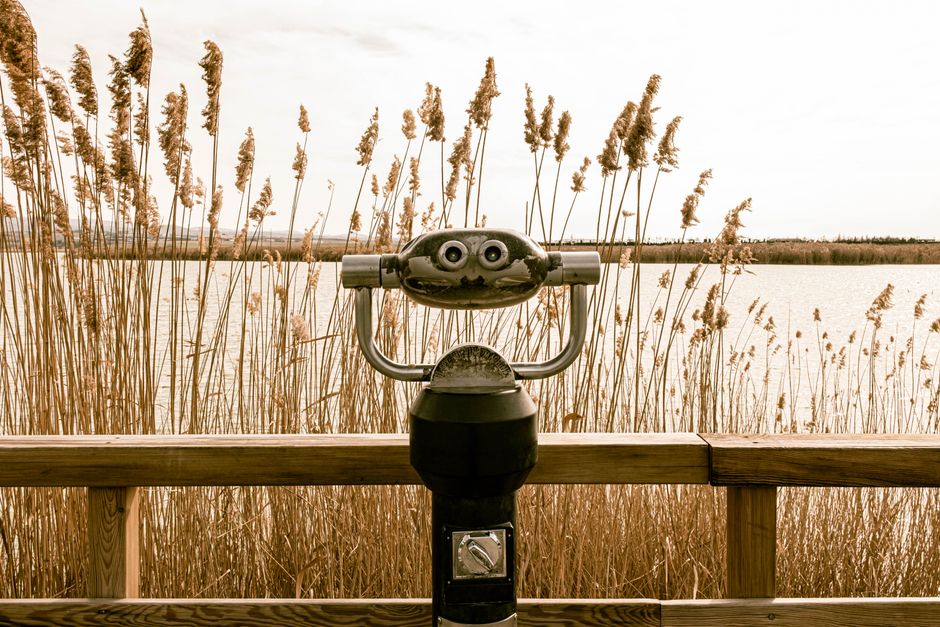
Photo by Ümit Çetin via Pexels
Base layer: lightweight cotton or merino in a muted colour. The Simple premium tees works well here in grey, olive, or any of the darker garment-dyed options. At 6.1oz it's not a technical performance fabric but it's comfortable, durable, and quiet.
Mid layer: a fleece or softshell that packs small. The premium 9oz fleece used in AukCliff's sweatshirts compresses reasonably and adds significant warmth over a base layer.
Outer layer: the one place where technical fabrics are often worth the noise trade-off. A waterproof shell will get used eventually, particularly in coastal and wetland environments. If you can find one in an olive or grey soft-shell fabric rather than a hard nylon shell, the noise reduction is meaningful. In dry conditions, leave the shell in your pack and you'll move more quietly.
An Organic Hat is worth including in any birdwatching kit. It reduces sky reflection off your face, which birds detect, keeps sun off your binocular eyepiece, and helps with cold mornings at the hide. Peaked caps also break up the human head silhouette slightly, which matters more than most people give it credit for.
Pockets: The Functional Priority
Field birdwatching generates a surprising amount of small kit: a phone for the app, a notebook and pen, lens wipes, a field guide, snacks, a spare battery. You need pockets that are accessible without taking off your optics and without making noise when you reach into them. Cargo pants and multi-pocket softshells solve this. Jeans do not.
The placement of pockets matters on your outer layer particularly. Front hand-warming pockets that double as bino rests when you're standing are more useful than chest pockets that interfere with binocular straps. Side access pockets you can reach without raising your arms above shoulder height are better in woodland where arm movement flushes birds.
Seasonal Clothing Considerations
Spring and early summer are peak birdwatching season for breeding activity and migration. Weather ranges from cold April mornings to warm May afternoons. The same layering logic applies but pack for morning cold: temperatures at a dawn vigil in April in northern Britain or the northern US can be close to freezing, even if the afternoon will be genuinely warm.

Photo by Abhishek Navlakha via Pexels
Autumn migration brings similar temperature variation and the added consideration of dew-soaked grass and reeds at dawn. Waterproof trousers are more useful in autumn than a waterproof jacket, since the moisture is usually coming from the vegetation around you rather than from above.
Winter birdwatching requires more insulation than you think you'll need. Standing at a seawatch point for two hours in a January easterly is genuinely cold even in moderate climates. Down or synthetic insulated layers under your shell add warmth without much movement penalty.
The full range of the Captain Puffin collection is built around the same ethos: outdoor-ready, practically designed, with artwork that belongs to the wildlife context rather than being grafted onto it.
Why Cotton Base Layers Work for Birdwatching
The outdoor industry spent the last twenty years telling people to avoid cotton. The argument was correct for high-intensity mountain sports where sweat management and wet-weather performance are critical. It's less applicable to the specific demands of birdwatching, where you're rarely generating enough heat to soak a cotton tee, and where the quiet, comfortable feel of good cotton against your skin over a long still day is a genuine advantage.
Heavyweight garment-dyed cotton like the 6.1oz premium fabric has better colour stability than cheap cotton alternatives, which means the muted tones stay muted wash after wash rather than fading to pale shades that show up more against natural backgrounds. The garment dyeing process also pre-shrinks the fabric, so the fit is consistent over time. For a piece you're going to wear regularly in the field, that matters.
Frequently Asked Questions
What colour should I wear for birdwatching?
Earth tones in mid-range saturation work best: olive, khaki, dark green, brown, grey. Avoid bright colours including bright navy, white, yellow, and orange. The goal is to reduce contrast with the background environment, so the ideal shade depends slightly on where you're watching. Dark greens and browns work in woodland. Grey and tan work on open ground. Avoid high-contrast patterns including black and white combinations.
Is a birdwatching jacket really necessary or can I wear any outdoor clothing?
Any muted-colour, quiet-fabric outdoor clothing works. You don't need specialist birdwatching gear. The things to avoid are bright colours, nylon shell fabrics that rustle when you move, and anything with reflective logos or trim. Beyond those, standard outdoor layering clothing in sensible colours is entirely adequate for most birdwatching situations.
What binoculars should I use for birdwatching?
For most birdwatchers, an 8x42 is the standard all-purpose specification. It gives a good balance of magnification, field of view, light-gathering ability, and weight. 10x42 gives more reach but a narrower field of view and more apparent shake. For sea-watching or open-country birding where target birds are far away, 10x50 is worth the extra weight. Entry-level options from Nikon, Olympus, and Celestron at around $150 to $200 are adequate for starting out. Swarovski, Zeiss, and Leica represent the top end at $1,500 to $3,000+.
Do I need camouflage for birdwatching?
Camouflage helps in specific situations: open marshland or grassland where there's no cover, hide-based photography at close range, or stalking ground-nesting species. For most woodland and coastal birdwatching, plain earth tones are equally effective and considerably more practical for daily life. A camouflage jacket worn on the train to a reserve and then in the supermarket on the way home creates unnecessary friction that plain clothing doesn't.
How important are pockets in birdwatching clothing?
Very important. A typical day's birdwatching kit includes binoculars (worn around neck), a phone, a notebook, pens, lens wipes, snacks, a field guide, and possibly a camera. You need to access most of these without taking off your optics and without creating noise or movement. Multiple front and side pockets, ideally with zips rather than buttons (quieter to operate), make a significant practical difference on a full day out.
AukCliff does not make a hard shell yet, but the Wildlife Photographer sweatshirt and the wider hoodies and sweatshirts range fill the quiet mid-layer role described here.


