
Bothy Etiquette: The Unwritten Code, the Kit List, and What to Bring
Quick answer: Bothy etiquette is the unwritten code that keeps a hundred unlocked stone shelters open across Scotland, Wales, northern England, and the wider mountain world. Carry out everything you carried in, leave the bothy better than you found it, sign the book, and bring more wood than you think you need. The kit is small: dry layers, a head torch, a stove, a sleeping bag, and food.
Bothy etiquette is the unwritten code that keeps a hundred unlocked stone shelters open and welcoming across Scotland, Wales, northern England and beyond. The rules are simple but rarely written down in one place. You do not book. You bring more food than you need. You leave the bothy cleaner than you found it. You sign the bothy book. You greet whoever else is there with the assumption that you are equals tonight, no matter who arrived first.
This guide covers the etiquette in full, the kit list that follows from the etiquette, and the differences between a Scottish bothy, a New Zealand DOC backcountry hut, and a Norwegian turisthytte. It is written for people who have stayed in one before and want a reference, and for people who are about to stay in one for the first time and want to do it right.
What is a bothy and how is it different from a hut?
A bothy is a basic mountain shelter, almost always free, almost always unlocked, with no booking system, no warden, no power, and often no running water. The Mountain Bothies Association maintains roughly a hundred bothies across Scotland, Wales and northern England under agreement with the landowners. Volunteers do the maintenance work. Use is on trust.
The equivalents around the world follow the same principle with different names and slightly different rules:
| Country | Local name | Booking | Fee | Maintained by |
|---|---|---|---|---|
| Scotland, Wales, N England | Bothy | No | Free | Mountain Bothies Association volunteers |
| New Zealand | Backcountry hut (standard, basic, bivvy) | Most basic and standard huts: no | Hut pass or ticket, basic huts free | Department of Conservation |
| Norway | Turisthytte (ubetjent or selvbetjent) | Self service, key from DNT | Member rate via DNT key | Den Norske Turistforening (DNT) |
| Iceland | Skáli | Yes, in season | Paid | Various hiking associations |
A bothy is the least booked, least serviced, and most reliant on the user behaving well of any shelter in this list. That is why etiquette matters more here than anywhere else.
The ten rules of bothy etiquette
The rules below are gathered from the Mountain Bothies Association's published Bothy Code, from the DOC backcountry hut guidance, and from forty years of bothy culture across the British uplands.
- Do not book. Bothies operate on first arrival, but the bothy is not yours when you arrive. Other parties may turn up at any hour. There is always room for one more, even if it means moving your kit.
- Greet whoever is already inside. Names, where you walked in from, how the weather is. Two minutes of conversation is the difference between a good night and an awkward one.
- Bring more food than you need. Someone always arrives wet, late, and underfed. A spare brew bag, a second packet of noodles, and an extra teabag costs nothing and changes the evening.
- Carry in all fuel. Most bothies have a stove but no fuel supply. Wood, coal, or smokeless briquettes carried in are the warmth that night. Never burn the bothy itself, the furniture, or the wooden beams. This has happened, and bothies have been lost because of it.
- Carry out all rubbish. Everything you bring in goes back out in your bag, including food waste, foil, and toilet paper unless there is a designated spade and trowel pit. The phrase to memorise is heavier going out than coming in.
- Use the spade. If there is no toilet, dig a hole at least 50 metres from the bothy and any water source, at least 15 cm deep. Burn the toilet paper in the stove or carry it out.
- Sign the bothy book. Names, date, route, weather, and a sentence. Maintenance officers read these. So do the next visitors.
- Sleep on the platform, not the floor. If there is a sleeping platform, use it. Floor space is for late arrivals.
- Quiet hours start at dark. Conversation continues. Music does not. Headtorches on red mode after midnight.
- Leave it better than you found it. Sweep the floor. Wipe the table. Stack the kindling for the next party. Close the door properly on the way out, into the wind if that is the prevailing weather direction.

What to bring to a bothy: the kit list
Bothy kit is different from camping kit in three ways. You can carry less shelter because the building is the shelter. You must carry more fuel and food because there is no resupply. And you should carry insulation that performs at rest, not just on the move, because most of bothy life is sitting still around a stove that takes a while to warm the room.
Sleep system
A four-season sleeping bag is the wrong tool. The bothy itself takes the worst of the weather, so a three-season bag rated to about 0 degrees Celsius is enough for most of the year in the UK. In a Scottish winter or NZ alpine winter, a synthetic over-bag or a liner adds the margin without the weight of a true expedition bag. A closed-cell foam pad is enough on a wooden sleeping platform. An inflatable pad is comfort, not a requirement.
Stove and kitchen
The bothy fire warms the room. It does not cook your dinner. Carry a small canister stove (an MSR PocketRocket Deluxe, a Soto Windmaster, or equivalent) for water and food. Carry one pot, one spoon, one mug. A Stanley or Aladdin flask becomes the kettle for any party arriving in dark or wet weather. It is the single piece of kit most overlooked by first time bothy visitors.
Layering for sitting still
The mid layer is the most important garment in bothy kit. It is what you wear from the moment the stove is lit until the moment you climb into the bag. The same logic from our piece on high altitude layering above the treeline applies, but at rest rather than on the move.
Comparison: bothy clothing brands worth knowing
| Brand | Best for | Where it fits |
|---|---|---|
| Páramo | Quiet, breathable directional waterproofs | Outer layer, walk in and walk out |
| Klättermusen | Natural fibre insulation, Swedish design | Mid to insulating layer at rest |
| Fjällräven Keb | Hardwearing G-1000 trousers and shells | Trousers and outer shell |
| AukCliff | Midweight cotton-poly mid layer with brushed interior | Stove side, sleep side, the layer you live in |
What to leave behind
- Tent. The building is the shelter. Carry a bivvy bag only if the bothy might be full.
- Bluetooth speaker. Quiet hours start at dark and the room is small.
- Heavy four-season sleeping bag. Overkill three seasons of the year. Use a lighter bag and a liner.
- Single use plastic. Everything goes out with you. Less packaging in means less weight out.

Why AukCliff built an Alpine Bothy Captain Puffin
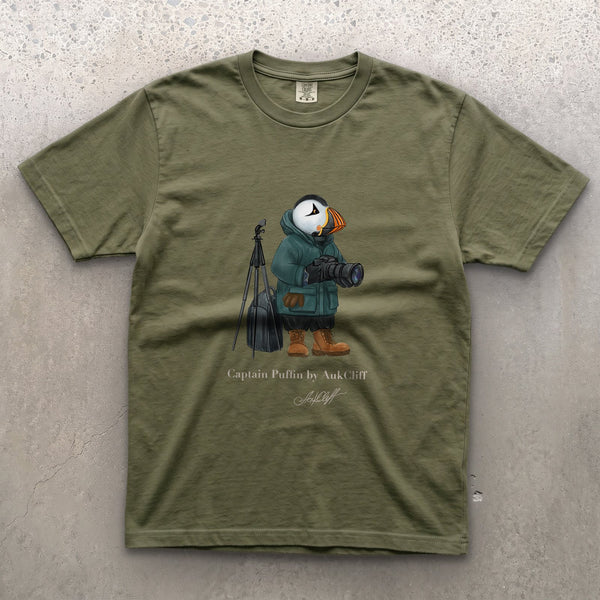
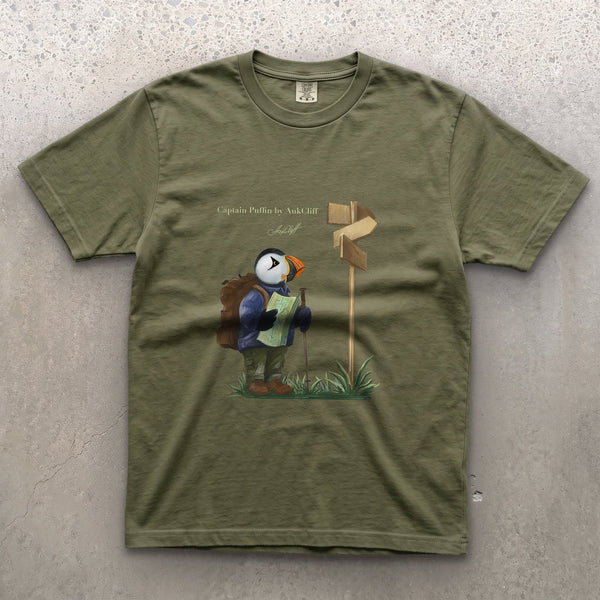
The Captain Puffin character series is hand-drawn, and each Captain represents a specific outdoor discipline or moment. The Alpine Bothy Captain Puffin T-shirt exists because customers asked for the in-between. There was a Summit Hiker for the destination. There was a Bird Photographer for the hide. There was no character for the evening, the stove, and the arrival.
The Alpine Bothy Captain Puffin Sweatshirt is printed on a midweight 80/20 cotton-poly fleece with a softly brushed interior, roughly 290gsm (Cotton Heritage M2480 blank). It sits in the layering system as the layer you live in once the day is over. It is what you put on when you arrive at the bothy, drop the pack, and lean on the stove waiting for the kindling to catch. It is what you sleep in if the bag is light. It is the layer most visible to whoever else turned up tonight.
Frequently Asked Questions
Do you need to book a bothy?
No. Mountain Bothies Association bothies cannot be booked. Arrival is first come, first room on the platform, but the building does not become yours when you arrive. Late parties may turn up at any hour and you make space. This is the rule that defines the culture.
Do you bring food to share at a bothy?
You bring food for yourself plus a small extra margin. You do not arrive with a banquet expecting to feed the bothy, and you do not arrive without enough expecting to be fed. A spare brew bag, a second packet of noodles, and an extra teabag is the standard. Sharing happens naturally when someone arrives late and wet.
What should you write in the bothy book?
Name, date, where you walked in from, where you are heading next, the weather, and one or two sentences about the night. Bothy books are read by Mountain Bothies Association maintenance officers and by the next visitors. A useful entry mentions any maintenance issue, the state of the fuel pile, and whether the stove is drawing properly.
Can you light a fire in a bothy?
Yes if there is a stove or open fireplace, using fuel you have carried in. Never burn the bothy itself, the wooden furniture, the floorboards, or the beams. Several bothies have been lost to fires lit with structural timber when fuel ran short. If you arrive without fuel and the previous party has left some stacked, take only what you need for the night and leave the rest for the next arrival.
How is bothy leave-no-trace different from wild camping leave-no-trace?
Bothy leave-no-trace is stricter on rubbish and softer on the ground because the building absorbs the impact. Everything brought in goes back out, including food scraps and toilet paper unless there is a designated pit. The floor is swept before leaving. The table is wiped. Kindling is stacked for the next party. The standard is to leave the bothy better than you found it, not just untouched.
Shop the Alpine Bothy Captain Puffin Sweatshirt or browse the full Captain Puffin collection for the other characters in the AukCliff field.
Last updated: May 2026
Wear it out there
Simple
$75.99
Coastal Waves
$101.99
Captain Puffin Wildlife Photographer
$84.99
Captain Puffin Hiker
$84.99
Get the next one
New designs as they land, and the stories behind them. Unsubscribe in one click.