
Hiking in Canada: Best Trails from Coast to Coast
Canada has more trail kilometres per person than almost any country on earth, and a population that uses them seriously. According to Statistics Canada, seven in ten Canadian households participate in outdoor activities, with hiking the most popular at 43% participation. In British Columbia alone, 82% of households take part in outdoor activities, the highest rate of any province. This is not casual weekend strolling. Canadians hike properly, in serious terrain, often far from the nearest road.
For visitors and Canadian residents alike, the challenge is not finding trails but choosing between them. This guide covers the best routes from each major region, with practical notes on permits, seasons, and what you actually need to bring.
British Columbia: The West Coast Trail
The West Coast Trail on Vancouver Island's southwest coast is 75 kilometres of genuine wilderness hiking along a coastline that wrecked dozens of ships before the trail was cut as a rescue route in the early 1900s. It takes most people five to seven days, requires crossing tidal zones and using cable cars over ravines, and offers some of the most dramatic coastal scenery in North America.
Parks Canada limits access to 70 hikers per day to protect the trail and the surrounding old-growth forest. Permits are allocated through an advance reservation system (opening in January for the May to September season) and a limited daily quota for walk-up hopefuls. The trail costs $260 CAD per person including the permit and two ferry crossings. Book early. Many people try for years before getting a reservation.
The trail covers everything: muddy rainforest sections, ladder scrambles down sea cliffs, long beach walks on hard-packed sand, and river crossings. You will be wet. You will be tired. The reward is camping on empty beaches that most people will never see, surrounded by old-growth cedar and sea stacks. It earns its reputation.
Pack for rain and cold even in summer. The coast gets significant precipitation year-round and temperatures rarely exceed the low 20s Celsius. Layering is the only approach that works. Start with a moisture-wicking base, add a fleece, and carry a waterproof shell. The Peak Junkie Hoodie in 9oz premium fleece fits this role well, warm enough to be useful in camp after a wet day, packable enough to stuff into a bag when you are moving.
Alberta: Banff and the Canadian Rockies
Banff National Park is the most visited park in Canada, drawing 4.2 million visitors annually according to Parks Canada. That number is a good argument for going in shoulder season, September and early October, when the larch trees turn gold, the crowds thin, and the days are still long enough for serious hiking.

The Rockies offer every level of hiking from lakeside strolls to serious multi-day backcountry routes. For day hiking, the Plain of Six Glaciers trail above Lake Louise (14 km return, 365m elevation) gives you alpine meadows, a working glacier, and the famous tea house if you time your arrival right. The Sentinel Pass trail (11.6 km, 725m elevation) via Larch Valley is one of the finest day hikes in the country when the larches are turning.
For multi-day routes, the Skyline Trail in Jasper National Park (44 km, 2-3 days) stays above treeline for most of its length, with views of the Athabasca Valley and the Columbia Icefield. The Egypt Lake loop in Banff is a quieter option with excellent wildlife viewing. All Banff backcountry requires a wilderness pass ($10.02 CAD per person per night), booked through Parks Canada's reservation system.
The Born of the North Hoodie is worth knowing about for Rockies hiking. The name fits the territory. Evening temperatures in Banff drop sharply even in midsummer, and a quality fleece hoodie is the single most useful piece of clothing you can carry.
Newfoundland: Gros Morne National Park
Gros Morne is UNESCO-listed for its geological significance, a place where the earth's mantle has been pushed to the surface by ancient tectonic forces, creating a landscape unlike anywhere else in the world. The Tablelands, a rust-red plateau of peridotite rock where almost nothing grows, looks like Mars. The fjords at Western Brook Pond look Scandinavian. It is strange and arresting terrain.
The Gros Morne Mountain trail (16 km return, 806m elevation) is the signature hike. The summit plateau is above treeline and can be disorienting in low visibility, so go in good weather. The ascent through the gully is steep and involves some scrambling. The views from the top across the Bonne Bay fjord and out to the Gulf of St. Lawrence are worth every metre.
Western Brook Pond is a land-locked fjord (technically a freshwater lake, but with fjord topography) reached by a flat 3 km trail across a bog. The boat tour on the pond is excellent, but the walk alone is worth doing for the views of the 668-metre cliffs rising from the water.
The Embrace The Mountain Call Tee works well for Newfoundland's shoulder seasons, spring and early summer before blackfly season peaks, and September when the weather is stable. The 6.1oz heavyweight garment-dyed cotton handles the variable conditions without looking out of place in the small fishing towns around the park.
Ontario: The Bruce Trail
The Bruce Trail runs 900 kilometres along the Niagara Escarpment from Niagara to Tobermory on the tip of the Bruce Peninsula. It is the oldest and longest marked footpath in Canada. You can hike it in sections over years, or attempt the full thru-hike in one go, which takes most people around 45 days.
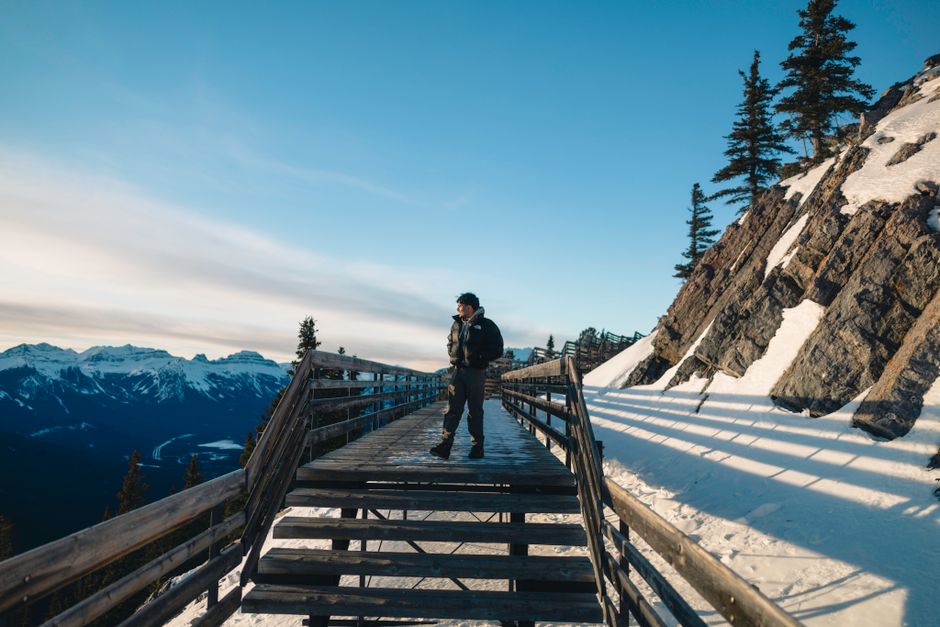
Photo by Ali Kazal via Pexels
The Bruce Peninsula National Park section at the northern end is the most dramatic stretch, with the Georgian Bay shoreline, ancient white cedar trees growing from limestone cliffs, and the famous Grotto sea cave accessible by a short hike from the Cyprus Lake campground. Parking at the trailheads in the national park requires advance reservation in summer, and the most popular access points book out weeks ahead.
The Niagara Escarpment is not alpine terrain but it is genuinely beautiful, particularly in October when the mixed forest colours. For day sections, the Fathom Five section around Tobermory is the strongest choice. The village has good food and accommodation and the ferry to Flowerpot Island adds a half-day extension.
Nova Scotia: The Skyline Trail, Cape Breton
Cape Breton Highlands National Park holds the Skyline Trail, a 9.1 km loop that follows the headland cliffs above the Gulf of St. Lawrence with views that, on a clear day, rank among the best on the east coast. The trail requires a timed entry permit in summer (Parks Canada reservation system) because the cape is a significant moose habitat and too many people in the meadow area causes real damage.
Go at dusk if you can. The cliff-top boardwalk faces west over the gulf and the sunsets from there are exceptional. The surrounding highlands offer another 25+ trails of varying difficulty, and the Cabot Trail driving route that encircles the park is worth doing as a full loop over two to three days with hikes built in.
The Life on the Edge T-Shirt earns its name on the Skyline headland. The cliff edges here are serious. Stay on the boardwalk in the cape section and treat the edge with respect, the cliff drops are significant and the trail infrastructure is there for a reason.
What to Pack for Canadian Hiking
Canada's conditions vary more than almost any other hiking destination. A summer day in Banff can go from 22°C and sunny to sleet and near-freezing in two hours. The West Coast Trail delivers rain in any season. Cape Breton fog can roll in off the Atlantic without warning.

Photo by James Wheeler via Pexels
The core packing principles that hold across all Canadian hiking: carry more layers than you think you need, assume weather will change, bring waterproofs, and never underestimate distances. Parks Canada's 15 million annual national park visitors (per Parks Canada data) include many people who are underprepared. Do not be one of them.
Day pack essentials: water (1 litre per 2 hours minimum), food beyond your estimated needs, map and compass (do not rely solely on phone GPS), first aid kit, headlamp, emergency blanket, and insect repellent from May through September in forested areas. Backcountry camping requires bear canisters or hang systems in most parks. Check the specific park regulations before you go.
The Origin Collection covers clothing built for extended outdoor time. Pieces designed to layer, look after themselves on the trail, and still be worth wearing off it.
Frequently Asked Questions
When is the best time to hike in Banff?
September and early October for the golden larch season and thinner crowds. Late June and July for wildflowers and long daylight. August is peak season, trails are crowded and parking is scarce. Avoid major holiday weekends regardless of the season. High-elevation trails are often snowbound until late June and can receive snow again by late September.
Do I need permits for day hiking in Canadian national parks?
A Parks Canada discovery pass is required to enter all national parks, costing $10.50 CAD per day per adult or $72.25 for an annual pass. For specific popular trails like the West Coast Trail and the Skyline Trail boardwalk, timed entry reservations are also required in peak season. Check the Parks Canada website for each park you plan to visit.
How dangerous is bear country hiking in Canada?
Bear encounters are possible throughout most of Canada's wilderness. The risk is manageable with sensible precautions: carry bear spray (readily available in Canadian outdoor stores, significantly more effective than noise-making devices), make noise on the trail, never approach wildlife, store food correctly, and know the difference between black bear and grizzly bear behaviour. The vast majority of hikers in bear country complete hundreds of trips without a serious encounter.
Is the West Coast Trail suitable for beginner hikers?
No. Parks Canada recommends the West Coast Trail only for experienced hikers who are physically fit, comfortable with route-finding, and capable of handling emergency situations in a remote environment. The trail involves exposed ladders, log scrambles, tidal crossings, river wading, and sections where assistance is hours away. Get solid multi-day backcountry experience on easier routes first.
What is the difference between Banff and Jasper National Parks?
Both parks are in the Canadian Rockies and share similar terrain. Banff is larger, more visited, and has the Lake Louise and Banff townsite hubs with extensive infrastructure. Jasper is quieter, has arguably better wildlife viewing (particularly along the Maligne Valley), and feels more remote despite being accessible. The Icefields Parkway connects the two parks over 230 kilometres of mountain highway and is worth driving slowly with hiking stops along the way.
You Might Also Like
Wear it out there
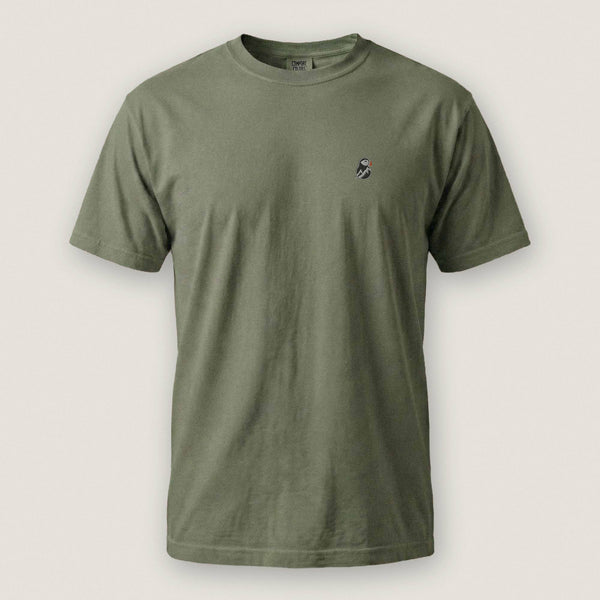
Simple
$75.99
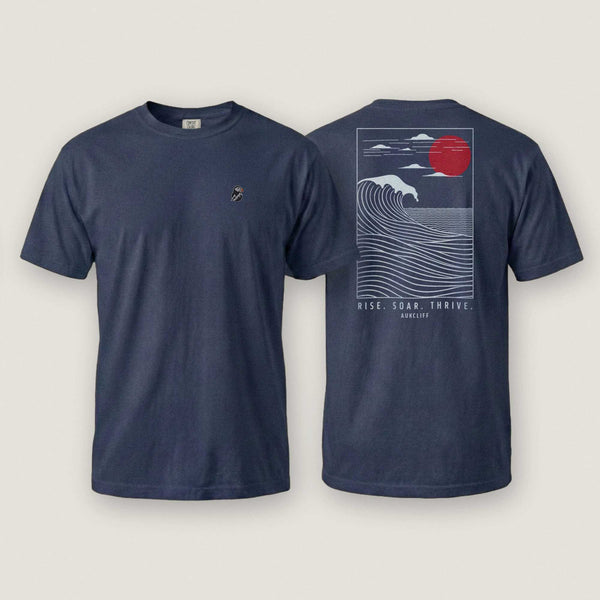
Coastal Waves
$101.99
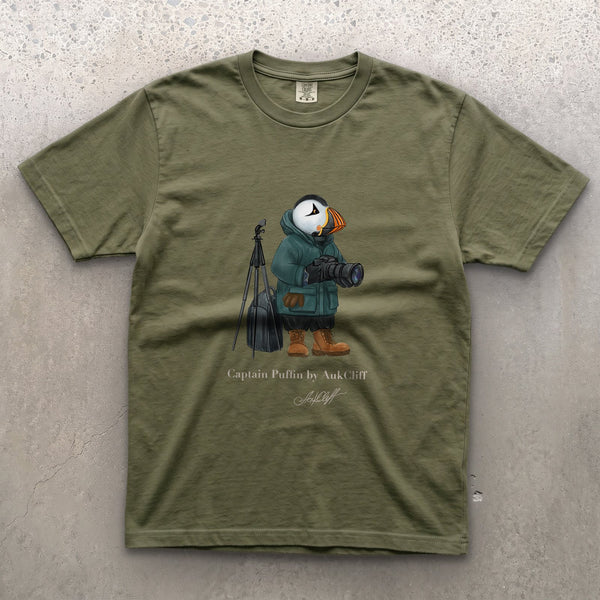
Captain Puffin Wildlife Photographer
$84.99

Captain Puffin Hiker
$84.99
Get the next one
New designs as they land, and the stories behind them. Unsubscribe in one click.