
Backpacking Adventures: How to Plan Your First Trip
Backpacking participation has grown dramatically over the past decade. The Outdoor Industry Association reports 61 million US hiking participants in 2023, an 89% increase since 2010. That growth includes millions of people attempting multi-day backcountry trips for the first time, many of them underprepared in ways that make their first experience worse than it needs to be, and sometimes genuinely dangerous.
This guide covers what you actually need to know before you shoulder a pack and walk into the backcountry, from choosing the right trail to what to eat, how to manage water, and the common mistakes that experienced backpackers have all made at least once.
Choosing Your First Trail
The single most common planning mistake first-time backpackers make is choosing a trail that's too long or too difficult. The excitement of planning trips, combined with the tendency to underestimate how different hiking with a 35-40 pound pack feels compared to day hiking, leads people to plan 15-mile days that turn into death marches.
For a first overnight trip, plan for 6 to 8 miles per day with a loaded pack. That feels slow if you're used to day hiking, but it accounts for the weight, the navigation time, the camp setup and breakdown, the extra breaks, and the general unfamiliarity of moving through backcountry terrain with all your kit on your back.
A good first trip structure is a two-night, two-day trip: drive to the trailhead, hike 6 to 8 miles to camp, spend a night, spend a day exploring from base camp or move to a second site, hike out the next day. This gives you a full backcountry experience without committing to a route where you have to cover miles every day regardless of how you feel.
The National Trails System spans 88,600 miles according to the Pacific Crest Trail Association, which means there is no shortage of options. Start with a trail in a region you know, ideally one a more experienced friend has done, with good waymarking, reliable water sources, and established camping spots. The Appalachian Trail's southern sections in Georgia and North Carolina, the John Muir Trail's northern entry points, and the Olympic National Park wilderness routes in Washington are all solid choices for first trips.
Essential Gear: What You Actually Need
The backpacking gear industry produces an overwhelming amount of equipment at every price point. Here's what genuinely matters and what doesn't.

Pack: A 55 to 65 litre pack fits three seasons of gear for most trips. It should fit your torso length, not just your height. Go to a shop and get fitted. A pack that transfers weight to your hips correctly is more important than its brand or weight. Most of the load should sit on your hips, not your shoulders.
Shelter: A freestanding three-season tent in the 2.5 to 3.5 pound range covers most conditions. Non-freestanding designs save weight but require practice to pitch correctly. Tarps are lighter still but demand experience with staking patterns and site selection. For a first trip, a standard freestanding tent is the right call.
Sleep system: A sleeping bag rated to around 20°F (-7°C) handles three seasons in most climates if you have an insulating pad underneath. The pad is not optional: without it, you lose more heat to the ground than your bag replaces. An R-value of 3.0 or higher is adequate for three-season ground conditions in most of North America and Europe.
Water: A filter or treatment system is non-negotiable. Sawyer Squeeze and Katadyn BeFree are the most widely used lightweight options. Iodine tablets are a backup worth carrying. Treat all backcountry water sources, including mountain streams that look clean. Giardia is colourless, odourless, and not worth the risk.
Navigation: Download offline maps before you go. Carry a compass and know how to use it. Phone GPS relies on battery and signal that you may not have. For serious backcountry routes, a dedicated GPS device is worthwhile. Knowing how to read a topographic map is a skill worth acquiring before you need it.
Food and Nutrition for Multi-Day Trips
Backpacking burns significant calories. At altitude or in cold conditions, 3,000 to 4,000 calories per day is realistic for a moderately active person carrying a full pack. Most people underestimate this and under-pack food, which makes days harder than they need to be and compounds fatigue.
The standard target is roughly 1.5 to 2 pounds of food per person per day. Focus on caloric density: nuts, nut butters, hard cheeses, cured meats, dried fruits, and whole grain crackers pack well and deliver energy without requiring cooking. Freeze-dried meals are convenient for evening meals when the effort of cooking from scratch is low after a hard day, but they're expensive and wasteful for every meal.
Bear canisters are required in many wilderness areas and strongly recommended everywhere else. Hanging food in a tree is increasingly ineffective as bears learn to defeat common hang patterns. A canister adds about 2 pounds to your pack but removes the nightly logistics problem entirely. In areas with bear boxes at established camps, you don't need one, but know the regulations for your specific route before you go.
Fitness Preparation
Backpacking fitness is specific. Road running or gym work helps your cardiovascular capacity but doesn't prepare your joints, tendons, and stabiliser muscles for the lateral stress of hiking on uneven terrain with weight on your back. The best preparation for backpacking is loaded hiking, and the sooner you start doing it before your trip, the better.
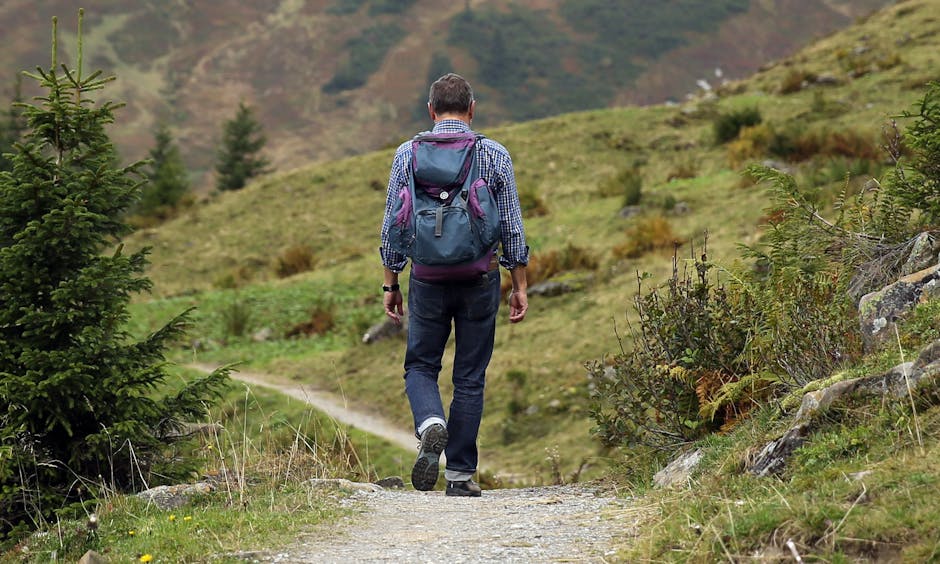
Photo by Pixabay via Pexels
Six weeks out: start day hiking once or twice a week with a pack loaded to about half your expected trip weight. Focus on hills rather than flat ground. Four weeks out: increase pack weight closer to trip weight. Two weeks out: do a one or two night shakedown trip if possible. This is the single most valuable preparation step because it reveals gear problems, fit issues, and fitness gaps while you can still do something about them.
Ankle strength is often the limiting factor, particularly on rough terrain. Single-leg balance work, calf raises, and lateral step-ups help. If you have a history of ankle sprains, tape or brace your ankles until your stabilisers are reliably strong.
Solo Versus Group Backpacking
The AT Conservancy and The Trek report that about 25% of Appalachian Trail thru-hike attempts are completed, and women now make up 42.5% of AT thru-hikers according to Statista, up from 38% in recent years. The community aspect of trail culture is a significant reason people attempt and complete long-distance routes.
Solo backpacking is genuinely rewarding and billions of people do it safely each year. The key differences from group travel are practical: you carry all the shared gear weight yourself, you have no backup if you're injured or lost, and decision-making is entirely your own. For a first trip, a small group is safer and more forgiving of mistakes. If you want to solo trip, start on a well-trafficked trail where you'll encounter other hikers regularly and where rescue access is feasible.
Always file a trip plan with someone who will not be on the trip: your intended route, trailhead, campsites, and expected return time. Tell them exactly when to call search and rescue if they haven't heard from you. This costs nothing and has saved lives.
What to Wear on Trail
Backpacking clothing follows the same layering logic as any mountain activity, with the additional constraint that you're carrying everything and wearing the same pieces for multiple days. Choose pieces that serve double duty: a base layer that works for hiking and sleeping, a midlayer that handles camp evenings and cold mornings on trail, a waterproof shell that lives compressed in the top of your pack.

Photo by Oziel Gómez via Pexels
A good cotton tee in the right weight is a solid choice for a base layer on mild to warm trips. The Life on the Edge T-Shirt and Raised on Peaks T-Shirt are both cut from 6.1oz premium fabric that holds up to repeated wearing and washing, which matters when you're wearing the same piece for three days in the backcountry. The garment-dyed finish means the colour stays consistent rather than washing out.
For evenings and cool mornings, the Peak Junkie Hoodie in premium 9oz fleece does the job as a camp layer without adding much weight. The Born of the North Hoodie is another solid option for colder conditions or high-elevation routes where temperatures drop significantly after sunset.
The full Origin Collection is built around the same practical approach: well-made pieces designed in New Zealand for people who spend real time outdoors.
Leave No Trace: The Baseline
Leave No Trace (LNT) is a set of principles that govern backcountry behaviour. The core seven principles are: plan ahead and prepare; travel and camp on durable surfaces; dispose of waste properly; leave what you find; minimise campfire impacts; respect wildlife; be considerate of other visitors.
The most consequential in practice are waste disposal and camping surface choice. Human waste must be buried in a cat hole at least 200 feet from water sources, trails, and camp. Used toilet paper should be packed out in a sealed bag in most wilderness areas, particularly high-use environments. Carry a dedicated waste bag for this purpose.
Camp on established sites or bare rock and mineral soil, not on vegetation. Set up tents on dirt, gravel, or rock rather than grass or alpine meadow, which takes years to recover from compaction. The cumulative impact of millions of backpackers making small, easy choices is what keeps wilderness areas wild for the next generation.
Frequently Asked Questions
How much does it cost to get started with backpacking?
A functional first setup including pack, tent, sleeping bag, sleeping pad, and water filter runs roughly $400 to $700 buying mid-range new gear, or less if you borrow, rent, or buy secondhand. Renting gear from an outfitter for a first trip is a good option: you spend less, and you can make informed decisions about what to buy after you've used equipment for a trip or two. The most worthwhile investments are a well-fitted pack and a reliable shelter. Cut costs elsewhere first.
How do I find a good beginner backpacking trail?
AllTrails, Gaia GPS, and the REI Trail Finder all allow filtering by difficulty, length, and features. The Washington Trails Association (WTA) and regional AMC trail guides offer detailed condition reports and user reviews. For a first trip, look for trails with clear waymarking, established campsites with bear boxes or good hanging options, reliable water sources, and elevation gain under 1,500 feet per day. A trail where you'll encounter other hikers provides a safety margin and navigation help if needed.
What is the most common mistake first-time backpackers make?
Overpacking. First-time backpackers typically carry 15 to 20 pounds more than they need. The "just in case" items, the duplicate clothing, the heavy cooking systems, and the full-sized everything add up to a pack that turns enjoyable hiking into a suffer-fest. Before each trip, weigh your pack and question every item over 1 pound. The lighter your base weight, the more enjoyable the experience. Most experienced backpackers aim for a base weight (without food and water) of 15 pounds or less.
How do I handle blisters on a backpacking trip?
Prevention is more effective than treatment. Break in your footwear on loaded day hikes before your trip. Wear liner socks under hiking socks to reduce friction. Address hot spots immediately rather than waiting for a blister to form: stop, dry your feet, and apply moleskin or kinesiology tape at the first sign of rubbing. If a blister does form, drain it with a sterilised needle, keep it clean, and cover it with a donut-shaped padding that takes pressure off the blister rather than onto it. Change socks daily if possible and air your feet at lunch.
Is backpacking safe for solo women?
Yes. Millions of women backpack solo safely every year and the trail community is broadly welcoming. The same precautions apply as for any solo travel: file a trip plan with someone at home, carry a personal locator beacon on remote routes, be aware of your surroundings in camp, and trust your instincts if a situation feels wrong. The growth in women's thru-hiking, from 38% to 42.5% of AT thru-hikers in recent years, reflects a genuine cultural shift in who the trail belongs to. The Appalachian Trail Conservancy and similar organisations publish solo safety resources specifically for women hikers.
You Might Also Like
Wear it out there
Simple
$75.99
Coastal Waves
$101.99
Captain Puffin Wildlife Photographer
$84.99
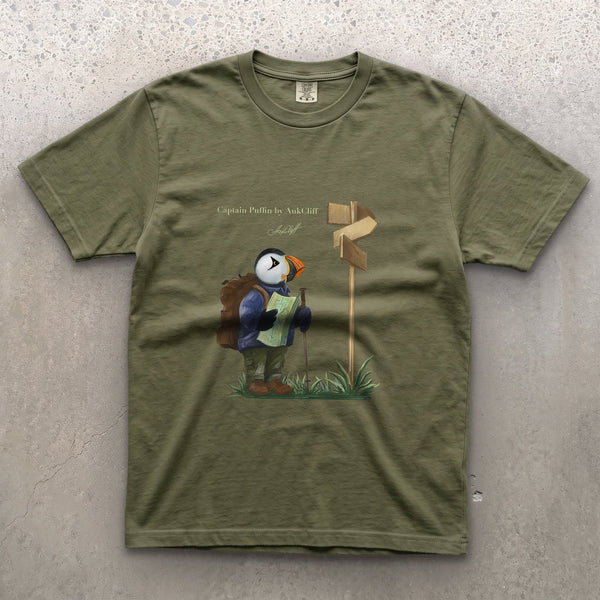
Captain Puffin Hiker
$84.99
Get the next one
New designs as they land, and the stories behind them. Unsubscribe in one click.