
Nature-Inspired Graphic Tees: Why Art Matters in Outdoor Apparel
Walk through any outdoor market or trailhead car park and you'll see hundreds of graphic tees. Most are forgettable. A few stop you in your tracks. The difference is almost always the art, and it's obvious within about two seconds whether someone cared about the design or just needed something to put on a shirt.
This is a piece about why that gap exists, how to spot quality, and what separates a shirt you wear once from one you keep for a decade. The graphic tee market was valued at USD 2.68 billion in 2024 and is projected to reach USD 4.07 billion by 2030, according to Virtue Market Research, which points to how much genuine appetite exists for this kind of product. The question is what makes some of those shirts worth owning.
What Actually Makes a Graphic Tee Good
A good graphic tee does something beyond decoration. It communicates something specific about who the wearer is, what they care about, and what kind of experiences they seek out. The best ones feel like a shorthand. You see someone wearing a well-drawn mountain scene and you already know something real about them before they open their mouth.
For that to work, the art itself has to carry weight. Thin lines, muddy colours, or a design that looks like it was assembled from clip art won't do it. The image needs to be confident, with clear intention behind every mark. It needs to look like someone made a decision about it, not just accepted a default.
The garment itself matters too. A beautiful print on a thin, badly cut shirt looks wrong. The fabric and the art have to earn each other.
Hand-Drawn Art Versus AI and Stock
This is worth talking about plainly. AI-generated art has flooded the graphic apparel market in the past two years. It can produce technically impressive images quickly, but the results tend to have a specific quality: they feel assembled rather than observed. Details that don't quite connect. A general sense of visual busyness without a clear point of view. Research published in PMC (NIH) found that consumers consistently assign a higher monetary value to human-made art over AI-generated art, rating human-labelled pieces higher across every measure including liking, beauty, and perceived worth. Even so, AI-generated images were selected at a rate of nearly 45%, which suggests growing but incomplete acceptance among buyers.

Stock art has a different problem. You're buying a design that exists in a catalogue somewhere, which means it has no relationship to your brand, your story, or any specific creative vision. It's a placeholder that's been licensed into permanence.
Hand-drawn art is different because it records a person's decisions. Every line was put there on purpose by someone who understood what they were drawing. When the subject is wildlife or wilderness, that matters even more. A skilled artist who has actually studied a puffin's posture, beak shape, and character will draw something that people who love puffins will immediately recognise as right. That specificity is what makes an image stick.
Maria's Captain Puffin Illustrations
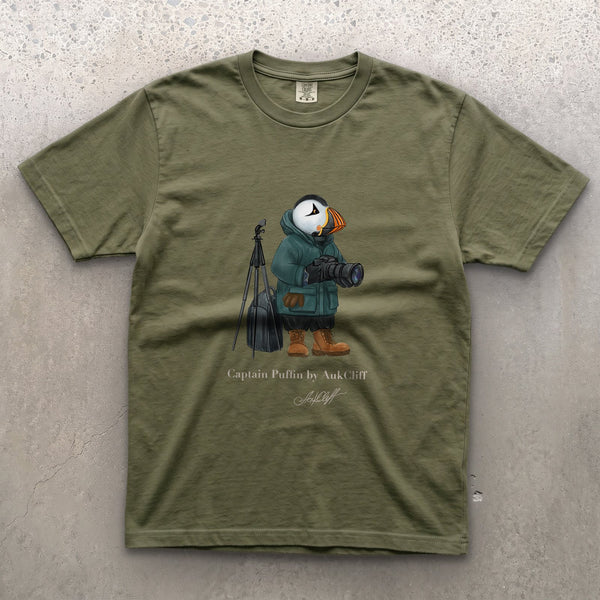
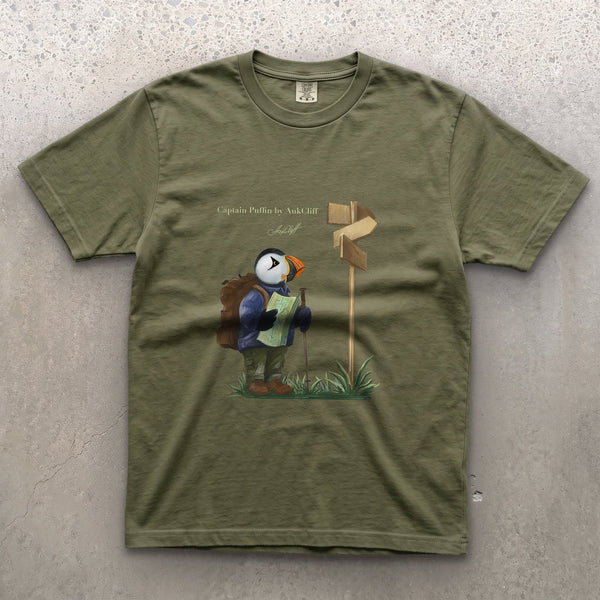
The Captain Puffin character at the core of AukCliff's most recognised designs was created by artist Maria, drawn by hand, not generated. The character has a personality that comes through in every pose: curious, a little self-important, quietly competent. That combination reads across the full range of designs, from the Captain Puffin Wildlife Photographer T-Shirt to the broader Captain Puffin collection.
The Wildlife Photographer design in particular rewards close attention. The Captain is set up with a long lens, fully focused on something just out of frame. It's a specific scene, not a generic pose. People who have spent time behind a telephoto lens in bad weather will find it immediately funny and familiar. That's the work of an illustrator who thought carefully about the subject.
This is what separates a collectible piece from merchandise. When the art has genuine character and consistent vision behind it, people form a real attachment to it. They don't just wear it; they keep it.
The premium as a Canvas
The shirt underneath the art matters more than most people think. AukCliff uses the premium for all t-shirt designs. It's a 6.1oz heavyweight garment-dyed cotton, which means a few things in practice.

Photo by Antoni Shkraba Studio via Pexels
The garment-dyeing process is done after the shirt is fully constructed, which gives premium their distinctive worn-in texture and slightly uneven colour depth. The surface takes prints differently than a standard jersey cotton. Colours sit into the fabric rather than sitting on top of it, which means a design ages well. After twenty washes it looks lived-in, not faded out.
At 6.1oz, the fabric has real body. It drapes properly, doesn't cling to everything, and holds its shape over time. The fit is relaxed and unisex, available from XS to 3XL. For anyone who has bought a great graphic tee only to watch it shrink and warp after six months of wear, the weight and construction of the 1717 is a meaningful difference.
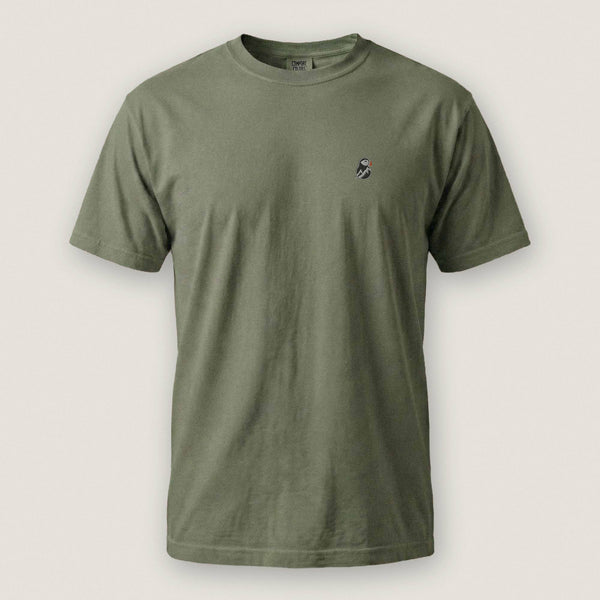
The Simple premium tees shows the garment at its best when the design lets the fabric breathe. The Embrace The Mountain Call Tee shows how well a bolder design works when the base fabric can carry it without looking cheap.
What Makes a Tee Collectible
Collectible graphic tees share a few consistent traits. They have a clear point of view, not just a subject matter. They're specific enough that not everyone gets them immediately, but accessible enough that the people who do feel like they're in on something. And they're well-made enough that keeping them is a reasonable decision rather than just sentimental.
Nature-inspired designs have particular collectibility potential because the subject matter is deep. There are people who will seek out every well-drawn seabird illustration they can find, or every quality mountain graphic, because it connects to something they care about seriously. A design that treats the subject with real attention, the kind that only comes from someone who studied it rather than searched for it, earns that kind of loyalty. Graphic-design shirts account for more than 57% of global custom t-shirt printing revenue, according to Virtue Market Research, which suggests the market rewards specificity and character over generic output.
Browse the full outdoor t-shirt collection to see how the range holds together as a body of work rather than a product catalogue.
Caring for Printed Cotton Over Time
Garment-dyed heavyweight cotton is durable but worth treating well. Turn the shirt inside out before washing. Cold water, gentle cycle. Avoid tumble-drying on high heat if you want the print and the fabric to stay sharp. Line dry or low heat. None of this is complicated, but it's the difference between a shirt that lasts three years and one that lasts ten.
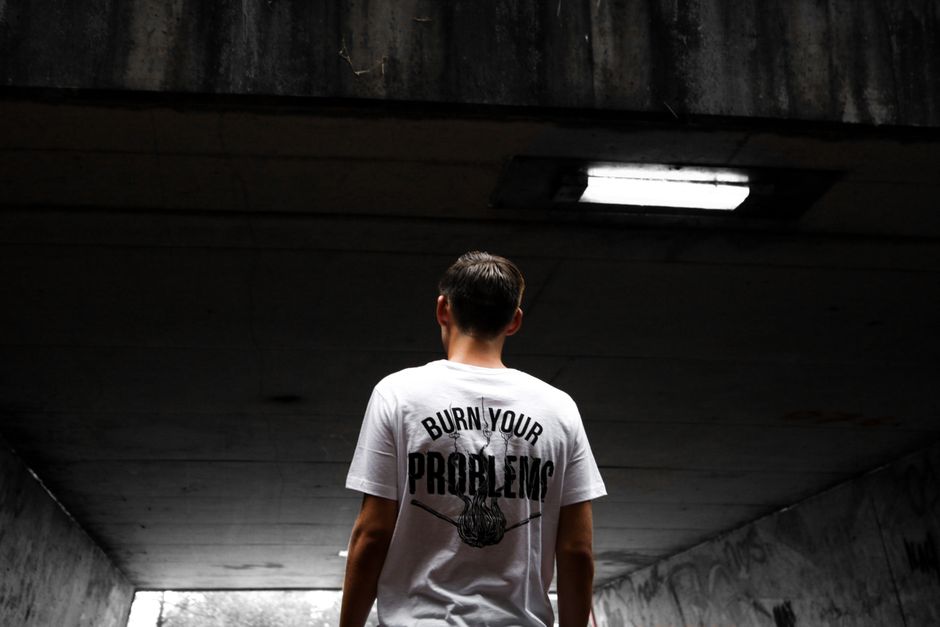
Photo by Sebastiaan Stam via Pexels
premium specifically tends to soften very pleasantly with repeated washing. The colour settles, the texture develops, and the whole thing gets better with age. That ageing quality is part of why people who own one tend to buy another.
Wearing Something That Means Something
Outdoor apparel doesn't have to be purely functional. The time you spend in the field, on the trail, or watching wildlife is time that matters to you, and wearing something that reflects that honestly is a reasonable thing to want. A well-drawn graphic from an artist who understood the subject does something that a logo or a slogan can't: it shows that someone paid attention.
That's the case for hand-drawn nature art on quality cotton. Not as a luxury, but as the logical result of caring about both things, the subject and the object, enough to do them properly.
FAQ
- What fabric is used for AukCliff graphic tees?
- All AukCliff t-shirts are printed on premium, a 6.1oz heavyweight garment-dyed cotton. The garment-dyeing process gives each shirt a slightly worn-in texture and rich colour depth. Sizes run XS to 3XL in a relaxed unisex fit.
- Are the Captain Puffin designs hand-drawn or AI-generated?
- All Captain Puffin illustrations are hand-drawn by artist Maria. None of the designs are AI-generated or sourced from stock art libraries. Each design is an original illustration created specifically for the AukCliff collection.
- How do I care for a printed cotton tee to keep the graphic sharp?
- Wash inside out on a cold gentle cycle. Avoid high heat in the dryer. Line drying or a low-heat tumble works well. premium fabric softens and improves with washing, and the print stays sharp when you avoid high heat.
- What sizes are available?
- AukCliff t-shirts are available in XS, S, M, L, XL, 2XL, and 3XL. The fit is relaxed and unisex, so most people find their usual size works well.
- Where are AukCliff products designed?
- AukCliff is designed in New Zealand and fulfilled through trusted production partners worldwide.
Related Reading
Frequently Asked Questions
What makes a nature-inspired graphic tee worth keeping for years?
The quality of the art is the primary factor. A design that was clearly created with care, where the artist understood the subject, stands apart immediately from a generic print. The difference is visible within seconds and tends to hold up both visually and physically over time.
How big is the graphic tee market?
The graphic tee market was valued at USD 2.68 billion in 2024 and is projected to reach USD 4.07 billion by 2030, according to Virtue Market Research. That growth reflects sustained demand for wearable art, not just branded merchandise or logo prints.
Why do most graphic tees feel forgettable?
Most graphic tees are designed quickly with no particular investment in the art itself. When the design is generic or mass-produced without a clear point of view, the shirt blends into the background. The ones that stand out are the ones where the design was clearly the starting point, not an afterthought.
What should I look for when buying a nature-inspired graphic tee?
Look at whether the art is specific and considered rather than generic. A well-executed nature graphic will show that the designer understood the subject closely, with detail and intention in the image rather than a simplified stock-art feel.
Why does the artwork on a graphic tee matter more than the brand?
A shirt you wear for a decade earns that longevity through the design first. Branding fades in relevance but a strong piece of art retains its appeal because it communicates something specific and genuine.
Explore the Captain Puffin collection
Last updated: April 2026
Wear it out there
Simple
$75.99
Coastal Waves
$101.99
Captain Puffin Wildlife Photographer
$84.99
Captain Puffin Hiker
$84.99
Get the next one
New designs as they land, and the stories behind them. Unsubscribe in one click.