
Adventure Tees for Kids: Inspiring Young Explorers
Kids take identity cues from the things they choose to wear. This is obvious once you think about it but easy to underestimate. A child who puts on a Wildlife Photographer tee before a family walk is in a different headspace than one in a plain shirt. They're not just dressed. They have a role. And that role changes how they move through the world.
This isn't a stretch. It's the same reason adults wear team kits, professional shirts, or gear from the outdoor brand they identify with. The clothing signals something about who you are and who you want to be. For kids, that signal is even more powerful because identity is still forming.
The Difference Between a Character and a Graphic
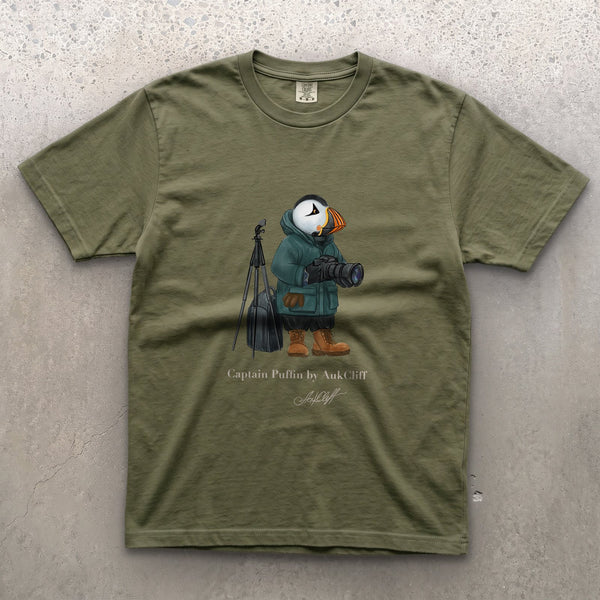
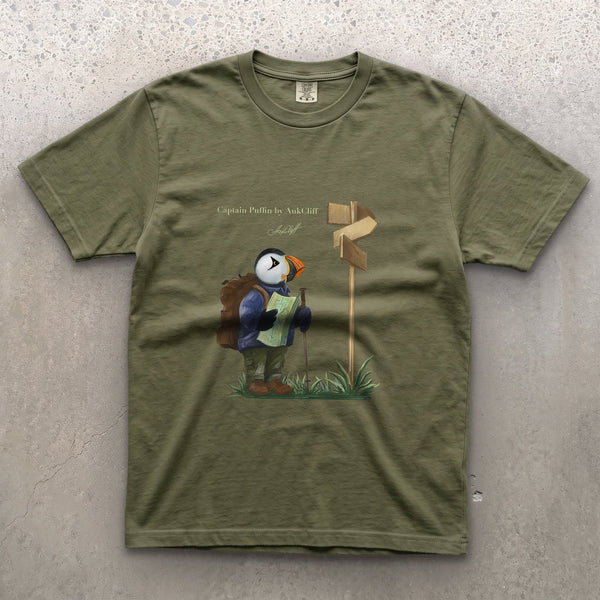
A generic wildlife graphic on a shirt is decoration. A character on a shirt is a relationship. Captain Puffin works for kids because he has a job, an attitude, and a context. He's a wildlife photographer. He's a hiker. He's someone doing something. Kids don't just look at him. They project themselves into what he's doing.
This is why the Captain Puffin Wildlife Photographer tee does something that a shirt with a printed eagle or mountain scene doesn't. The eagle is a symbol. Captain Puffin is an invitation. Kids who wear the Wildlife Photographer version tend to start noticing birds on walks. They ask for a camera. They want to show you what they spotted. That's not a coincidence, it's identity in action.
The same dynamic works with the Captain Puffin Hiker tee. Put a kid in it before a trail walk and watch them take the lead. They have a character to live up to. It's a small thing that makes a real difference in how enthusiastically a child engages with being outside.
Building an Outdoor Identity Early
Outdoor habits that form before age twelve tend to stick. Research on nature connectedness consistently shows that children who spend regular time in natural environments carry that orientation into adulthood. The need is real: a survey cited by the Children and Nature Network found that American children spend 35% less time playing outside freely than their parents did, with parents of children aged 8 to 12 reporting their kids spend three times as many hours in front of screens each week as they do outdoors. In the UK the picture is similar, with the European Centre for Environment and Human Health finding that a third of children don't play outside after school and that unstructured outdoor activity has fallen 50% compared to a generation ago. What shapes those habits? Partly access, partly parental example, and partly how kids understand their own relationship with nature.

Apparel is part of that picture. Not in a superficial way, but in the same way that having your own binoculars, or your own headtorch, or your own rain jacket makes a child feel like they belong in the outdoors rather than just visiting it. The right gear says: this is your space. You're equipped for it.
Captain Puffin designs are hand-drawn by artist Maria, which gives them a warmth and specificity that mass-produced licensed characters don't have. The puffin is a real bird with real habitat and real behaviour. When kids learn that puffins actually live in burrows, actually spend winter at sea, actually fly faster than you'd expect, the character on the shirt becomes a connection point to a real animal, not just a cartoon.
Wildlife Photography as a Gateway Activity
Giving a child a simple camera and a mission to photograph birds, insects, or plants on a walk changes the walk completely. They slow down, they look more carefully, they notice details they'd sprint past otherwise. A child who has photographed a robin from six inches away has a fundamentally different relationship with that bird than one who saw it from a distance.
The Wildlife Photographer tee seeds that idea before you even get to the trailhead. You don't need expensive gear to make it meaningful. A spare phone, a tablet, or a basic point-and-shoot is enough. The interest comes first and the equipment follows when the interest is sustained.
For parents who already do wildlife photography or birdwatching, getting a child into the same headspace is straightforward. Let them use the binoculars. Let them hold the field guide. Let them make the ID call even when they're wrong. The engagement matters more than accuracy at this stage.
How to Make Family Hikes Actually Enjoyable for Kids
Most kids don't hate hiking. They hate being bored and they hate feeling like they have no agency. The fix for both is giving them a specific role. Spotter. Navigator. Photographer. Naturalist. When a child has a job on a hike, they're not just following you from A to B. They're contributing.

Photo by Bulat Khamitov via Pexels
The Captain Puffin Hiker tee works as a costume in the best sense of the word. Before you leave the house, you can say: you're the hiker today, what do you need? That question makes them think about preparation, which is itself an outdoor skill. Sunscreen, water bottle, snack, rain jacket. Kids who pack their own kit take ownership of the day differently from those who have everything handed to them.
The full Captain Puffin collection covers several character types, which makes it easy to match the shirt to the planned activity. Hiker day gets the Hiker tee. A trip somewhere coastal gets the Newfoundland tee. The specificity reinforces the connection between the shirt and the experience.
Fabric That Holds Up to Kids
Kids are hard on clothes. Grass stains, mud, food, and general chaos are part of the deal. The premium base holds up well to this. The 6.1oz garment-dyed cotton washes reliably without fading, which matters when a shirt is going through the machine twice a week. The garment-dyed finish also means the colour is throughout the fabric rather than a surface coating, so it doesn't crack or peel under repeated washing the way screen-printed colour can on lighter-weight shirts.
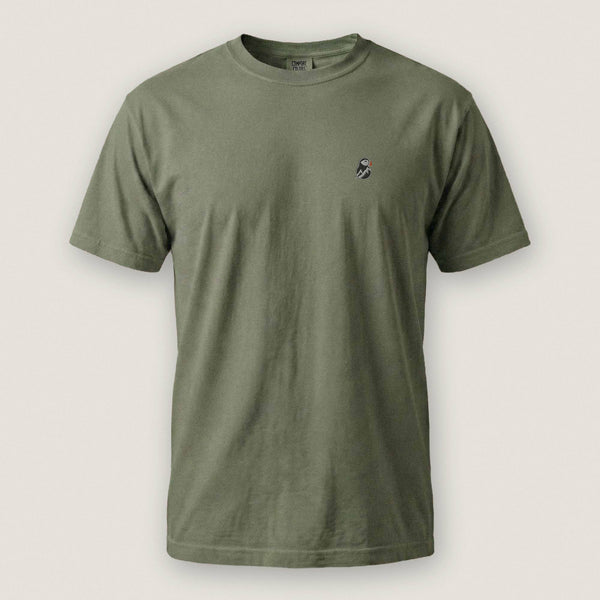
The Simple premium tees is worth having as a versatile base if you want something without a specific character graphic but in the same quality fabric. It pairs well as a layering piece under a shell on cooler days. Browse the full outdoor tees range for the complete selection.
What Kids Learn by Being Outdoors Consistently
Risk assessment is learned, not innate. Children who spend regular time on trails, scrambling over rocks, crossing streams, and moving through variable terrain develop a calibrated sense of what's actually dangerous versus what just feels unfamiliar. That calibration is useful for the rest of their lives. A systematic review of 147 research studies published in Frontiers in Public Health found significant support for nature-based outdoor learning, particularly in personal and social development, collaborative skills, and improved self-concept in children. The evidence for getting kids outside consistently is not just anecdotal.

Photo by KATRIN BOLOVTSOVA via Pexels
They also learn patience in a way that almost nothing else teaches. Watching a bird at a feeder, waiting for it to come close enough to photograph, requires sustained focus that can't be rushed. This is the opposite of most screen-based entertainment and it's a skill that has to be built through practice. Research published in Frontiers in Psychology found that children form strong attachments to outdoor play spaces and construct more creative, imaginative identities through nature play, with studies of school yards confirming that children engage in richer forms of play in green areas than in built environments.
None of this requires expensive trips or special destinations. A local park with a pond is enough. A suburban garden with a bird feeder is enough. The consistent return to the same place over time builds the kind of knowledge that makes the outdoors feel like home rather than foreign territory.
Giving Outdoor Gear as Gifts
For birthdays and holidays, outdoor gear that enables a specific activity lands better than general toys for kids who already show an interest in nature. A Captain Puffin tee paired with a cheap field guide to local birds or a simple magnifying glass kit turns a piece of clothing into a starter kit for a hobby. The shirt says: you're a wildlife photographer. The field guide says: here's how to get started.
This approach works especially well for children between about five and twelve, the window where identity formation around interests is most active. A ten-year-old who has decided they're "into birds" is more likely to stay into birds through adolescence than one who encounters birdwatching as a casual suggestion. The gear, the shirt, and the activity all reinforce each other.
FAQ
What age range are the Captain Puffin tees suitable for?
The premium comes in sizes XS through 3XL in a unisex cut. XS typically fits older children and petite adults. For younger children, the designs work well as a slightly oversized fit, which is also how many kids prefer to wear graphic tees.
Are the designs hand-drawn or AI generated?
Hand-drawn. Every Captain Puffin design is illustrated by artist Maria. The work starts as traditional pencil sketches and is then refined digitally for print. No AI art tools are used in the design process.
How do I use a nature walk to build a child's interest in wildlife?
Give them a specific job. Spotter, photographer, or trail navigator all work well. Bring a field guide for your local area so they can make identifications. Let them lead the pace. Slow walks where the child chooses what to stop and look at are more valuable than covering distance.
Do the shirts hold up to heavy use and washing?
Yes. The premium is 6.1oz garment-dyed cotton. The colour is throughout the fabric rather than a surface coating, so it doesn't crack or fade quickly. Wash cold and hang or tumble dry low to get the best life out of them.
What outdoor activity would you suggest for a child who has never shown interest in nature?
Start with water. Ponds, streams, rock pools, and beaches have immediate visual interest. There's almost always something moving. Invertebrates, fish, water birds. Water environments have high discovery density and short feedback loops, which keeps younger children engaged more reliably than a forest walk where you might walk for an hour before seeing anything interesting.
Related Reading
Wear it out there
Simple
$75.99
Coastal Waves
$101.99
Captain Puffin Wildlife Photographer
$84.99
Captain Puffin Hiker
$84.99
Get the next one
New designs as they land, and the stories behind them. Unsubscribe in one click.