

Trail Running Culture: Community, Gear, and the Open Trail
Trail running has grown fast over the past decade, not because of fancy marketing, but because people tried it and didn't go back. According to Sports Destination Management, participation jumped from 13.2 million in 2022 to 14.8 million in 2023, a one-year increase of 12.3 percent. The combination of varied terrain, natural surroundings, and a genuinely welcoming community makes it different from most other sports. If you've ever wondered what the fuss is about, this is what the culture actually looks like from the inside.
What Makes Trail Running Different from Road Running
The surface is the obvious difference, but the shift in mindset matters more. On a trail, pace becomes almost irrelevant. You're navigating roots, rocks, loose gravel, and gradient changes that no road race prepares you for. Your body works differently, engaging stabilising muscles you barely use on flat tarmac. Most trail runners stop measuring themselves by pace per kilometre and start thinking in terms of effort and elevation.
The other difference is the noise level, or lack of it. Road running in a city involves traffic, pedestrians, and the constant mental load of urban navigation. On a trail, especially a few kilometres in, that drops away. This is part of why people become devoted to it so quickly. It functions as both physical training and mental reset.
Technically, trail running can mean anything from a groomed forest path to a mountain ridge with 1,200 metres of vertical gain. There's no gatekeeping. If you're running (or hiking fast) on an unpaved surface, you're trail running.
The Community and How It Works
Trail running communities tend to form around local events, running clubs, and regular group routes. The atmosphere at most trail events is noticeably different from road races. People wait at aid stations to encourage other runners, experienced athletes pace alongside beginners on tough climbs, and finishing times matter far less than finishing. That culture starts at the entry-level events and scales all the way to 100-mile ultras.

Parkrun has played a huge role in bringing people into trail running specifically. Many parkrun courses include sections of unpaved trail, and the free, weekly format removes every barrier to entry. Parkrun now operates more than 2,500 events across 20 countries, with over 10 million participants and 100 million recorded finishes, according to Euronews. Ireland leads globally, with 8 to 9 percent of its population registered. It's where a lot of trail runners first realise they prefer off-road terrain. From there, many move into local trail races, then longer events.
Online communities, particularly on Strava and dedicated trail running Facebook groups, have extended this further. Route sharing, local knowledge, and trip reports are freely exchanged. If you move to a new area, finding the best local trails usually takes one post in the right group.
Ultra Culture and What It Actually Involves
Ultra running, meaning any distance beyond a marathon, has its own subculture within trail running. The distances sound extreme from the outside, 50km, 100km, 24-hour events, but the people who do them are not a separate category of athlete. Most are recreational runners who built up gradually over a few years. The growth numbers are striking: RunRepeat data shows participation in races between 26.3 and 50 miles rose by 42 percent in 2024, while events between 50 and 100 miles saw a 77 percent jump. Registrations for 200-plus mile events grew 114 percent year-over-year. The appeal is less about racing and more about the extended time in the mountains and the self-reliance it demands.
Aid stations at ultras are known for their generosity: hot soup, boiled potatoes, fruit, coffee at 3am on a mountain. Volunteers at these events often run the same races themselves and bring the same ethos to crewing. The community at the finish line of a 100-mile race, at 2am, waiting for the last finishers to come in, is one of the more unusual sights in sport.
You don't need to run ultras to be part of trail culture. But understanding that side of it explains why trail runners tend to be unusually supportive of each other. The sport selects for people who are comfortable being uncomfortable, and that tends to produce a decent crowd.
Trail Running Etiquette
Most trail etiquette is practical rather than ceremonial. Faster runners call out when approaching from behind, slower runners step aside when it's safe. On single-track trails, downhill runners typically yield to uphill runners, since maintaining uphill momentum is harder to restart. At stream crossings or technical sections, the person already committed to a move goes first.
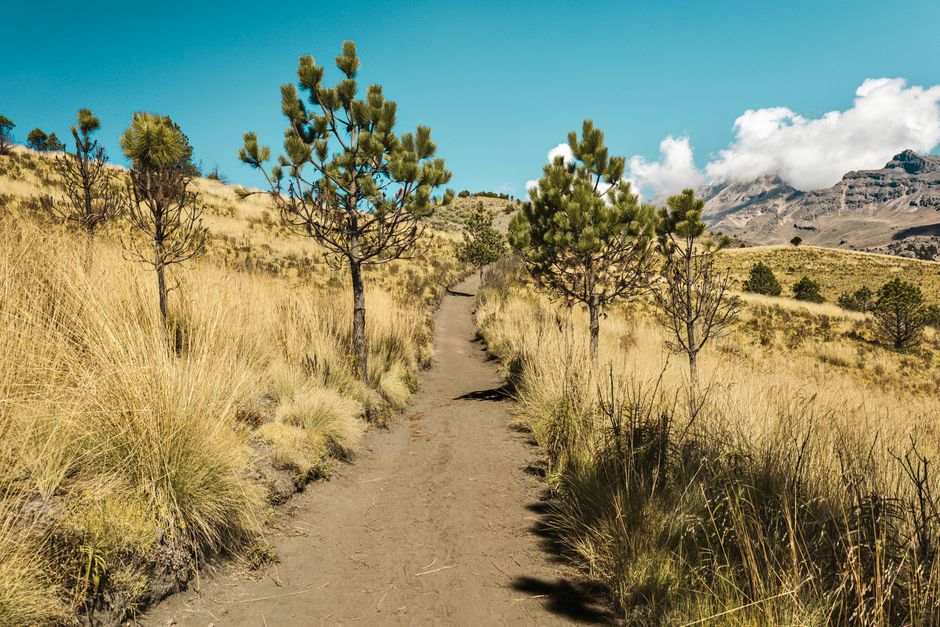
Photo by Magaly Taboada via Pexels
Leave No Trace principles apply: pack out what you pack in, stay on marked trails to protect vegetation, and if you're running in an area with wildlife, keep noise low and give animals space. Many trail running areas exist because land managers have good relationships with running clubs. Behaving well on trails preserves that access.
At races, the norm is to announce yourself when passing rather than silently squeezing by. A simple "coming through on your left" is enough. Most runners will step aside immediately and often offer encouragement as you pass.
What to Wear: Practical Gear Choices
Trail running gear has become overcomplicated by the industry. For most runs, you need trail shoes with grip, a way to carry water if you're going more than an hour, and clothing that handles sweat and temperature variation.
For training runs in moderate conditions, a well-fitting cotton tee works fine for many runners. The Simple T-shirt is made from 6.1oz heavyweight Comfort Colors garment-dyed cotton, which wears comfortably during long efforts and holds up well to repeated washing after muddy runs. It's unisex and available from XS to 3XL. For those who run near the coast or on exposed ridge lines, the Coastal Waves T-shirt from the same Comfort Colors 1717 blank is a solid option with a design that fits the environment.
A hat is worth including from the start, not just in summer. A structured brim keeps sun out of your eyes on exposed sections, reduces squinting on technical ground, and stops sweat running into your eyes on climbs. The Organic Trailblazer Dad Hat is made from organic cotton, has a low profile that works under a pack's hip belt or helmet, and doesn't trap heat the way synthetic caps can. Browse the full hats collection for options.
Layering matters more than any single item. Trail temperatures change with elevation and time of day. A base layer or light wind shell in your pack costs almost nothing in weight and prevents misery on long descents.
Getting Started: A Practical Path In
The most reliable way to start trail running is to find your nearest parkrun that includes unpaved sections. Show up on a Saturday morning. You'll finish in company, get a time record, and meet other local runners who can point you toward trails worth exploring.
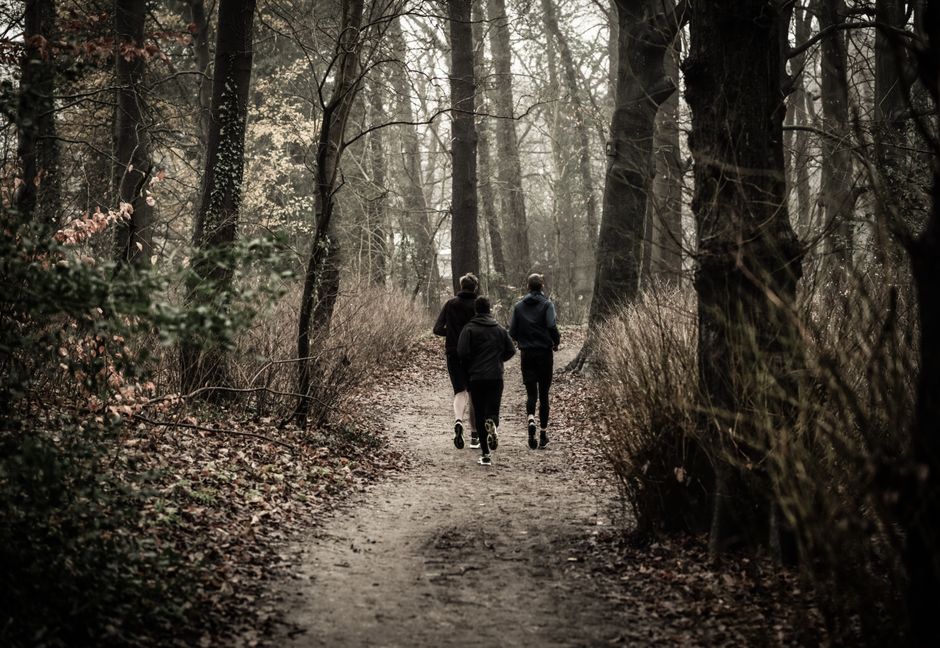
Photo by ClickerHappy via Pexels
From there, pick one local trail that takes roughly 30-40 minutes at walking pace. Run what you can, walk the climbs, run the flats and descents. Do that same route regularly until it feels controlled, then add distance or elevation. The progression should feel gradual. Trail running stresses ankles and stabilisers in ways road running doesn't, and the injury risk comes from adding too much too fast.
Local trail running clubs usually run two or three times a week at different paces. They're the fastest way to learn local trails, understand the culture, and find people to run with safely in remote areas. Most clubs are free or very cheap to join.
If you're building toward a race, look at events in the 10-15km range first. These are accessible after a few months of regular trail running and give you a feel for race logistics, aid stations, and the course marking systems used in your region before committing to longer distances.
Why the Community Keeps Growing
Trail running growth is driven by word of mouth more than advertising. Someone tries it, finds it transforms their relationship with running, and tells five friends. The barrier to entry is low: a pair of trail shoes, somewhere to run, and a willingness to slow down and pay attention to the ground under your feet. The International Trail Running Association now ranks more than 3 million runners globally, with a community spanning 160 countries and over 6,500 event organisers. Women currently make up 29 percent of the ITRA community, a figure that's been steadily rising as the sport broadens its reach.
The sport also ages well. Road running is hard on joints over decades. Trail running's softer surfaces and varied movement patterns are easier on the body long-term, which means the community includes serious athletes across a wide age range. It's common to see 60-year-olds finishing 50km races ahead of runners half their age.
The outdoor T-shirt collection at AukCliff was built around people who spend time outside for real, not for the photo. That connection to actual use is something trail runners recognise immediately.
FAQ
- Do I need special shoes to start trail running?
- Trail shoes with lugged soles are strongly recommended. They provide grip on mud, roots, and loose rock that road shoes can't handle. You don't need the most expensive pair on the market, but a dedicated trail shoe makes a real difference to both safety and enjoyment from the first run.
- Is trail running harder than road running?
- It's different rather than simply harder. The terrain demands more attention and works stabilising muscles harder. Pace will be slower on technical ground, which many runners find refreshing. Cardiovascular fitness from road running transfers well, but you'll notice new muscle soreness in ankles and hips for the first few weeks.
- Can I wear a regular cotton T-shirt trail running?
- Yes, for most conditions. Heavyweight cotton like the Comfort Colors 1717 handles sweat reasonably well in moderate temperatures and is far more comfortable than many synthetic options on long efforts. In cold, wet conditions, a moisture-wicking layer is a better choice, but for mild to warm training runs, cotton works fine.
- How do I find local trails?
- AllTrails, Strava's heatmap, and local running club websites are the best starting points. Asking at a parkrun is also reliable: someone will know every runnable trail within 20km and will usually offer to show you.
- What's the difference between a trail race and an ultra?
- A trail race is any organised running event on unpaved terrain. An ultra is any race beyond marathon distance (42.2km). Most trail ultras are also on trails, but not all trail races are ultras. You can compete in trail races at 5km, 10km, half marathon, and marathon distances before ever considering ultra distances.
Every AukCliff order plants a tree through our partnership with One Tree Planted.


