
Mindful Hiking: Engaging Your Senses on the Trail
Most hikers spend the trail counting kilometres to the summit or mentally composing their post-hike meal. That's fine. But there's another way to hike, one that makes even a familiar local track feel worth repeating. It starts with slowing down and paying attention to what's actually around you.
Mindful hiking isn't a wellness trend. It's just hiking with your head in the right place. Here's how to do it, sense by sense.
Why Slowing Down Changes Everything
Speed hiking has its place. Fitness goals, weather windows, day length, these are real constraints. But most people who hike regularly have walked past extraordinary things because they were moving too fast to notice them. A single slow kilometre through native bush will show you more than ten kilometres at a brisk pace.
The research on this is fairly consistent: time in nature reduces cortisol and lowers blood pressure, but those benefits are stronger when you're present in the environment rather than just passing through it. A 2019 study published in Scientific Reports, drawing on data from nearly 20,000 people in England, found that spending at least 120 minutes a week in nature is significantly associated with good health and higher psychological wellbeing, with the effect holding across age, income, and health status. The Japanese practice of shinrin-yoku (forest bathing) is just structured slow walking with the intention of actually noticing the forest. You don't need a formal protocol. You just need to stop treating the trailhead as the enemy and the summit as the prize.
Try this once: pick a section of trail you know well and walk it at half your normal speed. Stop three times for no reason other than to look around. The difference is immediate.
Sight: Look at the Small Things
We're wired to scan for movement and horizon. That's useful for navigation and safety, but it means we miss most of what's actually on the trail. Lichen on a rock face, the exact colour of a dead fern frond, the way water moves over different substrates, these details don't register unless you actively look for them.

A practical approach: choose a single category before you set off. Today you're looking at fungi. Or mosses. Or bird activity. Narrowing your attention like this forces you to look at the ground level, the tree trunks, the understory, not just the view at the top. You'll start to recognise species, understand habitats, and build a much richer map of your local trails.
Wildlife photography is a natural extension of this. You don't need a professional kit. A phone with a decent camera forces you to get close, to be patient, to wait for the shot. It's hard to rush past a tui when you're waiting for it to turn towards the light.
Sound: The Trail Has Layers
Stand still on any trail for sixty seconds and count the distinct sounds you can identify. Wind in specific tree types sounds different from wind in grass. Running water changes pitch with depth and speed. Bird calls are often the first indicator of habitat type before you can see it.
Headphones are the enemy of this. Not a moral judgement, just a practical one. The soundscape of a trail is part of the experience, and cutting it off means you're using the trail as a backdrop for something else. If you find silence uncomfortable on a solo hike, that's worth sitting with rather than solving with a podcast.
Rain on different canopies is one of the most distinct sounds in hiking. A native podocarp forest in light rain sounds completely different from a beech forest or an open alpine tussock field. Once you start listening for it, you'll notice these textures everywhere.
Touch: What You're Wearing Matters Here
This one gets overlooked because we tend to think of touch on the trail as terrain underfoot. That's part of it, noticing different ground surfaces through your boots, the temperature shift when you cross into shade, the change in air density before rain. But what you're wearing against your skin is also part of your sensory experience of being outdoors.
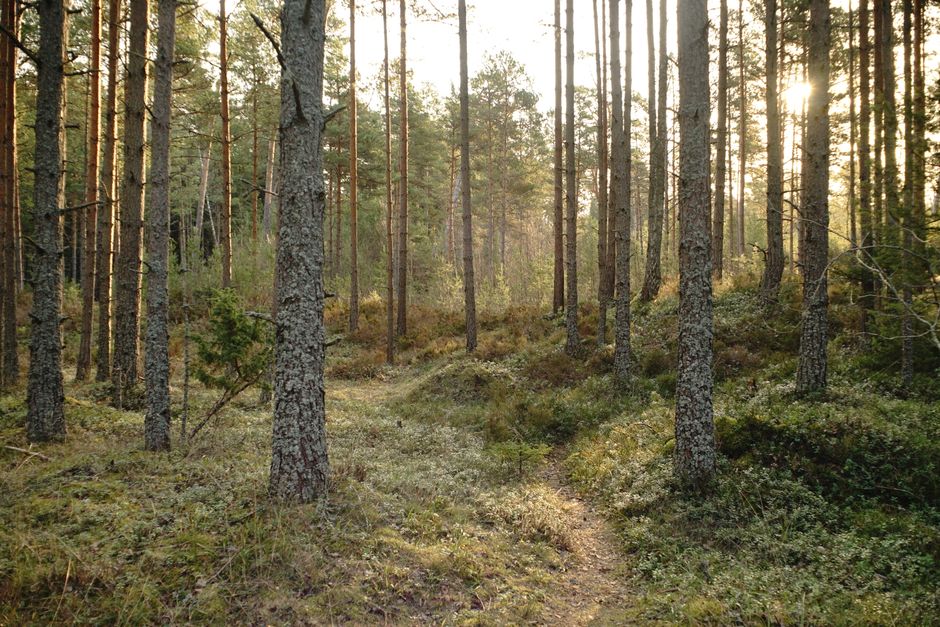
Photo by Argo Allvee via Pexels
Fabric matters more than most people acknowledge. Synthetic performance fabrics can feel clinical, smooth in a way that doesn't change much between conditions. Heavy garment-dyed cotton like the Coastal Waves T-shirt (made on the premium blank, 6.1oz heavyweight cotton) feels genuinely different, softer and more textured, with a weight that feels grounded rather than slippery. On lower-intensity trail days, on rest days at camp, or when you're hiking for pleasure rather than performance, that sensory difference is real.
The Simple T-shirt works on the same principle. Nothing extraneous. Garment-dyed cotton that feels good against your skin and gets better with washing. For hikes where comfort matters more than moisture-wicking speed, heavyweight cotton holds up well and doesn't cling uncomfortably once you stop moving.
Smell: The Most Underrated Trail Sense
Smell triggers memory more directly than any other sense, which is part of why certain trail smells feel so strongly tied to specific places. Wet native bush after rain. The mineral smell of alpine rock in sun. The particular damp-earth smell of a forest floor in autumn. These are free and they're everywhere, but only if you're paying attention.
Stop and breathe through your nose at transitions: where the forest opens into tussock, where a stream runs near the trail, where the aspect changes and you're suddenly in full sun. The smell changes at every one of these points. Building a sensory vocabulary for a place takes time, but it makes return visits to familiar trails consistently interesting rather than diminishing returns.
Smell is also practical. The smell of rain, of lightning, of bloom on certain plants at specific times of year, these are signals the trail is giving you if you're listening for them.
Taste and Hunger: Eating on the Trail Properly
Most people eat on the trail either too early (boredom and habit) or too late (bonk prevention). Mindful eating on the trail means paying attention to actual hunger signals rather than time or proximity to a good view.
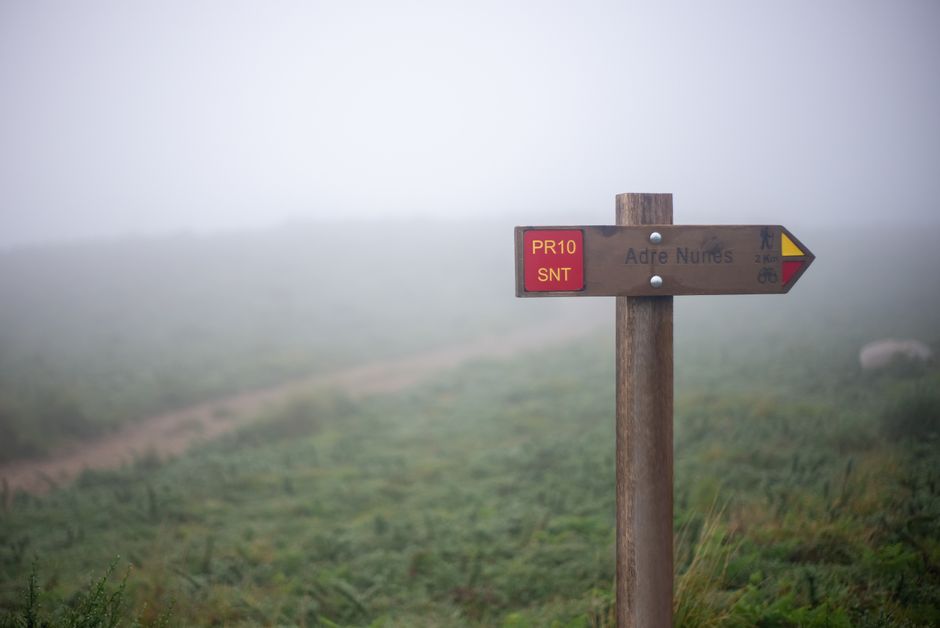
Photo by Kampus Production via Pexels
Stop somewhere interesting rather than just convenient. Eat slowly. Food tastes different outside, partly because exertion increases sensitivity to sweetness and salt, partly because you're not competing with a screen for your attention. A simple lunch eaten while watching a river can be one of the better meals of your week.
Bring food worth eating. This sounds obvious but most trail food is optimised for calorie density rather than taste. A piece of good cheese and crackers beats a protein bar for both satisfaction and experience. Bring water that's cold enough to actually taste refreshing.
Mental Health Benefits: What the Research Actually Says
The benefits of hiking on mental health are well-documented but worth being specific about. Studies consistently show reduced rumination (the looping negative thought patterns associated with depression and anxiety) after nature walks, particularly in green spaces. A systematic review published in the International Journal of Biometeorology found that cortisol levels dropped by an average of 12.4% after forest walks compared to urban walks, and in all but two of the included studies, cortisol was significantly lower after time in forest environments. Separate research by Dr. Qing Li at Nippon Medical School found that even a single day trip to a forest park significantly increased natural killer cell activity, a measure of immune function, with that boost lasting at least seven days after one visit. The mechanism appears to be partly attentional: natural environments provide enough low-level sensory engagement to occupy the default mode network without overwhelming it, which is different from both overstimulating urban environments and under-stimulating indoor spaces.
Mindful hiking amplifies this effect because you're intentionally directing attention to the environment rather than inward. The practical implication: if you're hiking specifically for mental health reasons, the quality of attention you bring matters more than the distance covered. A short, genuinely present trail session beats a long hike spent inside your own head.
The Captain Puffin collection was built around exactly this kind of outdoor attention. The designs, including the Captain Puffin Wildlife Photographer T-Shirt, are hand-drawn by artist Maria, who draws from direct observation of wildlife rather than stock references. That specificity shows. These aren't generic outdoor graphics; they're portraits of animals that reward slow looking, the same skill the trail is trying to teach you.
How to Build a Mindful Hiking Practice
Start small. One mindful section per hike, even if the rest of it is normal pace with headphones. Gradually expand the mindful sections. Keep a trail journal if that helps, not a log of distances but notes on what you noticed: a specific lichen formation, a bird you couldn't identify, the way the light hit a particular clearing at a particular time.
Hike with people who look at things. The best hiking companions are the ones who stop suddenly because they spotted something interesting. Their attention trains yours. Avoid the ones who treat every stop as a delay and every observation as a detour.
Browse the full AukCliff T-shirts collection for trail wear designed to feel as good as the trails you're walking.
FAQ
What is mindful hiking?
Mindful hiking means walking with deliberate attention to your immediate environment rather than mentally elsewhere. It involves slowing pace, engaging all five senses, and choosing presence over performance. It's not a formal practice; it's just a different intention brought to the same activity.
Do I need to hike slowly to hike mindfully?
Not necessarily, but slower pace makes it easier, especially at first. You can build sensory awareness while moving at a normal pace, but it takes more practice. Start by slowing down for specific sections: stream crossings, habitat transitions, any point where something catches your eye.
What should I wear for a comfort-focused trail day?
For lower-intensity hikes where comfort matters more than technical performance, heavyweight garment-dyed cotton like premium (6.1oz) is genuinely comfortable against the skin and durable enough to handle trail conditions. Pair with appropriate layering for conditions. Save your synthetic performance fabrics for high-intensity or wet-weather days.
How do I identify birds by sound on the trail?
Start with the Merlin Bird ID app (free, works offline after download). Record calls you don't recognise and identify them later. Focus on learning five or six common species in your local area first before expanding. Knowing what's common makes the unfamiliar calls stand out immediately.
Can mindful hiking help with anxiety?
The research suggests yes. A 2020 meta-analysis in the International Journal of Mental Health and Addiction reviewed 210 papers on forest bathing and found the practice may significantly improve both physical and psychological health, including short-term reductions in anxiety. The effect is strongest when you're genuinely present in the environment, engaged with your senses, rather than just physically present while mentally elsewhere. It's not a replacement for clinical treatment, but it's a genuinely useful tool.
Related Reading
Wear it out there

Simple
$75.99
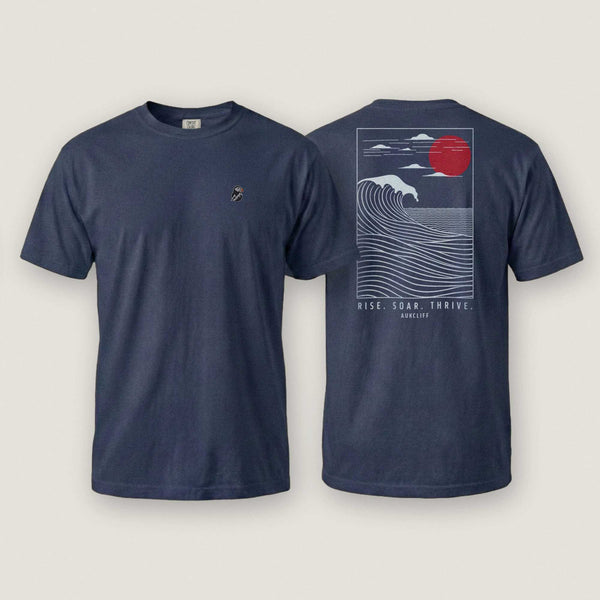
Coastal Waves
$101.99

Captain Puffin Wildlife Photographer
$84.99

Captain Puffin Hiker
$84.99
Get the next one
New designs as they land, and the stories behind them. Unsubscribe in one click.