

Tent Safety: What Every Camper Needs to Know
Tent camping involves a specific set of risks that most beginners don't think about until they encounter them. Poor site selection, improper fire management, and inadequate ventilation are the three most common causes of serious camping incidents, and all three are preventable with basic knowledge applied before you pitch.
This guide covers practical tent safety for anyone from first-time campers to people who've been doing it for years but have picked up some habits that increase risk without realising it. The goal is a comfortable, safe night out, not a list of rules for their own sake.
Site Selection: Where You Pitch Matters
Most camping accidents related to tent placement involve either flooding or falling objects. When you're evaluating a campsite, look up before you look down. Dead branches, called widow-makers by experienced campers, are the primary overhead hazard. Any large tree with visible dead branches directly above your tent pitch is a problem. This is especially true in windy conditions, when dead wood that's been stable for months can dislodge without warning.
For ground conditions, avoid low-lying areas that could collect water if rain arrives overnight. Even a light rain can turn a shallow depression into a puddle beneath your ground sheet within a few hours. On a slope, pitch with your head higher than your feet. Slightly uphill makes for better sleep and keeps blood from pooling toward your head.
Check for ant nests, wasp nests, and bee activity before committing to a spot. These are easy to miss when you're pitching in fading light. A quick walk around the area before you start is worth the extra two minutes. Also note what's around you: if you're near a river, check the water level and assess whether it looks like it's been higher recently. Flood lines on vegetation and debris caught in low branches at a distance from the waterway tell you how high that river has risen in the past.
Tent Stability in Wind and Weather
A tent that's not properly staked and guyed out is a liability in wind. In calm conditions, under-pegged tents stand fine. In a night storm, they fail. The rule is: peg out everything, guy out everything, regardless of the current conditions. Weather changes overnight when you're asleep and can't monitor it.

Use all the guy points your tent has. Guy lines should be taut, pegs driven at 45 degrees away from the tent at an angle that maximises holding strength. In soft ground, screws pegs or pegs with larger surface area hold better than thin wire pegs that cut through soft soil. If you're on rock or very hard ground, use rocks piled onto the guy lines at the attachment point.
A freestanding dome tent is more wind-resistant than a ridge tent, but only when properly pegged. An un-pegged freestanding tent can still roll across a field in a gust. If conditions are forecast to be severe, position the aerodynamic end of your tent into the wind direction so the wind flows over rather than into the broadside of the structure.
Fire Safety at Camp
Fire is the most serious safety risk in camping and the one people are most casual about. The basic rules are not complicated, but they need to be applied every time without exception.
Keep fires at least three metres from any tent. Sparks travel further than you expect, and tent fabric burns quickly and completely. If a spark lands on your sleeping tent and you're inside, your exit time is measured in seconds, not minutes. Never position a tent downwind of a fire. Wind direction can shift, and a fire that's three metres upwind can move sparks directly onto fabric.
Never bring a camp stove inside a tent. Carbon monoxide from combustion accumulates to lethal concentrations in an enclosed tent faster than the occupant typically notices the onset of symptoms. Headache and drowsiness, the early symptoms, are easily misinterpreted as tiredness. Cook outside or in a properly ventilated porch area with the inner tent closed. This rule is non-negotiable. A peer-reviewed study published in PMC covering England and Wales coroner data from 1998 to 2019 found that around 26% of fatal unintentional CO poisoning deaths occurred in places where CO alarms were unlikely to be present, including tents. In 27% of tent-related CO deaths, the source was a charcoal barbecue brought inside for warmth. The Gas Safe Register reports that 1 in 5 people in the UK do not know the dangers of bringing a barbecue into a tent, which is why incidents keep happening.
Extinguish fires completely before sleeping. Drown with water until there is no residual heat whatsoever. A fire that looks dead can have embers buried beneath ash that restart hours later. Stir the ash, pour more water, feel for heat with your hand close to the surface. When it's cold to the touch throughout, it's out.
Ventilation Inside the Tent
Condensation inside a tent is almost entirely a ventilation problem, not a tent quality problem. Two people sleeping in a well-sealed tent generate enough moisture through breathing and body heat to soak the inner fabric within a few hours. The solution is to keep vents open even in cold weather, specifically the mesh inner tent vents and at least one of the fly vents.
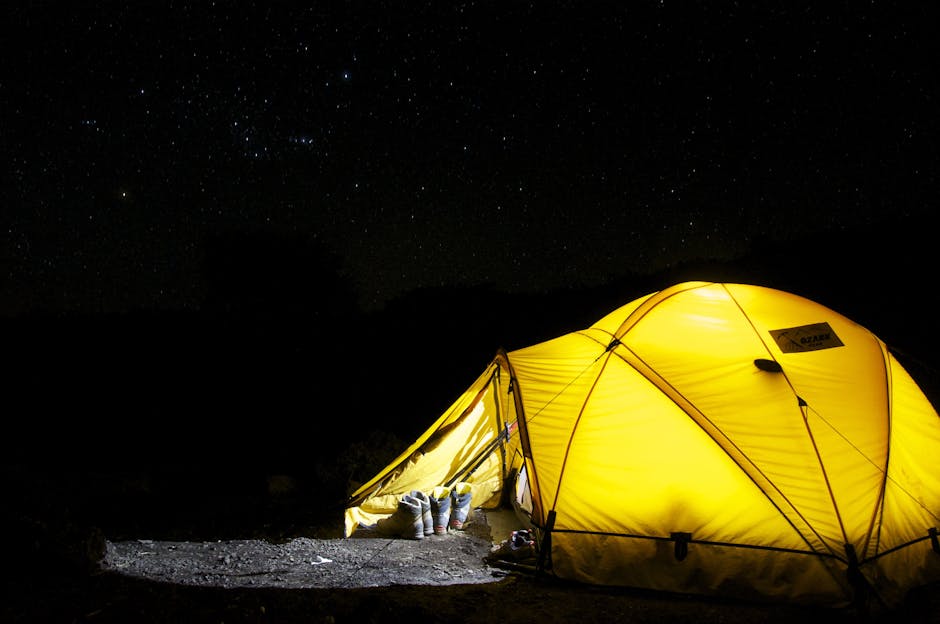
Photo by Pixabay via Pexels
For stoves and heaters, the ventilation requirement is not about comfort, it's about survival. Any combustion process consumes oxygen and produces carbon monoxide. A tent does not have the air volume to safely support combustion appliances. Purpose-built camping stoves are sometimes marketed as safe for tent use. They are not. The risk is not the flame, it's the combustion byproduct accumulation. Always cook outside. The US Consumer Product Safety Commission's analysis of tent-related incidents found an average of 30 fatalities per year from CO poisoning in tents in the United States during the 1990s. A 10-year review of accidental CO deaths in California found that 10 of 136 deaths were directly associated with camping equipment. These are not rare edge cases. They are a predictable outcome of cooking inside an enclosed tent.
In hot conditions, ventilation is about temperature management. Open both ends of a ridge tent to create cross-flow. In a dome tent, use available vents to avoid building internal temperatures that affect sleep quality and increase dehydration overnight.
Wildlife Considerations
Wildlife risk at camp varies significantly by location. In the UK, the main considerations are midges, wasps, and rodents. In North America, bears and cougars require specific protocols. In Australia, snake and spider awareness is relevant. Know what's present in your region before you camp there.
Food storage is the universal principle. Any food, food packaging, or scented item left in or around a tent attracts animals. In areas with significant wildlife, store food in a hard-sided container or hang it from a tree at least four metres up and two metres from the trunk. Even where bears are not a concern, leaving food accessible attracts rodents that can chew through tent fabric and contaminate your supplies overnight.
Shake out boots and clothing left outside the tent before putting them on. This is a universal rule that applies everywhere from Highland Scotland to tropical camping. Insects and small creatures seek warm, sheltered spaces. A boot is a perfect habitat from their perspective. Two seconds of shaking prevents a bite or sting at the worst possible moment.
What to Wear at Camp
Comfort at camp is underrated as a safety factor. Cold, uncomfortable clothing increases the time people spend inside their sleeping bag rather than maintaining awareness of their surroundings, monitoring weather changes, or attending to fire safety. Good camp clothing keeps you functional and comfortable across the full temperature range of a day and night outdoors.

Photo by Quang Nguyen Vinh via Pexels
A reliable heavyweight tee as a base layer is the foundation. The Coastal Waves T-shirt and the Simple T-shirt are both made on the Comfort Colors 1717 blank: 6.1 oz garment-dyed heavyweight cotton, XS to 3XL unisex. This weight and construction is meaningfully different from thin camping tees. It stays comfortable over a long day, handles camp activity including cooking and fire management, and feels good as a sleeping layer on milder nights. The garment-dyed finish doesn't show dirt the way a plain white or bright-coloured tee does, which matters when you're a few days from a washing machine.
Layer over it with a fleece mid-layer for evenings, and add a proper insulated layer if overnight temperatures are dropping significantly. Cotton is not ideal for wet conditions where you're at risk of hypothermia, but for typical UK or mild North American camping, a heavyweight cotton tee functions well as part of a layered system.
Small Additions That Make a Difference
Beyond clothing, a few simple items improve the camp experience significantly. A headtorch with fresh batteries, every member of the group has one, is the single most important safety item for night-time camp management. Navigating from tent to toilet or fire in the dark without a torch creates unnecessary trip-and-fall risk.
A first aid kit that you know how to use. Blisters, cuts, sprains, and burns are the common camp injuries. A basic kit with blister treatment, wound dressings, bandages, and some kind of pain relief covers most scenarios. Knowing how to use what's in the kit before you need it matters more than the brand of the kit.
Small memorabilia items from outdoor trips, like the Puffin Round Magnet or a Trailblazer Puffin Patch, are low-weight ways to mark the places you've been. They're also a conversation piece that other campers tend to notice. The patch in particular attaches to a pack or jacket and builds up as a record of trips over time. Check the accessories range for what's available alongside the apparel.
FAQ
Can I use a camp stove inside a tent vestibule?
Only in a ventilated vestibule with the inner tent closed and the fly open. Never cook inside the sleeping area. Carbon monoxide risk is real even in a vestibule if it's fully enclosed. If the fly is open and there's reasonable airflow, a vestibule can work for cooking in rain, but the safest option is always outside the tent entirely.
How far from water should I camp?
Most guidelines recommend at least 60 metres from any water source. This is a combination of flood risk, the presence of biting insects that breed near water, and minimising contamination of water sources by human activity. In practice, 60 metres in flat terrain looks like more distance than you might expect. Measure it before committing to your pitch.
What should I do if my tent floods overnight?
Move to higher ground immediately, taking your sleeping bag in a dry bag if you have one. A wet sleeping bag, particularly a down one, loses insulation rapidly and takes a very long time to dry. Priority is warmth: get into dry clothes, get into a dry sleeping system, and deal with the tent and kit recovery once you're not at risk of getting cold.
Is it safe to camp alone?
Yes, with appropriate preparation. Tell someone your intended location and expected return time. Carry a means of communication that doesn't rely on mobile signal, a personal locator beacon or a satellite messenger if you're in remote terrain. Know your route in and out. Solo camping is genuinely enjoyable and statistically safe when you've done basic preparation.
How do I stop condensation soaking my sleeping bag?
Keep vents open, even in cold weather. Use a groundsheet that extends beyond your tent footprint to stop moisture wicking up from the ground. Keep your sleeping bag away from the tent walls where condensation collects. A tent that breathes properly and is pitched with adequate ventilation will have dramatically less condensation than a well-sealed tent in the same conditions.
Every AukCliff order plants a tree through our partnership with One Tree Planted.


