
What Coastal Birders Actually Wear: A Field Guide to Cliff, Headland and Estuary Kit
Quick answer: Coastal birders wear a quiet windproof outer, a wool or brushed-cotton mid-layer, and trousers that survive wet rock and salt spray for a four-hour cliff sit. The kit is built around three problems: offshore wind chill, salt corrosion on binoculars, and the slow patience of counting rather than chasing the shot.
A coastal birder walks two miles along a headland in an offshore wind, sits down on the wet grass at the cliff edge, opens a notebook, and starts a list. The salt is already in the binocular hinges before the first count goes on the page. This is not photography. This is the older discipline of watching, recording, and listing the seabirds that pass a single stretch of coast over a single afternoon, and the clothing brief is different from anything an inland birder needs.
Coastal birding clothing has to solve four problems at once: wind exposure on an open headland, salt corrosion across fabrics and metal, the long static cold of a four-hour sit, and quiet enough that a seabird flock at the cliff edge does not flush. Most general birdwatching kit fails at least two of those. This is a field guide to what coastal birders actually wear, and which named brands have built the right pieces for cliff, estuary, and headland work.
What is different about coastal birding clothing?
Coastal birders sit still for longer than most outdoor disciplines, in the windiest and saltiest environment on the kit list. Inland birding tolerates softshells and breathable hardshells. Coastal birding does not.
The salt problem
Salt spray is the single most aggressive environment in outdoor apparel. It corrodes zips, eats untreated metal hardware on binocular harnesses, and degrades the durable water repellent finish on standard hardshells within a season. Sailing-grade outers and oiled-cotton overshirts are the only outer layers that hold up to repeated headland sessions through a full year. This is why the named brands in coastal birding overlap heavily with the named brands in dinghy sailing.
The wind problem
An offshore wind on a cliff edge moves at the same speed as the wind two metres out over the water. There is no shelter. A jacket that is rated as windproof in a forest understorey will let the wind through in a cliff-edge sit, because the gust profile is different. Coastal birding clothing needs a true wind-blocking outer with closeable cuffs, hood and hem, not a "wind resistant" softshell.
The stillness problem
A four-hour count on a cliff is closer to a wildlife hide sit than to a walk-and-flush birding day. Insulation matters more than mobility. The mid-layer is the layer that does the work, because the outer is doing wind and salt and the base is doing moisture management. Most coastal birders run a four-layer system and accept that they will be slightly overdressed on the walk in and exactly right once they sit down.
Which named brands are coastal birders actually wearing?
The cliff-edge crowd does not match the catalogue page. Working coastal birders, RSPB volunteers on cliff colonies, and BirdLife seabird surveyors converge on a small number of brands that survive salt and wind work over multiple seasons.

| Brand | Piece | Why coastal birders pick it |
|---|---|---|
| Páramo | Cliff-rated waterproof jackets (Velez, Halcon) | Analogy-pump fabric stays quiet, vents passively, no DWR breakdown in salt. Rated by RSPB volunteers on multiple cliff colonies. |
| Musto | Sailing-grade outers (HPX, MPX) | Engineered for repeated saltwater immersion. The benchmark for headland work where spray reaches the cliff edge. |
| Aigle | Parcours 2 wellies and rubber boots | Rubber over neoprene. The standard estuary and mudflat boot for waders, gulls, and shorebird work at low tide. |
| RAB | Mountain hardshells repurposed for cliff work | The Latok and Kangri are the cliff-edge choice for birders who came from a hill background. Wind-blocking, fully sealed. |
| Fjallraven | G-1000 oiled-cotton overshirts and trousers | Quiet under binocular straps, takes wax reproofing for salt exposure, accepts notebook and field pencil in the chest pocket. |
How does coastal birding clothing differ from inland birdwatching kit?
Inland birding is mostly walking. You move between hedge, scrub, woodland edge, and wetland margin, and the clothing brief is breathable, layered, and quiet enough not to spook a warbler. Coastal birding is mostly sitting. You walk in to a known seabird vantage, settle, and stay there until the count is done.
The result is that inland birders prioritise breathability and freedom of movement, while coastal birders prioritise wind blocking, insulation at rest, and salt durability. Our earlier guide to choosing a bird watching jacket covers the inland brief in more detail. The piece you are reading now is specifically for the cliff, headland, and estuary work.
What does a working coastal birder's layering system look like?
A four-layer system that survives a UK or Pacific spring on a seabird colony:
- Base layer: merino long-sleeve, 200gsm. Silent under binocular straps, warm wet, no smell on the second day of a colony watch.
- Mid layer: midweight brushed-cotton or cotton-poly sweatshirt, roughly 280 to 340gsm. The layer that does the work in a four-hour static sit. Quiet, warm at rest, and the layer most often visible in coastal birder photographs from Bempton or the Farnes.
- Insulation: a synthetic or wool puffy that tolerates damp. Down loses loft in salt-laden coastal air faster than at altitude.
- Outer: sailing-grade or cliff-rated waterproof. Páramo for quiet wind blocking, Musto for spray exposure, RAB hardshell for the high-cliff drop-temperature work.
Trousers follow the same logic. Fjallraven G-1000 with knee reinforcements, or a Musto sailing trouser for the wetter sits. Aigle wellies if the day includes any estuary or mudflat work, walking boots if the day is purely cliff.
Where do coastal birders actually go?
The UK and Ireland are the heartland of cliff and seabird-colony birding. The four named reserves below are the working coastal birder's classroom. The RSPB reserve network manages most of them, and the BirdLife International seabird programme covers the wider North Atlantic and Pacific equivalents.
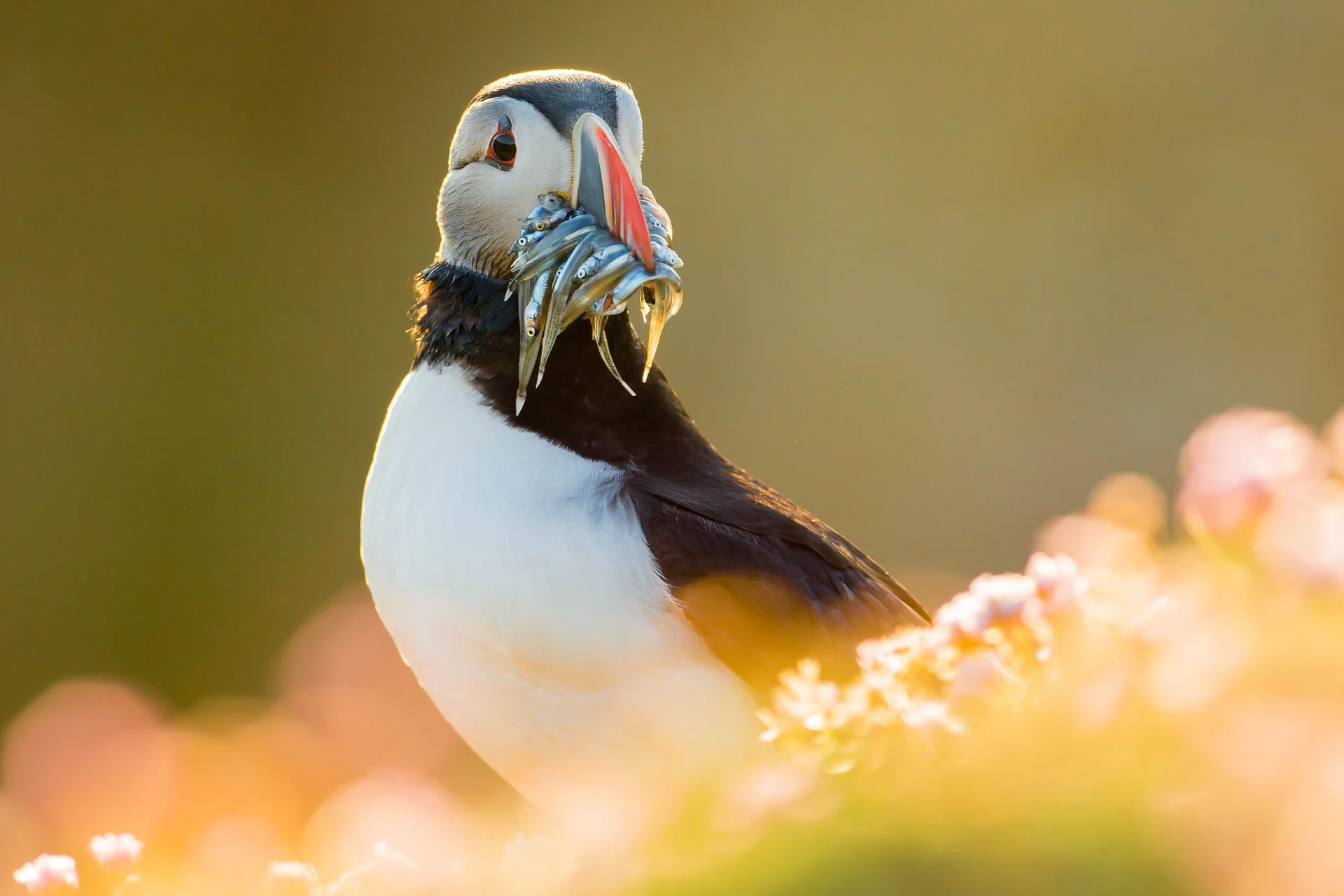
- Bempton Cliffs, East Yorkshire: the largest seabird colony on the English mainland. Gannets, puffins, razorbills, kittiwakes from cliff-top viewing points.
- Skomer Island, Pembrokeshire: the Atlantic puffin stronghold of Wales. Boat access, day visits, and an on-island visitor count cap.
- Farne Islands, Northumberland: puffin, tern and seal colonies. Cliff and offshore-rock viewing.
- Strumble Head, Pembrokeshire: autumn seabird passage watchpoint. Manx shearwater, gannet, skua passage from the coastguard hut.
- Cape Kidnappers, New Zealand: mainland gannet colony, accessible on foot at low tide. The Southern Hemisphere equivalent of Bempton.
For a Northumberland and Yorkshire-specific puffin-watching brief, our piece on where to stand and what to wear for puffin watching covers the on-cliff etiquette side of the same brief.
How does coastal birding differ from bird photography?
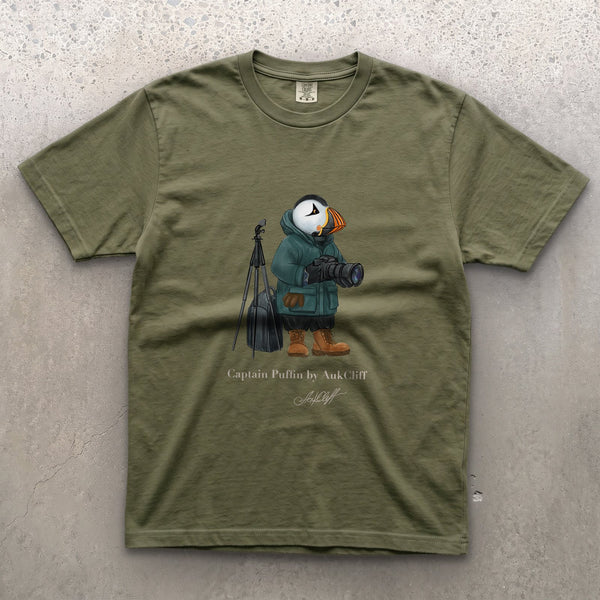
The photographer is chasing the shot. The coastal birder is keeping the list. The two crafts overlap on a cliff edge but the kit conversation is different. A photographer is mobile, carries weight, prioritises camera access through the outer layer, and tolerates a noisier shell in exchange for tripod stability. A coastal birder is static, carries a notebook and a scope, prioritises wind blocking and salt durability over freedom of movement, and needs an outer quiet enough that a passing flock does not flush.
The Captain Puffin character series at AukCliff is hand-drawn, and each Captain represents a discipline within outdoor culture. The Coastal Birder Captain Puffin T-shirt exists because the coastal birding crowd is its own community, not a subset of the photographers. The cliff-edge counter, the headland watcher, the estuary lister: they are the people this Captain was drawn for.
The Coastal Birder Captain Puffin Sweatshirt is printed on a midweight 80/20 cotton-poly fleece with a softly brushed interior, roughly 290gsm (Cotton Heritage M2480 blank). It sits inside the layering system above as the mid layer, the layer that does the work in a four-hour cliff-edge sit. The character holds binoculars rather than a long lens because the count, not the shot, is what the discipline is built around.
Frequently Asked Questions
What is the best jacket for coastal birding?
Páramo cliff-rated waterproofs like the Velez and Halcon are the working coastal birder's benchmark for quiet wind blocking and salt durability. For spray-exposed headland and estuary work, Musto sailing-grade outers are the standard. For high-cliff cold-snap days, a RAB hardshell repurposed from mountain use is widely used by ex-hill birders. The shared rule is true wind blocking with closeable cuffs and hem, not a softshell rated as wind resistant.
Do binoculars get damaged by salt air?
Yes. Salt corrodes the focus wheel and the bridge hinges of any binocular over repeated exposure. Sealed and waterproof binoculars from Swarovski, Leica and Zeiss handle it better than entry-level glass, and most coastal birders rinse their binoculars in fresh water after a heavy headland session. Carrying a binocular harness rather than a neck strap keeps the optics off salt-soaked clothing.
What is the difference between a coastal birder and a bird photographer?
A coastal birder keeps a written count of species, numbers, weather, and time. A bird photographer is chasing a single usable image. The two crafts share the same coastlines and the same patience but the kit list is different. Birders prioritise binoculars, a scope, and a waterproof notebook. Photographers prioritise a long lens and a static support. The clothing brief differs because birders sit still for longer and photographers move between vantages.
Where are the best coastal birding spots in the UK?
Bempton Cliffs in East Yorkshire is the largest mainland seabird colony in England, with gannets, puffins, razorbills and kittiwakes from cliff-top viewing platforms. Skomer Island in Pembrokeshire is the Atlantic puffin stronghold. The Farne Islands off Northumberland and Strumble Head in Pembrokeshire complete the four major coastal birding classrooms. All are RSPB or National Trust managed and accessible to day visitors.
What should you wear birdwatching at the coast in summer?
Even in summer the coastal birding brief is layered. A merino base layer, a midweight cotton or cotton-poly sweatshirt as the mid layer, and a packable wind-blocking shell in the bag. Headlands run several degrees colder than inland sites because of constant offshore wind, and a four-hour static sit feels cold even on warm days. Sun protection on the hands and face matters because reflected light off water doubles UV exposure on an exposed cliff.
Shop the Coastal Birder Captain Puffin Sweatshirt or browse the full Captain Puffin collection for the other characters in the AukCliff field.
Last updated: June 2026
Wear it out there
Simple
$75.99
Coastal Waves
$101.99
Captain Puffin Wildlife Photographer
$84.99
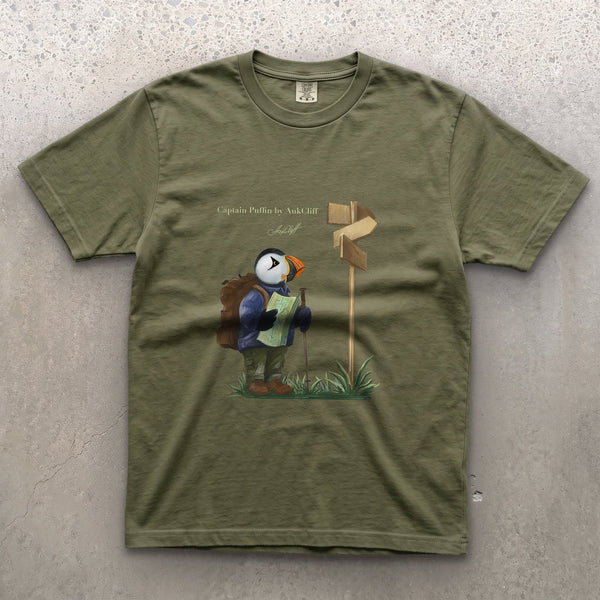
Captain Puffin Hiker
$84.99
Get the next one
New designs as they land, and the stories behind them. Unsubscribe in one click.