
What to Wear Hiking to a Summit: The Layers That Earn the Last Hour
Quick answer: To hike a summit, wear a merino base, a midweight brushed-fleece or cotton-poly mid, a packable softshell for windline gusts, and stretch softshell trousers for scrambling. The last hour above the bushline is when wind, cold, and exposure stack. The kit earns itself in that window, not on the approach.
The last hour of a summit walk is not the same garment problem as the first three. Above the bushline the wind picks up a knot every hundred metres, the temperature falls roughly a degree per 150 metres of gain, and the layer that carried you up will be wet from the inside. This is a field guide to what to wear hiking to a summit, written for tramping in New Zealand, hill walking and Munro bagging in the UK, and peak bagging in the Cascades, Rockies and Sierras. The principles travel. The vocabulary does not.
The headline rule is unromantic. A summit attempt is not one outfit, it is a layering decision you make four times in a single day. What you start in, what you climb in, what you wait for the view in, and what you walk out in are rarely the same combination. The mistake most day hikers make is dressing for the car park, not for the cairn.
What changes about clothing above the bushline?
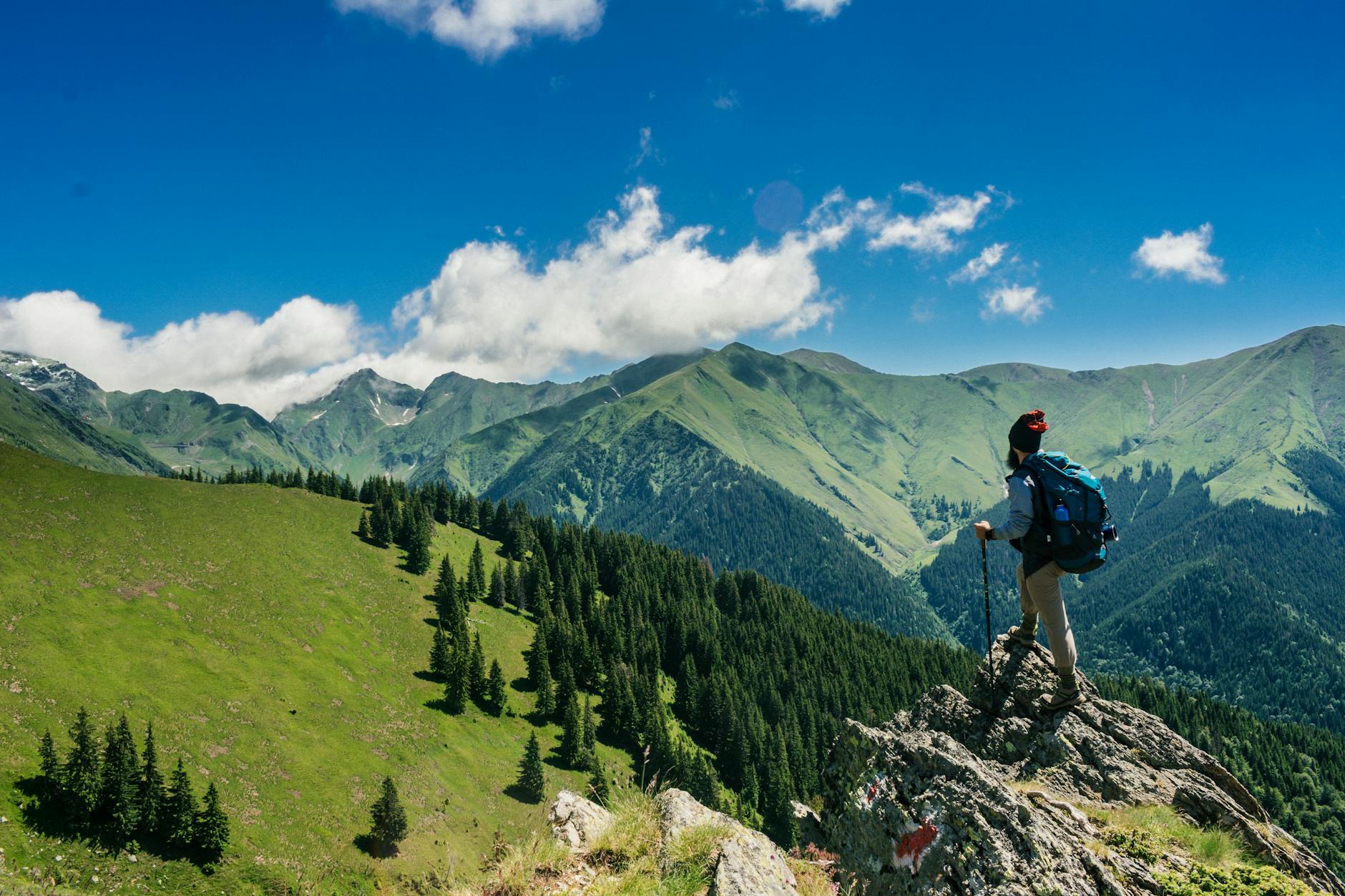
Three things change the moment the trees stop. Wind speed roughly doubles, ambient temperature drops faster with elevation, and your sweat from the climb starts working against you instead of for you.
Wind is the variable that turns
Below the bushline the canopy and the gully walls break the wind. Above it, the saddle funnels and the ridge accelerates. A 20 km/h breeze at the car park becomes 40 to 50 km/h on a New Zealand alpine ridge or a Scottish Munro plateau. Effective temperature falls by 5 to 10 degrees with that change alone. The shell goes on at the saddle, not at the summit, and you put it on before you feel cold.
The damp mid-layer problem
The garment that warmed you through the bush is now wet from inside. Putting a shell over a saturated cotton shirt is the classic summit mistake. The shell traps the damp, the body has nothing dry to insulate, and the descent becomes a thermal problem. Day hikers and trampers who summit comfortably either swap the mid layer at the bushline or wore a fibre that does not hold sweat in the first place.
What is the layering system for a summit attempt?
A four-layer system covers a southern hemisphere winter summit, a northern hemisphere autumn ridge walk, and most three-season days above 1,500 metres. The named-brand reference points below are the garments working trampers and hill walkers actually own, not catalogue suggestions.
| Layer | Job | Material | Reference garments |
|---|---|---|---|
| Base | Move moisture off the skin | Merino 150-200 gsm, or polyester grid fleece | Icebreaker 200 Oasis, Patagonia Capilene Air |
| Mid | Trap warm air, breathe on the climb | Brushed cotton-poly fleece, or technical grid fleece | AukCliff Summit Hiker sweatshirt, Patagonia R1 Pullover |
| Wind shell | Cut the wind at the saddle without trapping sweat | Lightweight softshell or windshirt | Arc'teryx Squamish Hoody, Rab Vital Hoody |
| Hardshell | Stop rain, sleet and full wind on the tops | 3-layer waterproof, Gore-Tex or equivalent membrane | Arc'teryx Beta LT, Mountain Equipment Tupilak, Macpac Prophet |
An insulated jacket lives in the pack as a fifth piece. It comes out at the cairn, not on the climb. A light synthetic puffy like a Patagonia Nano-Air or a Fjällräven Keb Padded works for most three-season summits. A down piece is warmer for the weight but loses its loft once it gets wet, which is the wrong failure mode in a New Zealand cloud cap or a British wet-cold day.
How do you read the wind line on the day?
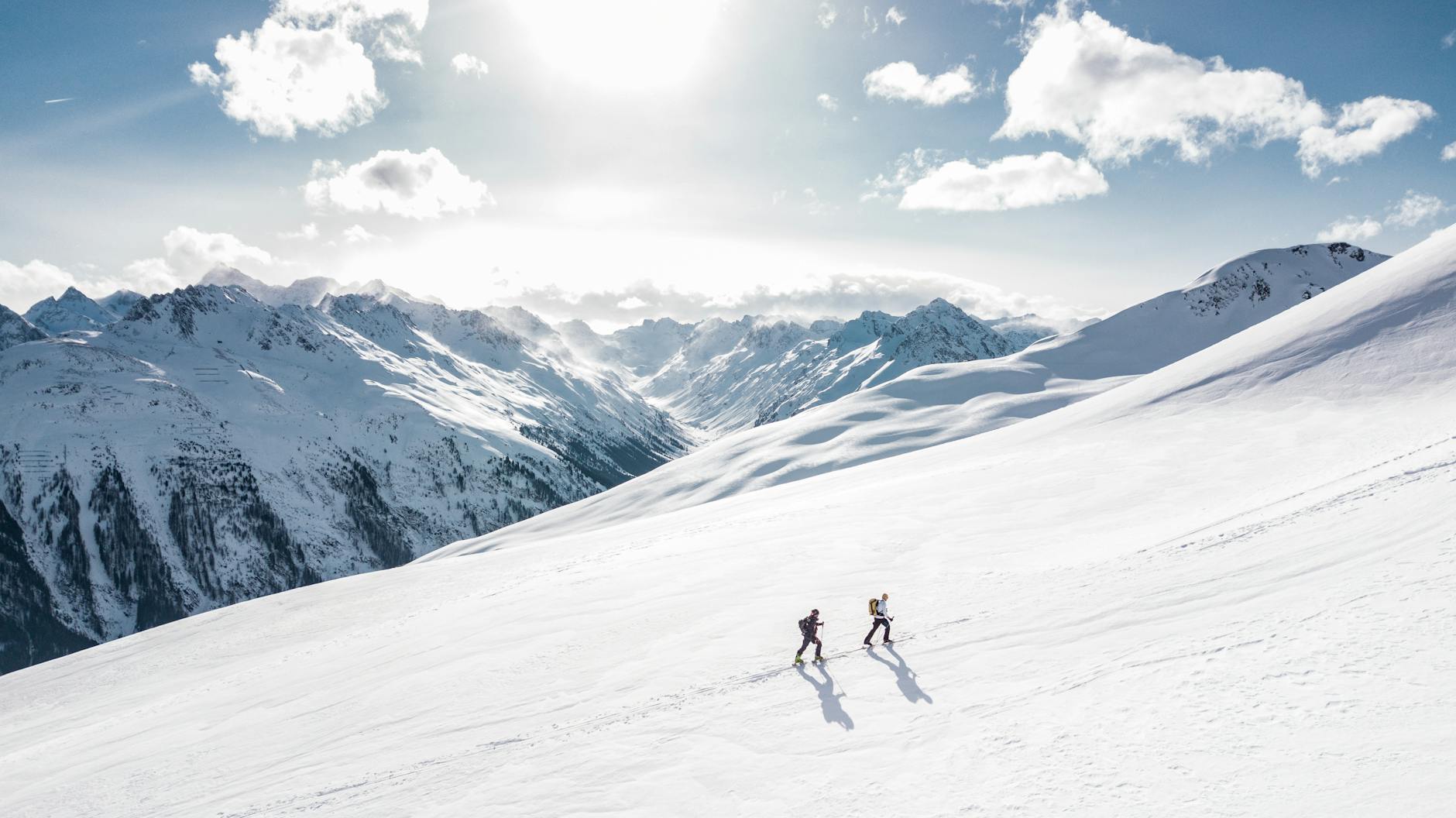
The wind line is the elevation at which the ambient breeze becomes a sustained wind. On a New Zealand alpine route in winter it can sit at 900 metres. On a Lake District ridge in summer it can sit at 600 metres. On a Cascades volcano it can sit at the moraine. The number changes. The behaviour does not.
- Read the forecast in two parts: the valley forecast and the summit forecast. They are routinely 10 degrees and 30 km/h apart.
- Note the freezing level. Anything above it is winter dressing, regardless of season.
- Identify the first saddle or col on the route. That is usually where the wind line begins. Plan to add the wind shell there, before you reach it.
- Carry a thermometer or use the watch. A 10-degree drop over 30 minutes of climbing means the layer change is overdue.
The New Zealand Department of Conservation Outdoor Safety Code recommends checking the forecast within 24 hours of departure for any trip above the bushline, and turning back when conditions exceed plan. The British Mountaineering Council publishes a similar hill walking safety guidance oriented around the same principle. Both treat layer management as a fieldcraft skill, not a kit-list problem.
What about the mid layer specifically?
The mid layer is the garment that earns or loses the summit. It is on your body for the entire climb, it absorbs the sweat of the ascent, and it is what stands between you and the puffy at the cairn. Three options work for most summit attempts.
- Technical grid fleece (Patagonia R1, Rab Power Stretch Pro) dries fast, breathes hard, and packs small. The right answer for high-output ascents and warm-season summits.
- Brushed cotton-poly midweight fleece (AukCliff Summit Hiker sweatshirt, on a Cotton Heritage M2480 80/20 blank at roughly 290 gsm) is the right answer for slower-paced multi-day tramps, hut-to-hut routes, and cool-weather day hikes where comfort at rest matters as much as breathability on the move. It is also the layer most likely to come back to camp clean enough to wear at dinner.
- Wool mid (Devold or Macpac merino 260) is the warmest of the three at rest and the slowest to dry. Suits cold-weather summits where pace is moderate.
The choice is about how long you stop at the top. A peak bag with five minutes at the cairn rewards a fast-drying grid fleece. A Munro round with a flask of tea on a rock platform rewards a mid that holds heat at rest.
What goes wrong on the descent?
The descent kills more summit days than the ascent. You are tired, you are damp, the gradient throws different loads at the knees, and the temperature drops as the sun moves behind the ridge. Three rules from working guides reduce the failure rate.
- Eat at the summit, not at the car. Cold and tired is a calorie deficit. Refuelling at the cairn keeps body heat available for the walk out.
- Swap the base layer if you can. A dry shirt out of the pack at the summit is the single most underrated piece of summit fieldcraft. It changes the descent into a different day.
- Loosen, then re-lace boots at the cairn. The descent loads the toe box. Re-lacing prevents the second-night blister problem on a multi-day tramp.
Why AukCliff built a Summit Hiker Captain Puffin
The Captain Puffin Summit Hiker is hand-drawn. A puffin at the cairn with hiking poles planted, hood up, looking out at a view the camera was always going to miss. The wearer identifies with the patient ascent more than the photograph at the top.
The Summit Hiker Captain Puffin T-shirt works as a warm-weather base or a camp top after a long day on the tops. The Summit Hiker Captain Puffin Sweatshirt is printed on a midweight 80/20 cotton-poly fleece with a softly brushed interior, on a Cotton Heritage M2480 blank, roughly 290 gsm. It sits between a wicking base and a shell. Warm at rest in a tussock saddle, breathable on the climb out, and quiet enough that you can still hear the weather change before it arrives.
For the underlying three-layer logic that the summit-specific advice above builds on, our companion piece on the layering system every guide swears by covers base, mid and shell selection for general day hikes, with the science on fibre weights and breathability ratings.
Frequently Asked Questions
What should I wear hiking to a summit in summer?
A merino or polyester base at 150 gsm, a lightweight mid layer like a grid fleece or a brushed cotton-poly midweight, and a wind shell at minimum. Carry a hardshell and a light insulated jacket even on a forecast clear day. Summer summit weather at 1,500 metres and above turns faster than the valley forecast suggests, particularly in New Zealand, the Cascades and the Scottish Highlands.
Do I need a hardshell for a one-day summit attempt?
Yes for any route that crosses or exceeds the local bushline. A 3-layer Gore-Tex or equivalent hardshell weighs 300 to 500 grams and packs to roughly the size of a water bottle. The weight cost is trivial compared to the alternative if the cloud comes in. Arc'teryx Beta LT, Macpac Prophet and Mountain Equipment Tupilak are reference garments at this weight.
What is the best mid layer for tramping in New Zealand?
For multi-day hut-to-hut tramps, a midweight 280 to 320 gsm brushed cotton-poly or wool mid is the standard. Comfort at rest and warmth at the hut matter as much as breathability on the climb. For high-output single-day summits in the Southern Alps, a technical grid fleece dries faster and packs smaller. The right answer depends on whether you are walking for the photograph at the top or for the days that connect the summits.
How do I know when to put my shell on?
Before you feel cold, and before you reach the windline. The classic indicator is the first exposed saddle or col on the route. If the forecast suggests a wind shift, put the shell on at the bushline rather than the summit. Putting a shell over a damp mid layer at the summit traps the moisture inside and turns the descent into a thermal problem.
Is a sweatshirt suitable for a summit hike?
A midweight cotton-poly sweatshirt works well as the mid layer between a wicking base and a shell on cool-to-cold three-season summit days where pace is steady. It is not the right answer for high-output scrambling in warm conditions, where a grid fleece dries faster. It is also not a substitute for a wicking base in any condition. Use it as the middle of the system, not the layer next to the skin.
Shop the Summit Hiker Captain Puffin Sweatshirt or browse the full Captain Puffin collection for the other characters in The Crew.
Last updated: July 2026
Wear it out there
Simple
$75.99
Coastal Waves
$101.99
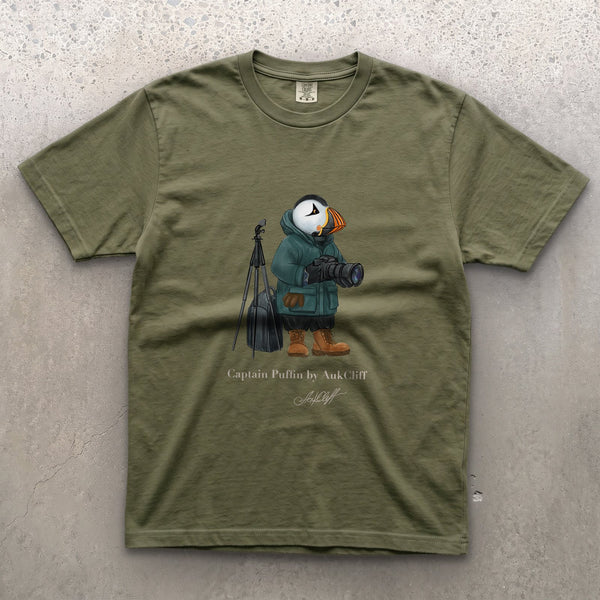
Captain Puffin Wildlife Photographer
$84.99
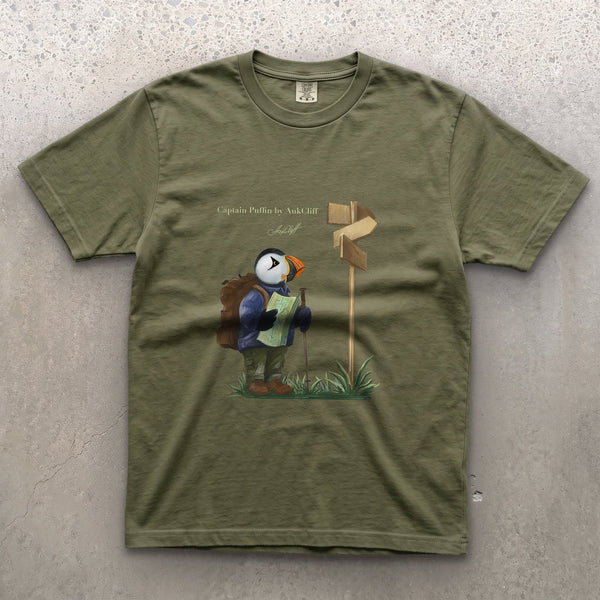
Captain Puffin Hiker
$84.99
Get the next one
New designs as they land, and the stories behind them. Unsubscribe in one click.