
What Wildlife Videographers Wear in the Field (and Why Photographers' Kit Falls Short)
Quick answer: Wildlife videographers wear soft-shell or brushed-fleece outer layers, merino base layers, and avoid any nylon, GORE-TEX shell, or velcro that creates microphone noise during 30 to 90 second static takes. Photography kit fails on video because video records the sound the photographer never has to think about.
A wildlife videographer can spend forty minutes in one position before the shot arrives. Crouched in a coastal hide on a falling tide, finger resting just off the record button, listening for the wingbeat before they see the bird. The light is usable. The wind is offshore. The only variable left inside the hide is the videographer themselves, and the small sounds their kit and their clothing make every time they shift weight on damp ground.
Wildlife videography is a different discipline from stills. A photographer waits for a moment and presses a button. A videographer commits to a take and has to stay inside the frame, inside the audio field, and inside the subject's comfort zone for ten, twenty, sometimes ninety seconds at a time. Clothes that work for photography can ruin a video take. This is a field guide to what wildlife videographers actually wear, and why the answer differs from the photographer kit list.
What makes wildlife videography clothing different from photography kit?
Photographers can move between shots. Videographers commit to a take. That single difference cascades into every clothing decision a working filmmaker makes.
The microphone problem
Most wildlife video is recorded with a shotgun mic mounted to the rig or a directional boom held within a metre of the operator. Synthetic shells, nylon outers and dry waterproofs are the loudest fabrics in human apparel. A shoulder strap dragging across a hard-shell jacket reads on a sensitive lavalier mic as a slow plastic scrape. It is the single most common reason a take gets binned in post.
The stillness problem
Static shots demand static bodies. Photographers can ride out cold by moving every few minutes between frames. Videographers cannot. A long lens on a tripod is locked, the body behind it has to match. Insulation matters more for filmmakers than it does for stills shooters of equal experience.
How long do wildlife videographers actually stay in one position?
Working natural history filmmakers report holding a single setup for anything from 30 minutes to 14 hours per location, depending on subject. Hide-based film work for raptor breeding sequences regularly runs four to six hours per session. Cetacean work from a moving RIB is the opposite, all run-and-gun, layered for wind and salt rather than insulation.

The kit needs to handle the range. A four-hour static hide in a Welsh oak wood and a three-hour boat session off the Farne Islands are not the same brief. Most filmmakers run a layered system rather than a single garment, swapping pieces in and out as the shoot demands.
What fabrics work for filming and which ones ruin a take?
Fabric choice is the easiest place to lose a shoot before the camera even turns on. The rule is simple: anything that crinkles, swishes, scrapes or rustles is off the kit list for the outer layer.
Fabric comparison: what works, what kills a take
| Fabric | Noise level | Best layer | Why |
|---|---|---|---|
| Hardshell waterproof (PU coated) | Very high | Pack only | Rustles on every arm movement, audible at 1m through a shotgun mic. |
| Nylon ripstop puffy | Very high | Pack only | The worst offender for hide work. Even high-fill jackets ship with noisy face fabrics. |
| Polyester fleece | Medium | Avoid in hide | Tolerable indoors, scratchy on close audio outdoors. |
| Brushed cotton / cotton-poly fleece | Low | Mid layer | Quiet under straps, warm at rest, no audio footprint. The workhorse of hide kit. |
| Merino wool | Very low | Base layer | Best natural fibre for stillness and silence. Expensive in volume. |
| Brushed-back sherpa | Low | Mid / next-to-skin | The inside of a midweight sweatshirt. What most working filmmakers actually wear under a shell. |
| Specialist silent softshell (Páramo, Stealth Gear, Buteo) | Very low | Outer | Engineered specifically for fieldcraft. Benchmark performance. |
The specialist silent-softshell category is dominated by a handful of fieldcraft-first European brands. Páramo (UK) builds reversible directional waterproofs that move air without crinkle, used by BBC Natural History Unit cinematographers for decades. Stealth Gear (Netherlands) and Buteo Photo Gear (Italy) make hide-specific clothing the way other brands make hardshells. Fjällräven Keb trousers in waxed G-1000 are the field standard for trousers that survive a damp hide without telegraphing every shift in posture.
For a deeper read on the audio side of fabric choice, our earlier piece on what wildlife photographers wear in hides and on stakeouts covers the same ground from a stills perspective and lists specific fibre weights.
What does a working wildlife videographer's layering system look like?
A standard four-layer system that survives a UK or Pacific Northwest spring shoot:
- Base layer: merino long-sleeve, 200gsm. Silent, warm wet, no smell on day three.
- Mid layer: midweight brushed-cotton or cotton-poly sweatshirt, roughly 280-340gsm. This is the layer the camera sees and the layer the mic hears most. It carries the brand, identity, and audio profile of the whole shoot.
- Insulation: wool or natural-fibre puffy alternative. Skip nylon shells for hide work.
- Outer: quiet softshell or oiled cotton jacket. Hardshell goes in the bag for emergencies only.
Trousers follow the same logic: brushed cotton work pants for hide days, lightweight technical pants for run-and-gun coastal or boat work.
The Wildscreen festival, the world's largest natural history filmmaking gathering, runs a regular kit clinic where the same advice comes up year after year. The Wildscreen network and the RSPB's filming code of conduct both emphasise fieldcraft over equipment spend. Quiet clothing is fieldcraft.
Why AukCliff built a Wildlife Videographer Captain Puffin
The Captain Puffin character series at AukCliff is hand-drawn, and each Captain represents a discipline within outdoor creator culture. The Wildlife Videographer Captain Puffin T-shirt exists because filmmakers were quietly buying the Wildlife Photographer design and writing in saying they were filmmakers, not stills shooters. The two crafts overlap heavily but the gear conversation is different.

The Wildlife Videographer Captain Puffin Sweatshirt is printed on a midweight 80/20 cotton-poly fleece with a softly brushed interior, roughly 290gsm (Cotton Heritage M2480 blank). It sits inside the layering system above as the mid layer, the one the mic hears and the camera sees. It is the layer most often worn for the entire shoot day and the one a working filmmaker hands down to whoever assists them next season.
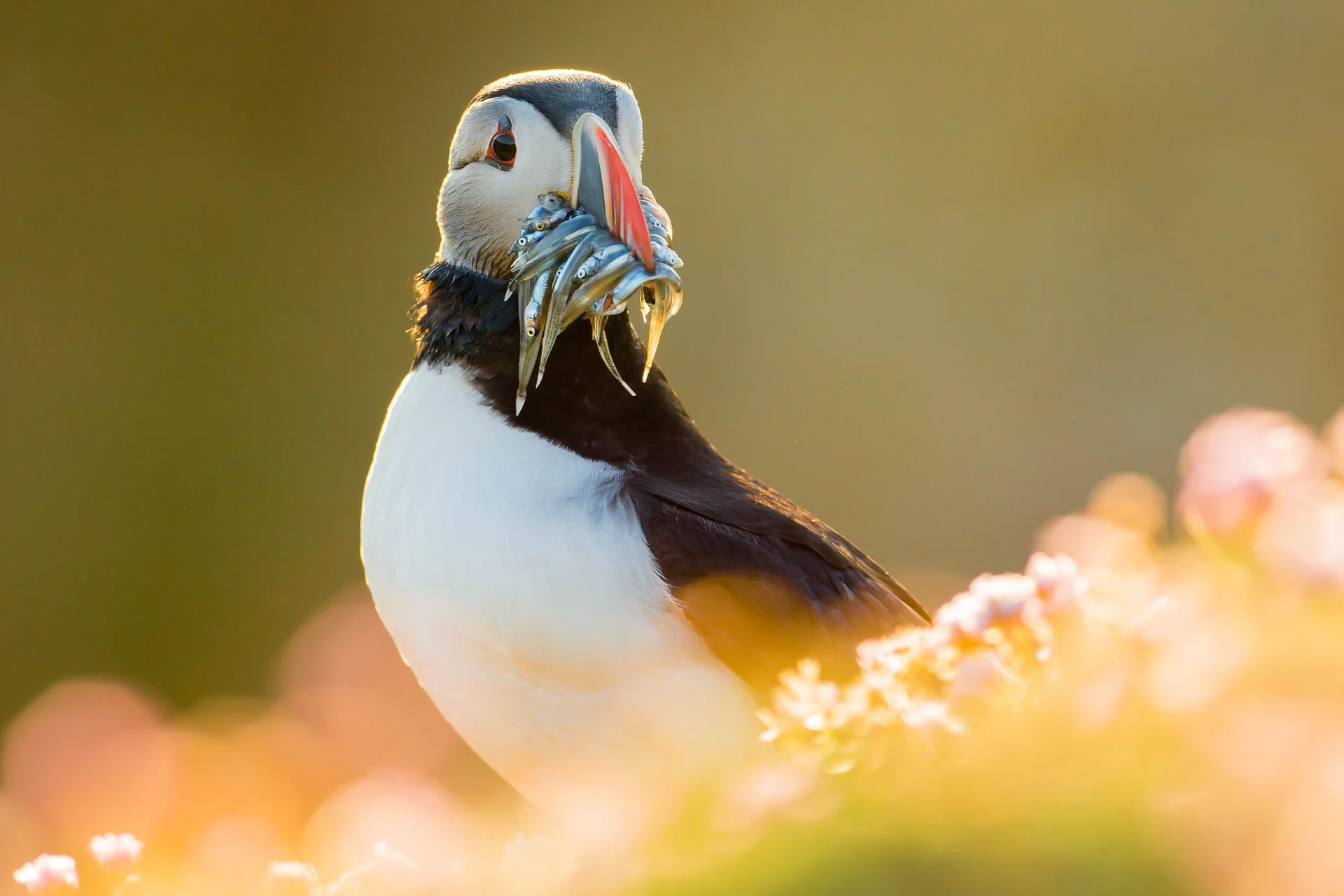
For the story behind the puffin photography that anchors the whole Captain Puffin universe, our piece Behind the Lens: AukCliff Partners with Kevin Morgans covers the collaboration with the award-winning Atlantic puffin photographer whose work shaped the visual world this character lives in.
Frequently Asked Questions
What is the quietest jacket for filming wildlife?
Specialist softshells made by Stealth Gear and Buteo Photo Gear are engineered for silence and remain the benchmark. For lower budgets, oiled-cotton field jackets and brushed-cotton overshirts are far quieter than any hardshell. The rule is to avoid PU-coated nylon outers if there is a microphone within two metres of you.
Do wildlife videographers need different clothing from wildlife photographers?
Yes for two reasons. Videographers stay still for longer single takes so need more insulation at rest, and they record audio so cannot wear noisy synthetic shells. Photographers can move between shots, ride out cold and run any fabric they like. Filmmakers cannot. The mid-layer choice is where the two crafts diverge most.
Is a sweatshirt or a fleece better for wildlife filming?
A midweight brushed-cotton or cotton-poly sweatshirt is the standard mid-layer for hide-based wildlife videography because it is warm at rest, near silent on close microphones, and durable enough for repeated field use. Most polyester fleeces are too scratchy for close audio and shed plastic microfibres in repeated wear. Cotton or cotton-poly blends win on both counts.
How long does a wildlife videographer typically stay in one position?
A working natural history filmmaker holds a single static setup anywhere from 30 minutes to a full day depending on subject. Hide-based work for breeding raptors regularly runs four to six hours per session. Boat-based cetacean work is the opposite, all run-and-gun. Clothing choice has to handle both ends of that range.
What colour clothing should you wear filming wildlife?
Muted earth tones and greens are the default for woodland and grassland work. Greys and dark blues work better for coastal and cliff work where the backdrop is sky and water. Avoid bright primaries and white. Most birds and mammals respond more strongly to shape and motion than colour, but contrast against the background is the giveaway that breaks cover.
Shop the Wildlife Videographer Captain Puffin Sweatshirt or browse the full Captain Puffin collection for the other characters in the AukCliff field.
Last updated: 18 May 2026
Wear it out there
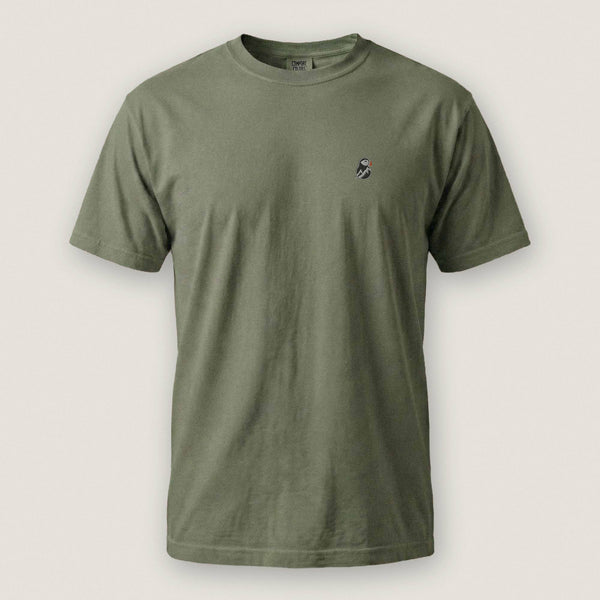
Simple
$75.99
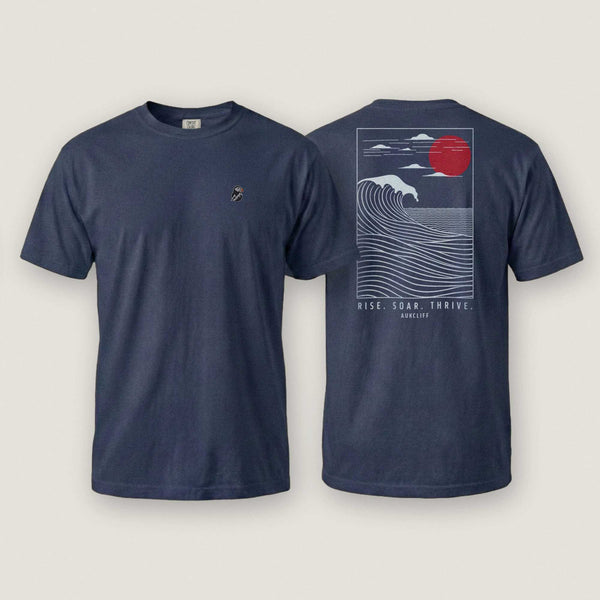
Coastal Waves
$101.99
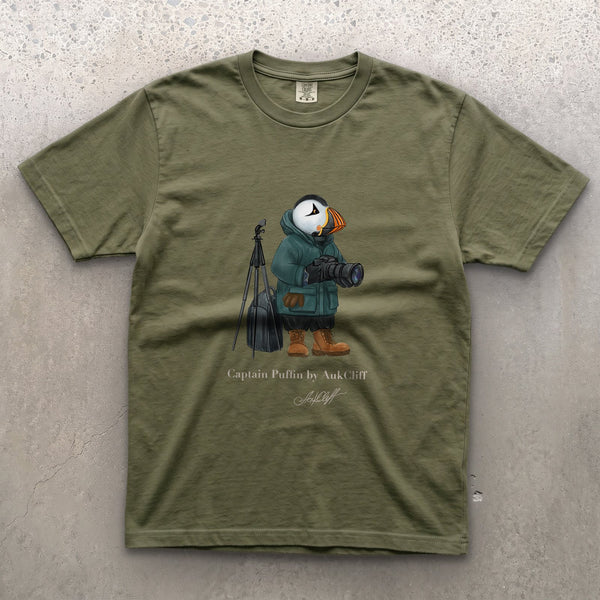
Captain Puffin Wildlife Photographer
$84.99
Captain Puffin Hiker
$84.99
Get the next one
New designs as they land, and the stories behind them. Unsubscribe in one click.