
Durable Outdoor Footwear: What to Look for in Trail Shoes
Trail footwear is where most outdoor kit decisions get complicated. A jacket is easy to assess on feel. Shoes are different. The wrong choice can end a trip early, and the consequences of a bad fit compound over kilometres in ways that nothing else in your pack does.
The trail shoe and hiking boot market reflects just how seriously people take this. According to Technavio, the hiking and trail footwear market is forecast to grow by $8.43 billion between 2025 and 2029, at a compound annual growth rate of 10%. That growth is being driven by 175.8 million outdoor recreation participants in the United States alone in 2023, with hiking consistently ranked the most popular activity by the Outdoor Industry Association. People are buying more footwear because they are spending more time on trail, and they are learning the hard way what works.
This guide breaks down what actually matters when choosing trail shoes, with no filler about "revolutionary technology" or brand marketing language. Just the parts, what they do, and how to match them to your needs.
Trail Shoes vs Hiking Boots: Understanding the Trade-Off
The honest answer is that neither is universally better. The choice comes down to three things: terrain, load, and ankle history.
Trail running shoes are low-cut, light, and designed for movement. They drain quickly, flex naturally with your foot, and suit well-maintained singletrack where the path is clear and your footing is reliable. The trail running shoe market alone was valued at $8.32 billion in 2024 (Credence Research), which tells you how popular this category has become among hikers, not just runners.
Traditional hiking boots offer ankle support, stiffer soles for load-bearing, and more durable uppers for technical or off-trail terrain. They take longer to break in and weigh more, but on loose scree, wet rock, or when you are carrying a 15kg pack for multiple days, that rigidity becomes an asset rather than a drawback.
Midcut boots sit between the two and are genuinely useful for day hikers who want more protection than a trail shoe but less bulk than a full boot. If you mostly do day hikes on mixed terrain, midcuts are worth serious consideration.
The Outsole: Your Contact With the Ground
The outsole is the part most people ignore until they slip on wet rock. Rubber compound and lug pattern together determine grip, and they are not interchangeable qualities.

Vibram is the dominant name in outsole rubber and for good reason, though the specific compound matters more than the brand. Harder rubber lasts longer on abrasive dry trails. Softer compounds grip better on wet rock but wear faster. Vibram Megagrip is the best-known example of a soft, high-friction compound designed for wet conditions.
Lug depth and pattern determine how the shoe sheds mud and bites into soft ground. Deep, widely-spaced lugs (4-6mm) work well on muddy trails but feel clunky on hard surfaces. Shallower, tighter lugs suit dry or rocky terrain where you want maximum rubber-to-rock contact.
One practical check: run your thumb across the outsole of any shoe you are considering. If the rubber feels plasticky or the lugs are shallow and close together, it is likely prioritising durability and weight over grip.
The Midsole: Where Comfort Actually Lives
The midsole is the layer between the outsole and your foot, and it determines cushioning, energy return, and protection from ground impact. Most midsoles are EVA foam, polyurethane, or a proprietary blend. The trade-offs are simple:
EVA foam is light and provides good initial cushioning but compresses over time and loses responsiveness. Polyurethane is denser, more durable, and holds its shape better over distance, but adds weight. Many modern shoes use a dual-density approach, with a softer inner layer and firmer outer layer.
Stack height refers to how much midsole sits between your foot and the ground. High stack (25mm or more) provides cushioning for long days on hard surfaces but reduces ground feel. Low stack (under 18mm) gives better proprioception on technical terrain but less protection on rocky ground.
Rock plates are a feature worth understanding. A nylon or carbon plate embedded in the midsole protects the foot from sharp rocks underfoot. If you hike on rocky, root-covered, or technical trails, a rock plate is not optional, it is essential for long-term foot health.
The Upper: What Protects the Shoe's Structure
Upper construction affects durability, breathability, and water resistance. The main materials are leather, mesh, and synthetics, each with distinct properties.

Photo by Pixabay via Pexels
Full-grain leather is the most durable option and naturally water-resistant. It breaks in slowly and adds weight, but a well-made leather boot can last decades with proper care. Split-grain leather is lighter but less waterproof and less durable at the seams.
Mesh uppers breathe well and dry quickly after stream crossings. They are the right choice for hot-weather hiking or wet terrain where your feet will get wet regardless of waterproofing. The downside is durability, mesh tears more easily on brush and rock edges.
Synthetic uppers offer a middle ground: lighter than leather, more durable than mesh, and available in varying degrees of water resistance. Most trail running shoes use synthetic uppers.
Waterproofing: GORE-TEX and When It Actually Helps
GORE-TEX and equivalent membranes keep water out and let water vapour escape. In theory. In practice, waterproof shoes work well in specific conditions and become liabilities in others.
Waterproof shoes are genuinely useful for: cold wet conditions where wet feet lead to cold feet, dewy morning grass, light river crossings, and sustained rain where the water does not exceed the shoe's height.
They work against you when: temperatures are high (because the membrane traps heat), when stream crossings are deep enough that water enters over the collar, or when you need your shoes to dry overnight in a hut. A soaked waterproof shoe takes two to three times longer to dry than a non-waterproof equivalent.
For three-season hiking in most temperate climates, a waterproof shoe is a net positive. For alpine summer, hot-weather hiking, or anywhere with frequent river crossings, a non-waterproof shoe that drains and dries fast is often the better call.
Matching Footwear to Terrain
The simplest framework for matching shoes to terrain:
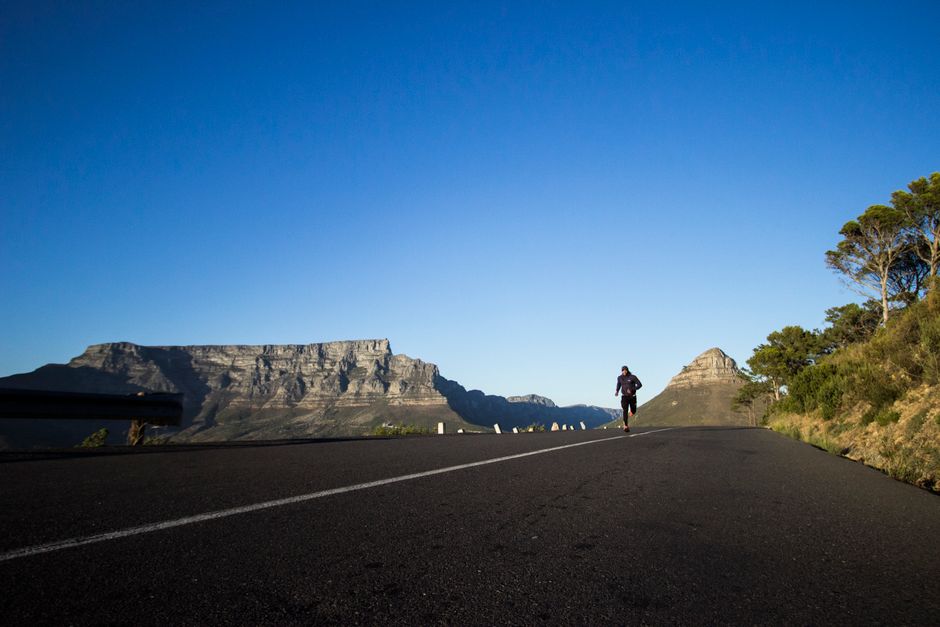
Photo by Tembela Bohle via Pexels
Maintained singletrack and gravel paths: trail running shoes or light hikers. You want low weight, good grip on firm ground, and breathability.
Mixed day hiking with some off-trail: midcut boots or supportive trail shoes with a rock plate. You want ankle stability for uneven ground and toe protection on roots and rocks.
Multi-day backpacking with a full pack: full boots with stiff midsoles and ankle support. The extra weight of the boot is offset by the protection it provides over multiple days carrying load.
Technical alpine terrain: stiff mountaineering boots designed for crampon compatibility and cramped rock features. This is a different category from trail footwear entirely.
Sock Selection and Break-In
The sock you wear with a trail shoe matters more than most people realise. Merino wool is the gold standard: temperature-regulating, naturally odour-resistant, and non-irritating against skin even when wet. Synthetic blends are durable and fast-drying. Cotton is the one to avoid, it holds moisture, loses insulation when wet, and increases blister risk on long days.
Thickness affects fit. If you plan to wear thick wool socks, bring them to the shoe fitting. A shoe that fits perfectly with a thin sock will be tight and uncomfortable with a heavy hiking sock.
Breaking in new boots before a big trip is not optional advice, it is hard experience. Even trail shoes designed to be worn out of the box benefit from a few shorter walks before you commit them to a 20km day. Leather boots especially need time to soften at the flex points and heel counter before they stop fighting your foot.
When to Replace Your Footwear
The most common mistake is holding onto worn-out footwear too long. The outsole lugs are the most visible sign, but the midsole usually degrades before the outsole shows obvious wear. If your shoes feel less cushioned than they used to, if you are feeling rocks through the sole, or if the heel counter has collapsed, it is time to replace them regardless of how the rubber looks.
A rough guide: trail running shoes used regularly need replacing around 500-700km. Hiking boots last longer due to stiffer construction but still lose midsole integrity after several hundred hours of use. If you are experiencing new foot, knee, or hip fatigue that you did not have before, old footwear is worth ruling out as the cause.
While you are thinking about what you wear on trail, the gear you wear above the ankles matters too. The Embrace The Mountain Call Tee and the Captain Puffin Hiker T-Shirt are both made from 6.1oz heavyweight premium fabric that holds up to real outdoor use, pre-washed and garment-dyed for a broken-in feel from day one. For cooler days at elevation, the Peak Junkie Hoodie pairs well as a mid-layer. Browse the full outdoor T-shirt collection for more options.
Frequently Asked Questions
How do I know if a trail shoe fits correctly?
With your foot flat and your shoe laced normally, you should have a thumb-width of space between your longest toe and the end of the shoe. Your heel should feel locked in with no slipping. The widest part of your foot should sit in the widest part of the shoe without feeling squeezed. Try shoes in the afternoon when feet are slightly swollen from daily activity, which is closer to how they will feel mid-hike.
Are trail running shoes good enough for day hiking?
For most day hikers on established trails with light packs, yes. Trail running shoes are lighter, more comfortable out of the box, and perform well on maintained singletrack. Where they fall short is on technical off-trail terrain, with heavy packs, and on loose unstable surfaces where ankle support matters.
Is GORE-TEX worth the extra cost?
It depends on where and when you hike. For cold, wet conditions and shoulder-season hiking, the premium is justified. For warm-weather hiking or trips with frequent water crossings, a non-waterproof shoe that dries quickly is often more practical. If you hike year-round in a wet climate, GORE-TEX shoes will earn their cost.
How should I care for leather hiking boots to extend their life?
Clean mud off after each use and let boots dry at room temperature, never near direct heat. Apply a conditioner or wax appropriate for the leather type (oil-based conditioners for full-grain, wax for nubuck and suede). Store in a cool, dry place away from UV light. Re-treat the DWR coating when water stops beading on the upper.
What is the difference between drop in a trail shoe and why does it matter?
Drop is the height difference between the heel and the toe, measured in millimetres. A 10mm drop is traditional and suits hikers used to standard footwear. Lower drops (0-4mm) encourage a more natural foot strike but require gradual adaptation, particularly for people with tight Achilles tendons. If you are switching from high-drop to low-drop shoes, do it over several months to avoid injury.
You Might Also Like
Wear it out there
Simple
$75.99
Coastal Waves
$101.99
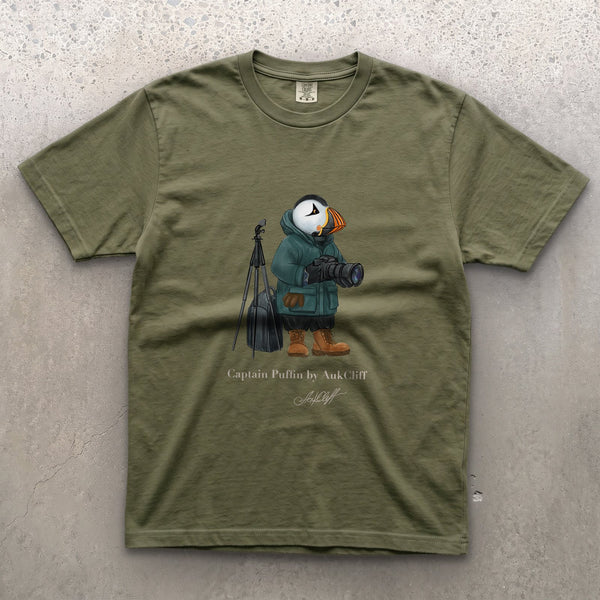
Captain Puffin Wildlife Photographer
$84.99
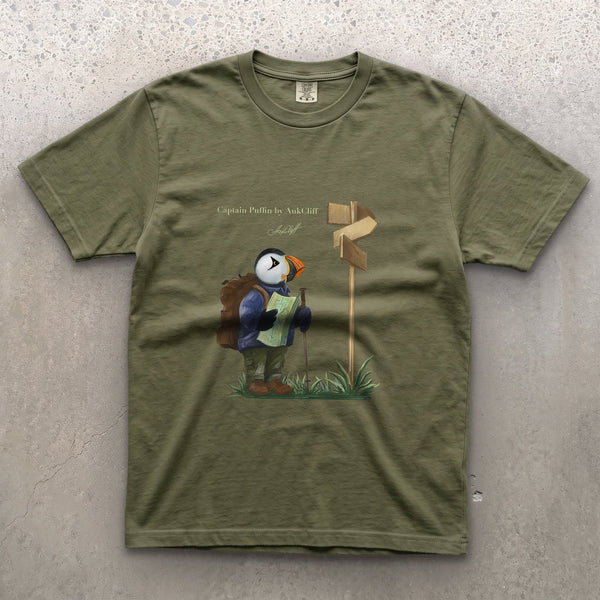
Captain Puffin Hiker
$84.99
Get the next one
New designs as they land, and the stories behind them. Unsubscribe in one click.