
Hiking in Australia: Best Trails and What to Pack
Bushwalking in Australia is bigger than most people outside the country realise. According to AusPlay and Sport Australia, it's the third most popular physical activity in the country out of 142 activities measured. That puts it ahead of cycling, gym attendance, and most team sports. Australians walk, and they walk in serious country.
The range of terrain available is part of the appeal. In a single country you can walk through tropical rainforest, alpine snowfields, red desert country, temperate old-growth forest, and sea cliff coastline. The trail infrastructure varies by state, but the well-developed networks in New South Wales, Victoria, and Western Australia compete with anything in Europe or North America for quality of waymarking, hut accommodation, and trail design.
This guide covers the best trails by state, the seasonal realities of walking in Australian conditions, and the practical side of packing for a country where UV exposure and heat management are genuine concerns.
New South Wales: The Blue Mountains and Beyond
New South Wales is the most popular bushwalking destination in Australia. Destination NSW reports 5.5 million visitors to the state's national parks for bushwalking, generating $2.4 billion in expenditure. NSW national park visitation grew 49% over 10 years to reach 53 million visits annually according to the NSW Environment department. That growth reflects both population increase and a genuine shift in how Australians are spending recreational time.
The Blue Mountains, two hours west of Sydney, is the entry point for most international visitors. The Grand Canyon track (not the American one) is the best half-day walk: a 6km loop that drops into a cool sandstone canyon with waterfalls, then climbs out through heath and lookouts. The Six Foot Track is the serious option, a 45km trail from Katoomba to the Jenolan Caves that takes 3 days and passes through terrain that most day-trippers never see.
Further afield, the 55km Coastal Walk from Broken Head to Forster in the Northern Rivers region and the Snowy Mountains area around Kosciuszko National Park offer very different terrain. The Main Range in Kosciuszko, particularly the walk from Charlotte Pass to Mount Kosciuszko and back via the Main Range Circuit, is the best alpine walking in the country at reasonable fitness levels.
Tasmania: The Overland Track
The Overland Track runs 65 kilometres through the Cradle Mountain-Lake St Clair National Park, from the Cradle Mountain visitor centre in the north to Cynthia Bay on Lake St Clair in the south. It takes 5 to 7 days, crosses above the treeline for significant sections, and passes through some of the most ancient-looking country in Australia.

Booking is mandatory for the main season (October to May) through Parks Tasmania, with a fixed daily quota in the southbound direction. The fee structure reflects the management intensive nature of the track. Public huts are provided at intervals but they fill quickly; a tent is essential.
The weather in the Tasmanian highlands is genuinely unpredictable. Four seasons in one day is a phrase Tasmanians use without irony. Snow is possible in any month at elevation. A 3-season sleeping bag rated to -5 degrees is the minimum sensible rating, and full waterproof layering is not optional. The reward is some of the cleanest air, clearest water, and most striking landscapes in the Southern Hemisphere.
Northern Territory: The Larapinta Trail
The Larapinta Trail is 223 kilometres long, running west from Alice Springs along the West MacDonnell Ranges to Mount Sonder. It's divided into 12 sections of varying length and difficulty, and most walkers do it as a section walk over multiple trips or as a private group guided tour.
The walking season is strict: April to September only. Summer temperatures in the Red Centre exceed 45 degrees Celsius regularly and the trail is impassable without serious risk during that period. The winter window offers clear skies, cool mornings and evenings, and the extraordinary light quality of the central Australian desert.
Water is managed through a series of cache points along the trail where walkers pre-order water drops from a service provider before setting out. The landscape is ancient beyond comprehension. The quartzite ridges of the MacDonnell Ranges are among the oldest exposed rock formations on Earth. Walking on them is a reminder that human timescales are a very small fraction of the story.
Victoria: The Great Ocean Walk
The Great Ocean Walk runs 104 kilometres from Apollo Bay to the Twelve Apostles along the Bass Strait coast. It's a point-to-point trail with a booking system for the designated campsites, a shuttle service for independent walkers, and the most consistently dramatic ocean scenery of any trail in Australia.
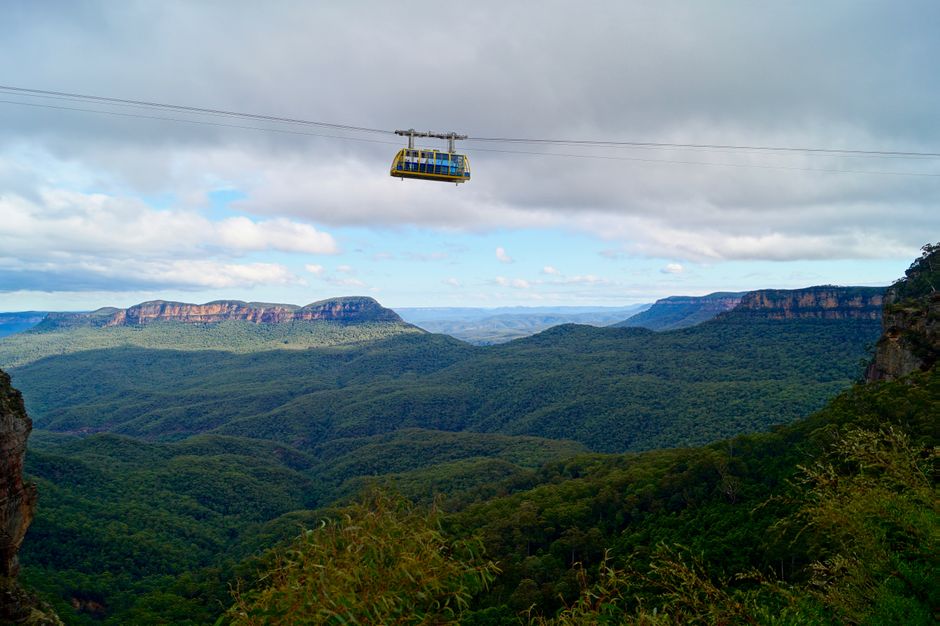
Photo by Samuel Weirich via Pexels
The clifftop sections above the Southern Ocean look west into open water all the way to Antarctica. The shipwreck coast earned that name honestly: the wrecks of 638 ships are documented between Port Fairy and Port Campbell, and the trail crosses above country that was one of the most dangerous stretches of coastline in the 19th century.
The entire trail can be done in 6 to 8 days. The Port Campbell section at the western end has the rock stacks and sea arches that appear in most Great Ocean Road photographs. Walking to them from the trail is a different experience from seeing them from a tourist lookout, which is the best case for doing this trail rather than driving the road.
Western Australia: The Bibbulmun Track
The Bibbulmun Track covers 1,003 kilometres from the Perth Hills to Albany, through jarrah and karri forests, coastal heath, and the Stirling Range. It's covered in detail separately, but in the context of Australian hiking overall, it represents the country's premier long-distance trail for independent walkers who want a genuine end-to-end experience. The 49 campsite shelter system makes self-sufficient travel achievable without exceptional logistics skills, and the biodiversity of the southwest WA corridors is unmatched in the country.
Seasons and Heat Management
Australia's size means there's no universal good season for hiking. In rough terms:

Photo by Kate Trifo via Pexels
April to June and September to November work well for most of the southeast: New South Wales, Victoria, and South Australia. Spring and autumn offer manageable temperatures and good visibility.
April to September for the tropical north (Queensland, Northern Territory, the Kimberley in WA). The dry season is the only viable walking window.
Year-round in Tasmania with the caveat that the highlands require full four-season preparation regardless of calendar month.
Heat management on Australian summer trails is a serious concern and worth planning for explicitly. Adults aged 25 to 34 are the largest bushwalker age group at 545,000 participants according to Statista. Most of them are walking in conditions that demand more respect than European trails of equivalent length.
The Australian sun at sea level has higher UV intensity than equivalent European latitudes due to the ozone layer profile and the Earth's orbital path. The UV index regularly reaches 12 to 14 (extreme) in summer months across most of the country. Applying SPF50+ sunscreen every two hours, covering arms and the back of the neck, and hiking before 10am or after 3pm in summer are not overcautious measures.
Sun Protection and What to Wear
The traditional Australian hiking advice is to cover up rather than rely solely on sunscreen. A shirt that covers the shoulders and upper arms reduces the sunscreen requirement, keeps you cooler in dry heat, and means you're not spending the afternoon reapplying on exposed skin.
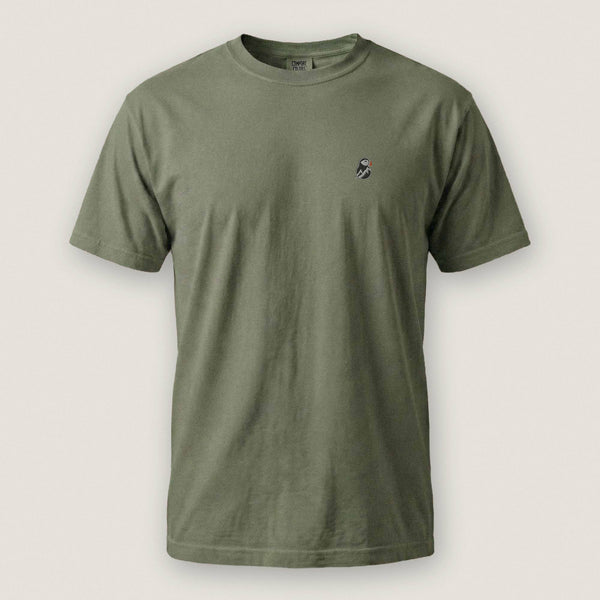
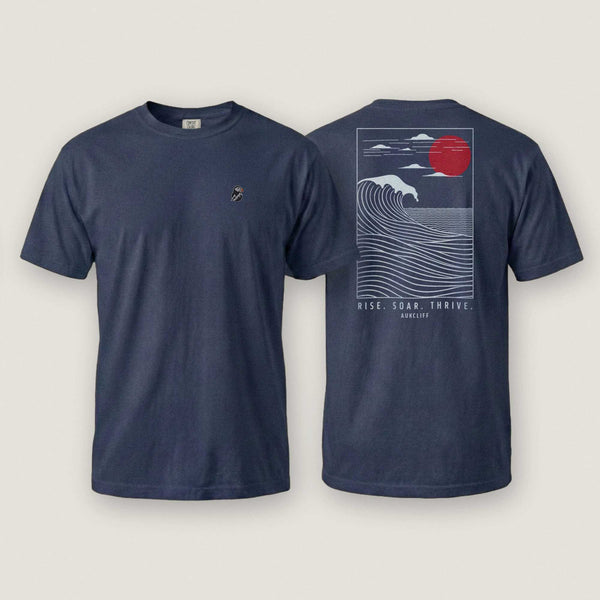
The 6.1oz garment-dyed premium cotton in the Embrace the Mountain Call Tee and the Life on the Edge T-Shirt sits in the right weight range for Australian conditions: substantial enough to block some UV and protect against scrub, light enough not to create heat stress on warm days. Both are pre-shrunk and colourfast, which matters when you're doing frequent sweaty washes on longer trips.
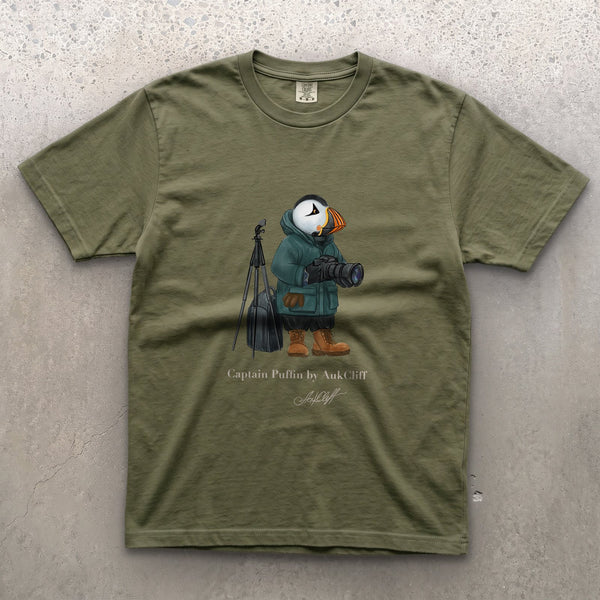
For cooler mornings and camp evenings, particularly in the Snowy Mountains, Tasmanian highlands, or the Red Centre nights, the Peak Junkie Hoodie in 9oz premium fleece covers the temperature gap efficiently. The Captain Puffin artwork in the Origin Collection is hand-drawn by artist Maria and designed in New Zealand. It travels well.
A hat is non-negotiable. The Organic Trailblazer Dad Hat provides coverage over the eyes and face and is worth packing in any Australian hiking kit. It folds flat in a pack and adds meaningful sun protection on extended ridge walks where trees are absent.
Footwear in Australia should be selected per trail. The smooth rock of the Blue Mountains and the granite of the Stirlings require grip. The soft sand of the Bibbulmun's southern section is kinder on footwear but heavier going for muscles. The Larapinta crosses sharp quartzite rubble that destroys shoes with thin soles. Match the boot to the specific trail rather than to Australia generically.
Wildlife Awareness
Australian trail wildlife requires awareness without paranoia. The key species to be aware of are snakes (eastern brown, tiger snake, red-bellied black depending on region), spiders (funnel-web in NSW, redback nationwide), and ticks in coastal NSW and Queensland.
The practical mitigation for snakes is watching where you put your feet and hands, not reaching into crevices, and giving any snake you see space to move away. Most bites happen when someone stands on or deliberately handles a snake. Gaiters provide meaningful protection on bushy trails where you can't see ground level clearly.
Ticks in NSW and QLD require a different protocol. Do a full body check at the end of each day on coastal trails. Remove any attached tick with fine-tipped tweezers without twisting, as the toxins are potentially serious. Don't use alcohol, petroleum jelly, or heat to remove ticks.
FAQ
What is the best hiking trail in Australia for first-time visitors?
The Blue Mountains Grand Canyon track in NSW for a half-day experience that requires no camping gear. The Overland Track in Tasmania for a multi-day experience that genuinely exceeds expectations. Both are accessible, well-marked, and represent what Australian bushwalking does at its best.
Is bushwalking in Australia safe for solo hikers?
Yes, with preparation. Register your plans with the relevant park authority or a trusted contact before any multi-day walk. Carry a personal locator beacon (PLB) on remote trails. Stick to the planned route and turnaround schedule. The main risks (dehydration, heat, snakes) are all manageable with standard preparation.
Do I need permits to hike in Australian national parks?
It varies by park and trail. The Overland Track requires a booking and fee. The Larapinta Trail requires a fee and water pre-booking. The Blue Mountains tracks are free. The Bibbulmun Track is free. Always check the relevant parks authority website (Parks Tasmania, NSW National Parks, WA Parks and Wildlife) before your trip.
What is the biggest mistake hikers make in Australia?
Underestimating water requirements and UV exposure. Most experienced Australian hikers will tell you they over-prepared on everything except water at some point early in their walking history. Carry more water than you think you need, particularly in the summer months and on any trail without reliable water sources.
When should I avoid hiking in Australia?
December to February in most of mainland Australia south of the tropics. The combination of extreme heat, high UV, unreliable water sources, and high fire danger makes summer hiking a serious commitment requiring substantial preparation and experience. Wait for autumn or book a trip to Tasmania where summer is the walking season.
Browse the full T-shirts collection and the Origin Collection for more gear designed for people who spend serious time outside. The Simple premium tees rounds out the kit with a clean everyday option in the same 6.1oz garment-dyed construction.
You Might Also Like
Wear it out there
Simple
$75.99
Coastal Waves
$101.99
Captain Puffin Wildlife Photographer
$84.99
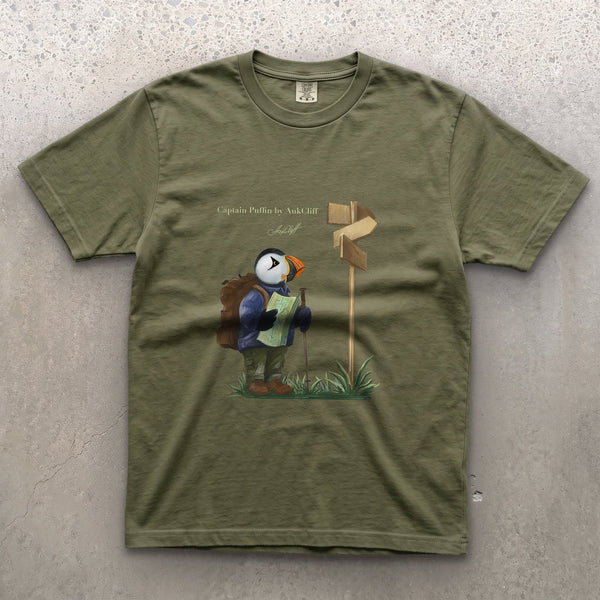
Captain Puffin Hiker
$84.99
Get the next one
New designs as they land, and the stories behind them. Unsubscribe in one click.